Denemek ALTIN - Özgür
A Chatbot Dystopian Nightmare
Scientific American
|July/August 2025
The Trump administration sees an AI-driven federal workforce as more efficient. Instead, with chatbots unable to carry out critical tasks, it would be a diabolical mess
IMAGINE CALLING the Social Security Administration and asking, “Where is my July payment?” only to have a chatbot respond, “Canceling all future payments.” Your check has just fallen victim to “hallucination,” a phenomenon in which an automatic speech-recognition system outputs text that bears little or no relation to the input.
Hallucination is one of the many issues that plague so-called generative artificial-intelligence systems such as OpenAI’s ChatGPT, xAI’s Grok, Anthropic’s Claude and Meta’s Llama. These pitfalls result from design flaws in the architecture of these systems that make them problematic. Yet these are the same types of generative AI tools that the Trump administration and its Department of Government Efficiency (DOGE) want to use to, in one official’s words, replace “the human workforce with machines.”
This proposition is terrifying. There is no “one weird trick” that removes experts and creates miracle machines capable of doing everything humans can do but better. The prospect of replacing federal workers who handle critical tasks—ones that could result in life-and-death scenarios for hundreds of millions of people—with automated systems that can’t even perform basic speech-to-text transcription without making up large swaths of text is catastrophic. If these automated systems can’t even reliably parrot back the exact information that is given to them, then their outputs will be riddled with errors, leading to inappropriate or even dangerous actions. Automated systems cannot be trusted to make decisions the way federal workers—actual people—can.
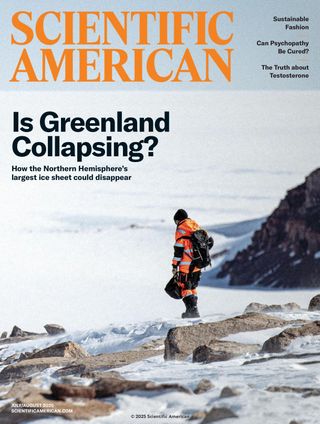

Bu hikaye Scientific American dergisinin July/August 2025 baskısından alınmıştır.
Binlerce özenle seçilmiş premium hikayeye ve 9.000'den fazla dergi ve gazeteye erişmek için Magzter GOLD'a abone olun.
Zaten abone misiniz? Oturum aç
Scientific American'den DAHA FAZLA HİKAYE

Scientific American
Probiotic Hope and Hype
Despite their popularity, supplements with billions of \"good\" microbes help only a few illnesses, research shows

3 mins
January 2026
Scientific American
Mondays Really Are More Stressful
The start of the workweek can be a biologically measurable stressor, with consequences for long-term health that can stretch into retirement
4 mins
January 2026
Scientific American
Tiny Display
An e-paper breakthrough brings extremely high-resolution color
2 mins
January 2026
Scientific American
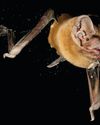
Fine-Feathered Snack
A bat's tracker documents a dramatic midair hunt
2 mins
January 2026

Scientific American
OUR ROBOTIC PICTURE
Will mechanical helpers ever be commonplace at home, at work and beyond?
11 mins
January 2026

Scientific American
"Use Your Words" Can Be Good for Kids' Health
Writing or expressing feelings can help adults mentally and physically. Kids are no different
5 mins
January 2026

Scientific American
Distant Diplomacy
Unrelated species “talk” and understand one another to avoid threats
2 mins
January 2026

Scientific American
Behind the Nobel
A 2025 winner reflects on the mysterious T cells that won him the prize
5 mins
January 2026

Scientific American
A Suite of Killers
Heart ailments, kidney diseases and type 2 diabetes actually may be part of just one condition. It's called CKM syndrome
10 mins
January 2026
Scientific American
Static Launch
Tiny worms leap toward their fruit fly hosts with an electric “tractor beam”
3 mins
January 2026
Listen
Translate
Change font size