Denemek ALTIN - Özgür
HOW TO OPERATE ON THE BRAIN
How It Works UK
|Issue 192
The procedures and surgical techniques that tackle problems inside your skull
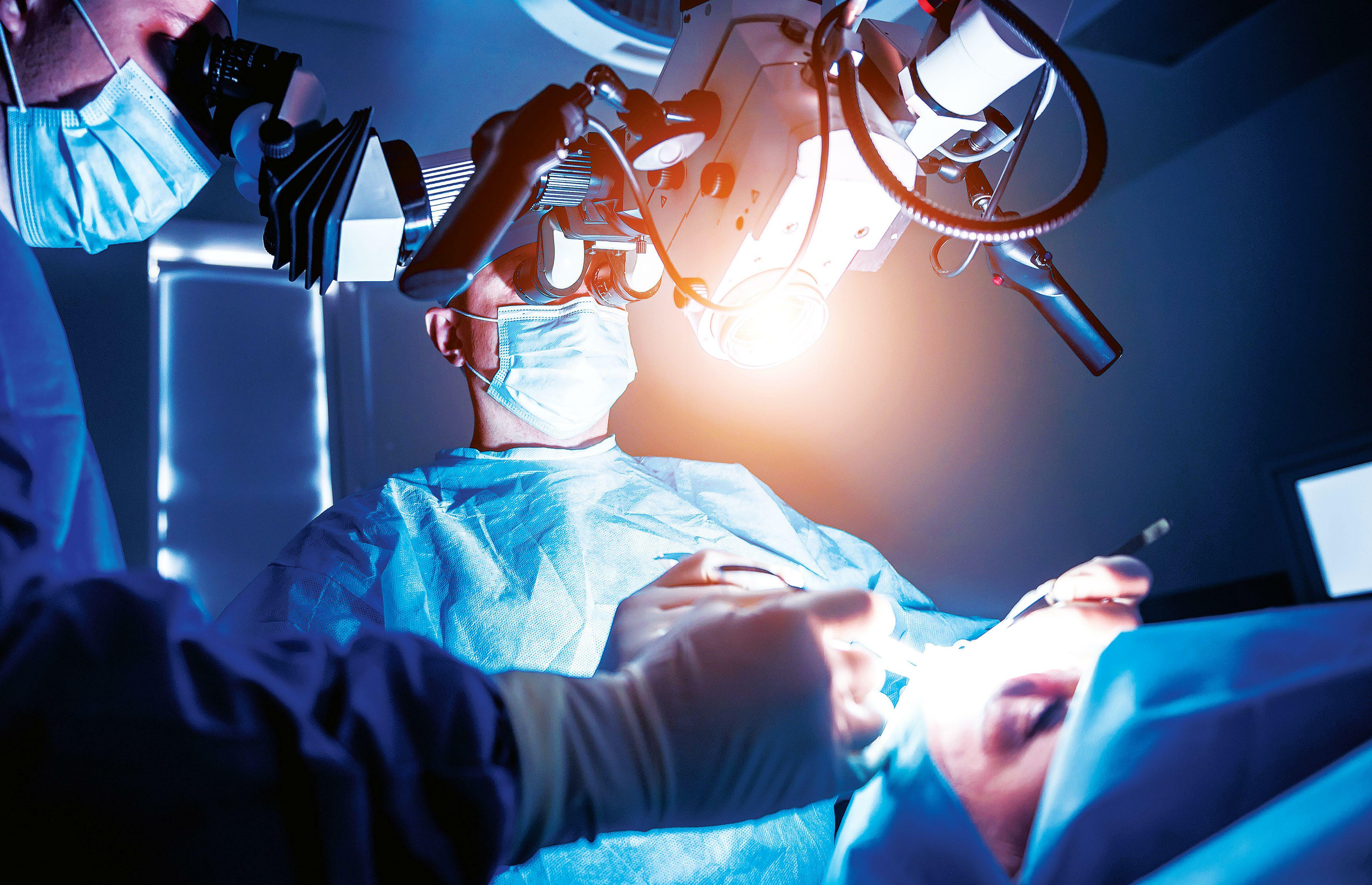
Brain surgery encompasses a myriad of procedures designed to treat an equally diverse set of conditions and associated symptoms, including tumours, blood clots, epilepsy and aneurysms. Neurosurgeries can range from minimally invasive procedures such as a biopsy, whereby a needle is inserted into the brain to collect cells for analysis, to extensive operations that expose the brain to treat blood clots and for tumour removal.
Like any other tumour, a brain tumour is an abnormal mass of cells and tissue that wedges itself somewhere in the brain. There are two categories of tumour: benign and malignant. While benign tumours can grow large, albeit slowly, they don't typically invade surrounding tissue or spread around the body. A malignant tumour, on the other hand, grows much faster, invades other tissue and can spread around the body. All in all, 120 different types of tumour can form in the brain alone.
For both benign and malignant brain tumours, a common course of intervention is a craniotomy and resection, whereby a surgeon removes a portion of the skull to expose the brain and hopefully cut away the tumour. To help guide them through the brain and keep tabs on where surgical instruments are during operations, surgeons use neuronavigation systems that are connected to their equipment.
"One of the biggest challenges is distinguishing between normal brain tissue and tumour tissue, which requires extensive training and experience," says Pietro D'Urso, a consultant neurosurgeon at Salford Royal Hospital in Manchester. "The location of the tumour is another big challenge, particularly if a tumour is in very important parts of the brain, called 'eloquent areas', that control speech and motor functions."


Bu hikaye How It Works UK dergisinin Issue 192 baskısından alınmıştır.
Binlerce özenle seçilmiş premium hikayeye ve 9.000'den fazla dergi ve gazeteye erişmek için Magzter GOLD'a abone olun.
Zaten abone misiniz? Oturum aç
How It Works UK'den DAHA FAZLA HİKAYE

How It Works UK
FORMULA FAST
YOUR ULTIMATE GUIDE TO FORMULA ONE RACING

1 mins
Issue 212

How It Works UK
MY LIFE AS AN ASTHMANAUT
A CHILDREN'S BOOK ABOUT ASTHMA
1 min
Issue 212

How It Works UK
LYDIA LOVES BUGS
A SHORT AND SWEET STORY OF AN ENTHUSIASTIC ENTOMOLOGIST
1 min
Issue 212

How It Works UK
INSIDE A DRONE
Drones aren't just for the military any more. These flying marvels are now taking over our lives
3 mins
Issue 212
How It Works UK
WE CAN HEAR WITHOUT EARS
AND OTHER THINGS YOU DIDN'T KNOW WE PLANTS COULD DO
1 min
Issue 212

How It Works UK
DO GEESE GET GOOSEBUMPS?
Many animals experience a similar reaction when they feel cold or scared
2 mins
Issue 212
How It Works UK
SUBMARINES WITHOUT SAILORS
Dive into the world of autonomous submarines and discover the mission that will see one sail around the world
4 mins
Issue 212
How It Works UK
WHAT HAPPENS INSIDE A COCOON?
How certain species of insects transform from crawling caterpillars to flying moths and butterflies
3 mins
Issue 212

How It Works UK
HOW THE ROSE LOST ITS SCENT
From floral to fragranceless, there's a biological reason behind a rose's missing odour today
3 mins
Issue 212
How It Works UK
How many insects have been discovered so far?
The total number of named species is around a million.
7 mins
Issue 212
Listen
Translate
Change font size