Denemek ALTIN - Özgür
POWER OF PAAN
Down To Earth
|June 16, 2024
Betel leaves are not just an integral part of India's culture, but also hold many benefits. Add them to your list of healthy greens

THERE WAS a time when heart-shaped leaves of betel (Piper betle) were served after dinner in nearly every household. Panwaris, or paan sellers, would set up shop on street corners and offer customised beedas (quids); or people would just buy the leaves and prepare them at home with ingredients such as areca nut, slaked lime, cardamom, cloves, fennel, saffron, coconut and gulkand (a sweet preserve of rose petals). A beeda after a meal was believed to aid digestion and freshen the breath.
It was so popular that people believed knowing the "correct" way to eat paan was the epitome of cultured life. The saying "Bandar ko diya paan, lagaa roti sa chabaan" (if you give paan to a monkey, he will eat it like a roti) is used to refer to a lack of finesse in behaviour.
However, think of paan nowadays, and it is likely to conjure an image of red spit-covered walls-a mess made by tobacco chewers who use betel leaves to wrap and flavour the intoxicant. Traditionally, the leaf would be chewed and swallowed, but when used with tobacco, the saliva has to be spat out. This practice is considered to have begun around the 16th century when tobacco was introduced in the country by Portuguese invaders.
The name "betel" was also first used in the 16th century by the Portuguese, most probably derived from vetila-the Malay word for leaf. The Malayalam and Tamil names for betel leaf are also similar-sounding, vettila and vettilai, respectively. In Kannada, betel is taamboola, in Manipuri kwa and in Marathi naagavaela.

Bu hikaye Down To Earth dergisinin June 16, 2024 baskısından alınmıştır.
Binlerce özenle seçilmiş premium hikayeye ve 9.000'den fazla dergi ve gazeteye erişmek için Magzter GOLD'a abone olun.
Zaten abone misiniz? Oturum aç
Down To Earth'den DAHA FAZLA HİKAYE

Down To Earth
Bitter pill
THE WEB SERIES PHARMA EXPOSES HARSH TRUTHS OF THE PHARMACEUTICAL INDUSTRY, WHERE PROFIT OFTEN BECOMES MORE IMPORTANT THAN HUMAN HEALTH

3 mins
January 16, 2026
Down To Earth
CHAOS IN-DEFINITION
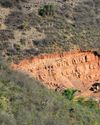
The Aravallis are perhaps India's most litigated hill range. More than 4,000 court cases have failed to arrest their destruction. The latest dispute concerns a narrow legal definition of this geological antiquity, much of which has been obliterated by mining and urban sprawl. While the Supreme Court has stayed its own judgement accepting that definition, it must see the underlying reality and help reconcile development and national security with conservation.
19 mins
January 16, 2026
Down To Earth
BITS: INDIA
Indore has recorded 16 deaths and more than 1,600 hospitalisations between December 24 and January 6.
1 min
January 16, 2026

Down To Earth
GUARANTEE EXPIRES
India's rural employment guarantee law is replaced with a centrally controlled, budget-capped scheme. Is this an attack on the right to work?
3 mins
January 16, 2026
Down To Earth
BLOOM OR BANE
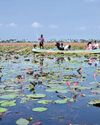
Surge of vibrant pink water lilies in Kuttanad, Kerala, provides socio-economic benefits, but the plant's ecological impacts must be understood
4 mins
January 16, 2026
Down To Earth
INVISIBLE EMPLOYER
Field and academic evidence shows sharp falls in casual agricultural employment at places where groundwater access declines
3 mins
January 16, 2026

Down To Earth
Schemed for erasure
Does the VB-G RAMG Act address structural weaknesses long observed in MGNREGA's implementation?
10 mins
January 16, 2026

Down To Earth
School of change
An open school in Panagar, Madhya Pradesh, aims to protect children of tribal settlements from falling into the trap of addiction
2 mins
January 16, 2026

Down To Earth
PULSE OF RESILIENCE
As a climate-ready crop, cowpea shows potential for widespread use in India
3 mins
January 16, 2026
Down To Earth
BITS GLOBAL
Britain recorded its hottest and sunniest year ever in 2025, the country's meteorological office said on January 2.
1 min
January 16, 2026
Listen
Translate
Change font size