
Magzter GOLD ile Sınırsız Olun
Sadece 9.000'den fazla dergi, gazete ve Premium hikayeye sınırsız erişim elde edin
Denemek ALTIN - Özgür
SKILLS FOR STARGAZERS
BBC Sky at Night Magazine
|June 2025
Get the best from your astro camera
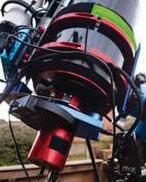
How to optimise your CCD or CMOS settings for great imaging results
CD and CMOS astrophotography cameras have been on the market for many years and allow amateur astrophotographers to produce stunning image results. But to get the best from your astro camera, you need to really understand and master its settings.
If you've just bought one or you've had one for a while but you're not getting the results you hoped for, it's time to learn all about it - and learn from examples of good (and bad!) imaging results. We'll run through how to judge your settings both during and after a 'first light' session. Much can also be learned in post-processing, meaning you can tweak settings on the next clear night.
There are four main settings to focus on: exposure, binning, gain and offset. Exposure is how long (in seconds) each frame is. Finding your camera's ideal exposure length depends upon many factors, including device sensitivity, sky conditions, light pollution and your astronomy target. Longer exposures can lead to more signal and detail, but also introduce noise. This could be system noise (created by the electronics) or shot noise. While system noise is reduced by taking calibration frames, shot noise can be reduced by taking multiple frames to stack together later. A careful examination of the histogram curve in your capture software will show if an exposure is too long or short. If the curve is fully towards the left axis, shadow detail may be lost in post-processing, whereas a curve that extends to the right will clip highlights, leading to blown-out areas.
Binning, gain and offset

Bu hikaye BBC Sky at Night Magazine dergisinin June 2025 baskısından alınmıştır.
Binlerce özenle seçilmiş premium hikayeye ve 9.000'den fazla dergi ve gazeteye erişmek için Magzter GOLD'a abone olun.
Zaten abone misiniz? Oturum aç
BBC Sky at Night Magazine'den DAHA FAZLA HİKAYE
BBC Sky at Night Magazine
MOONWATCH
January's top lunar feature to observe

2 mins
January 2026
BBC Sky at Night Magazine
Speed up your processing workflow
How to use Photoshop's Actions tool to drastically cut your processing time
3 mins
January 2026
BBC Sky at Night Magazine
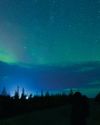
Chasing Canada's polar lights
With solar maximum peaking and a new Moon promising dark skies, Jamie Carter travels to Churchill, Manitoba to hunt the Northern Lights - and dodge polar bears – in Canada's far north
7 mins
January 2026
BBC Sky at Night Magazine
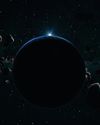
Beyond Pluto: The search for the hidden planets
Could one – or even two - undiscovered planets lurk at the edges of our Solar System? Nicky Jenner explores how close we are to finding the elusive 'Planet 9'
6 mins
January 2026
BBC Sky at Night Magazine
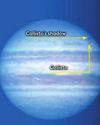
Jupiter moon events
Jupiter is a magnificent planet to observe.
2 mins
January 2026

BBC Sky at Night Magazine
What samples from space have taught us
Alastair Gunn explains what scientists have learnt in the 20 years since the first unmanned mission brought materials back from alien worlds
3 mins
January 2026
BBC Sky at Night Magazine
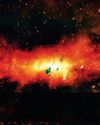
The Milky Way as you've never seen it before
This is the largest low-frequency radio colour image of our Galaxy ever assembled
1 min
January 2026
BBC Sky at Night Magazine
Merger of ‘impossibly' massive black holes explained
Scientists discover how enormous, fast-spinning black holes can exist after all
1 mins
January 2026
BBC Sky at Night Magazine
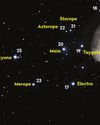
Lunar occultation of the Pleiades
BEST TIME TO SEE: 27 January from 20:30 UT
1 min
January 2026
BBC Sky at Night Magazine
The Universe's expansion may be slowing down
New study suggests current theories of dark energy could be wrong
1 mins
January 2026
Listen
Translate
Change font size