Denemek ALTIN - Özgür
WOODEN SATELLITES:LIGNOSAT PROJECT MAY REDUCE SPACE JUNK
BBC Science Focus
|New Year 2024
US and Japanese space agencies are teaming up to launch lumber in an effort to reduce space litter

In 1957, the first human-made object successfully launched into space was placed in orbit around Earth. This was Sputnik 1, a beautifully simple, Soviet-made spherical satellite with just four antennas.
But this historic event also marked another, more unsettling first: humanity had deposited its first piece of space debris. Part of the 267-tonne, 30m-tall rocket that launched Sputnik was stuck in orbit. Suddenly the world had a problem that we didn't know we needed to solve: the littering of outer space.
Thankfully, Sputnik and that rocket remnant de-orbited and burned up in our atmosphere fairly quickly after launch.
That hasn't always been the case, however - far from it. Over the course of just 66 years of space exploration, a vast amount of detritus has been left in orbit around Earth.
Now NASA and the Japan Aerospace Exploration Agency (JAXA) have an idea to help solve this issue: satellites made from a widely available, biodegradable material - wood.
The problem the agencies aim to address is a big and complex one and finding out just how big was the first stage of the project. We know that at least 130 million pieces of human-made debris orbit Earth, most of them whizzing around at over 7km/s - eight times faster than a typical bullet. Although that's a staggering number, some scientists think it's a conservative estimate.

Bu hikaye BBC Science Focus dergisinin New Year 2024 baskısından alınmıştır.
Binlerce özenle seçilmiş premium hikayeye ve 9.000'den fazla dergi ve gazeteye erişmek için Magzter GOLD'a abone olun.
Zaten abone misiniz? Oturum aç
BBC Science Focus'den DAHA FAZLA HİKAYE

BBC Science Focus
DOES MY DOG HAVE ADHD?
Officially, Attention-Deficit Hyperactivity Disorder (ADHD) is a human condition. People are diagnosed with it. Dogs are not. Yet many of its core features, including hyperactivity, impulsivity and distractibility, can be found in dogs.

1 min
March 2026

BBC Science Focus
DOES MY BRAIN LIVE A LITTLE IN THE PAST?
Yes, your brain does live a little in the past. It can't help it. The information it receives via your senses is always a little out of date. Whether it's light entering the retinas in your eyes, or sounds vibrating the hairs in your ears, it not only takes time for the data to arrive, but your brain then has to process it.
2 mins
March 2026
BBC Science Focus
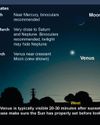
ASTRONOMY FOR BEGINNERS
RETURN OF THE EVENING STAR (VENUS)
1 mins
March 2026

BBC Science Focus
CAN YOU STOP YOUR SENSE OF TASTE DULLING AS YOU AGE?
Sometimes I hear people say that food just doesn't taste the same as they get older. It's tempting to blame this on age, but there are other factors at play, too.
1 mins
March 2026
BBC Science Focus
MICROBIOMES OF THE SUPERAGERS
BY STUDYING THE INCREASING NUMBER OF PEOPLE WHO ARE LIVING BEYOND THEIR 100TH BIRTHDAYS, SCIENTISTS ARE DISCOVERING THAT THE SECRET TO REACHING A RIPE OLD AGE IN RUDE HEALTH MIGHT LIE IN OUR GUTS
8 mins
March 2026

BBC Science Focus
HOW BIG WERE MEDIEVAL WAR HORSES?
You might picture knights charging into battle on towering steeds, but medieval horses were typically no bigger than modern-day ponies.
1 min
March 2026
BBC Science Focus
FORCES OF HABIT
Could new research on setting up healthy habits resuscitate those stuttering New Year resolutions?
3 mins
March 2026

BBC Science Focus
5 DANGERS HIDING IN YOUR PROCESSED FOOD
We all know that ultra-processed foods are bad for us, but what ingredients should we particularly try to avoid? And what are they doing to our bodies?
9 mins
March 2026
BBC Science Focus
Mosquitoes are becoming thirstier for human blood
Habitat loss may be pushing mosquitoes towards human hosts with deadly consequences
1 mins
March 2026

BBC Science Focus
HOW CAN I GET OVER MY EX?
Relationship breakups can be brutal, just look at the popularity of songs like 'Someone Like You' by Adele, or all the covers of 'Cry Me a River' by Julie London.
1 mins
March 2026
Translate
Change font size