
Magzter GOLD ile Sınırsız Olun
Sadece 9.000'den fazla dergi, gazete ve Premium hikayeye sınırsız erişim elde edin
Denemek ALTIN - Özgür
SAVE THE SHARKS...SAVE THE OCEANS
BBC Science Focus
|October 2024
RUTHLESS PREDATORS, MINDLESS KILLERS, MAN-EATERS... SHARKS HAVE A FEARSOME REPUTATION THAT BEARS LITTLE RELATION TO REALITY. THE TRUTH IS, THESE REMARKABLE CREATURES ARE STRUGGLING TO SURVIVE. BUT OUR WATERS WON'T BE ANY SAFER WITHOUT THEM. IN FACT, THE PLANET'S SEAS WILL BE IN EVEN GREATER JEOPARDY THAN THEY ALREADY ARE

Each morning, hundreds of thousands of fishing vessels head into the waters around Indonesia.
The country, comprising around 17,000 islands with a combined coastline of almost 100,000km (about 62,000 miles), is one of the world's fishing superpowers and, in recent decades, has grown in strength.
The country has established a reputation for providing quality tuna, shrimp and crab to high-end restaurants around the world. But behind this economic and culinary success story is an uncomfortable truth: Indonesia ranks among the world's top shark-killing nations, catching an estimated 100,000 metric tonnes (98,400 tons) of shark a year, which is contributing to an alarming global decline in shark numbers.
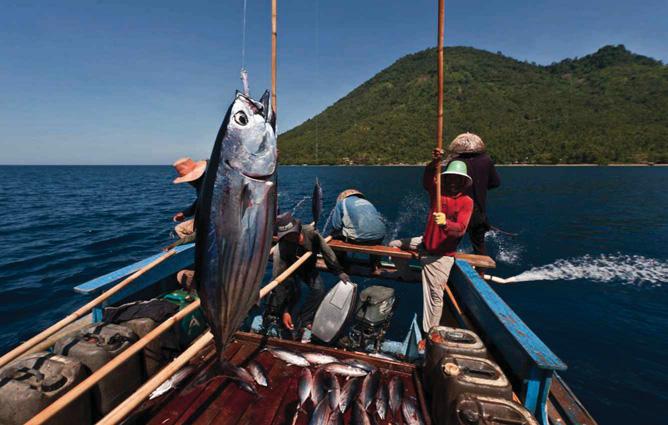 "The biggest threat to sharks currently is fishing," says Dr Colin Simpfendorfer of the University of Tasmania's Institute for Marine and Antarctic Studies. "Its impact dwarfs any of the other impacts for almost all species.
Too many sharks are dying in fisheries." The issue is by no means exclusive to Indonesian waters. Across the planet, an estimated 100 million sharks are killed annually either intentionally or as bycatch. That's one shark per 80 people - a colossal figure that's almost impossible to comprehend.
According to an article published in Nature, the global abundance of oceanic sharks and rays has declined by 71 per cent since 1970 and, as reported in a 2021 analysis in Current Biology, one-third of sharks and rays are now threatened with extinction. Historically, that decline has been largely attributed to overfishing, but it's not the only activity putting pressure on shark populations today. "New threats such as shipping, offshore wind farms and climate change are also affecting populations," says Dr James Sulikowski, director of the Coastal Oregon Marine Experiment Station in the US.

Bu hikaye BBC Science Focus dergisinin October 2024 baskısından alınmıştır.
Binlerce özenle seçilmiş premium hikayeye ve 9.000'den fazla dergi ve gazeteye erişmek için Magzter GOLD'a abone olun.
Zaten abone misiniz? Oturum aç
BBC Science Focus'den DAHA FAZLA HİKAYE

BBC Science Focus
HOW FISH COULD SAVE MILLIONS OF PEOPLE'S SIGHT
There's nowhere near enough donors to meet the demand for corneal transplants. A pioneering treatment that relies on fish scales could change that

3 mins
May 2026

BBC Science Focus
Your Wi-Fi is lying to you
Wi-Fi 7's giant speed claims might look impressive, but the realities of our homes – and the laws of physics – mean that real-world performance will never get close
6 mins
May 2026

BBC Science Focus
WHICH ANIMAL IS MOST LIKELY TO ESCAPE FROM THE ZOO?
Have you heard the one about the monkey and the Yorkshire pudding?
2 mins
May 2026

BBC Science Focus
THE BLACK SERVAL
The black serval (Leptailurus serval) is an unusual, melanistic version of the African serval, a medium-sized wild cat that's native to Africa.
2 mins
May 2026

BBC Science Focus
Cryosleep vs hibernation: What's the difference?
When hibernating animals, such as hedgehogs and dormice, disappear for winter, they don't freeze like the Siberian salamander.
1 mins
May 2026

BBC Science Focus
Space brain
The greatest names in science are often said to be 'big-brained', but this cosmic wonder puts them all to shame. Nebula PMR 1 - otherwise known as the 'Exposed Cranium' nebula for its distinctive shape - measures around 3.2 light-years across.
1 min
May 2026

BBC Science Focus
Your most draining relationships are taking years off your life, study suggests
Difficult people don't just zap your energy - they may also accelerate your biological ageing
4 mins
May 2026

BBC Science Focus
DOES EARTH HAVE A HEARTBEAT?
Move over, Ringo Starr.
1 mins
May 2026

BBC Science Focus
WEIGHT-LOSS DRUGS FOR ALL?
The obesity crisis is ruining lives and costing governments trillions. But some healthcare experts think there's now a radical solution: roll out GLP-1 jabs to everyone who needs them for free. Could it work?
9 mins
May 2026
BBC Science Focus
HOW TO SEE VENUS ON APPROACH TO JUPITER
Venus has been slowly moving away from the Sun's glare over the past few weeks, heading into the evening twilight after sunset.
1 mins
May 2026
Listen
Translate
Change font size