Denemek ALTIN - Özgür
Kashmir's Timeless Hamlet
Outlook
|October 11, 2024
Vishal Bhardwaj's film Haider, released ten years ago, remains as relevant now as It was then because It shows nothing Is normal’ in Kashmir

AROUND the halfway mark in Vishal Bhardwaj's Haider (2014), we enter Faraz Cinema. "Main hun diwaana tere pyaar ka, peecha na chhodunga tera," sings Salman Khan, like a dutiful stalker, on screen. A wide shot shows the Indian Army officers, as viewers, enduring varied stages of boredom-some drinking, some sleeping, some barely awake. Then, a door opens, and convicts line up in front of the screen. An officer signals the projectionist to stop; the interrogation-or the real film-has to start.
This Hamlet adaptation, much like its setting, Kashmir, inverts conventions, mocks normalcy, and distorts identities.
So a theatre, promising freedom from the captivity of mundane life, functions as a prison. The multiplicity of identities here isn't just restricted to inanimate things.
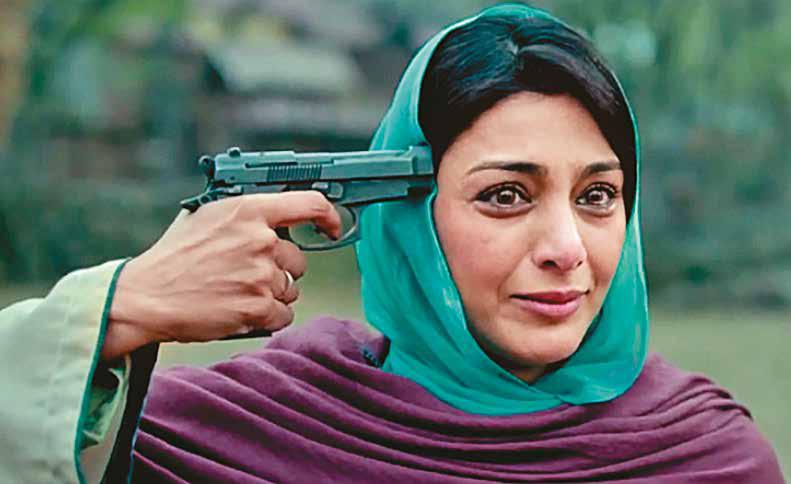 Because in the same theatre, Haider's father, "Doctor" (Narendra Jha), notices an "aasteen ka saanp"-a man whom he considered bhai, Khurram (Kay Kay Menon), morphed into the Army's informer-a brother turned betrayer. In a drama centred on a conflict-torn land, coveted by two countries, it makes poetic and perfect sense that dualities define Haider.
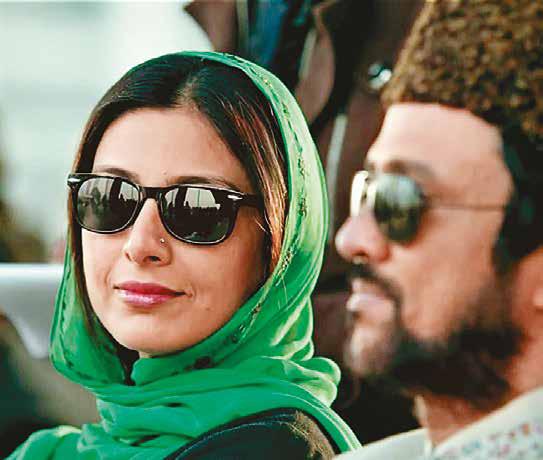
Consider its more literal example: the Army officials stopping and checking the IDs of regular Kashmiris, reminding them that they need permission to enter their own homes. Or making them feel, as a character says later, that "All of Kashmir is a prison". These ID checks, even more than the Faraz Cinema scene, examine and extrapolate identity and duality, as the 'correct' documents make all the difference: between allowed and detained, insider and infiltrator, home and prison.


Bu hikaye Outlook dergisinin October 11, 2024 baskısından alınmıştır.
Binlerce özenle seçilmiş premium hikayeye ve 9.000'den fazla dergi ve gazeteye erişmek için Magzter GOLD'a abone olun.
Zaten abone misiniz? Oturum aç
Outlook'den DAHA FAZLA HİKAYE

Outlook
Watch the Ball
I remember playing cricket as a seven-year-old in the cricket grounds across the road from our apartment building in north London.

4 mins
February 11, 2026
Outlook
History of Sound
From villages to the national squad, India's blind women cricketers battled disability, patriarchy and caste to win the inaugural World Cup. Beyond sport, their journeys reveal their fight for dignity
6 mins
February 11, 2026

Outlook
One Battle After Another
Women's cricket in Jharkhand is not built on infrastructure, funding or institutional care. It has survived on endurance and sacrifice
5 mins
February 11, 2026

Outlook
“Fix the Pipeline, Not the Pay Cheque”
When Doorva Bahuguna played cricket in the late 1980s and ’90s, there was no money, little recognition, and no illusion that the sport could become a career. You played, she says, because something inside you demanded it. Today, women’s cricket in India has a league, salaries, sponsors, and visibility—but also new constraints, new narratives, and familiar battles over agency, safety and femininity. In conversation with Lalita Iyer, Bahuguna—who captained Andhra Pradesh’s sub-junior, junior and senior cricket teams and later built a corporate career—speaks candidly about why grassroots matter more than pay parity, how sport reshapes women's sense of self; and why the real revolution in women’s cricket is still unfinished.
5 mins
February 11, 2026

Outlook
Where Roses Bloom
If the oligarchs return to Venezuela, the social housing will go, the public schools will go, the healthcare clinics will go, the food parcels will go, and the forests will be cut down
6 mins
February 11, 2026
Outlook
Baramati's Dada
Ajit Pawar's sudden death leaves a power vacuum, but for people, especially from rural pockets in and around Baramati, who considered him a grassroots strongman, the loss is more profound
5 mins
February 11, 2026

Outlook
The Foreigner India Came to Trust
The Indian media fraternity appears unable to live up to Mark Tully's standards of balance, honesty, trustworthiness and credibility
3 mins
February 11, 2026
Outlook
'Mother of all Trade Deals'
The EU-India trade agreement is an economic bonanza as it will merge two of the world's largest economic blocs into a single trade zone
3 mins
February 11, 2026

Outlook
Fiery Kolhapuri
Pratiksha Pawar's cricketing journey is a reminder that dreams know no boundaries
6 mins
February 11, 2026

Outlook
Spice Girls
In the once nondescript villages of Wayanad, cricket is no longer just a sport. It has become a way to dream and to rise above the limits of geography, poverty and custom
6 mins
February 11, 2026
Listen
Translate
Change font size