
Magzter GOLD ile Sınırsız Olun
Sadece 9.000'den fazla dergi, gazete ve Premium hikayeye sınırsız erişim elde edin
Learn Lisp Programming Using MCUs - Part 2: Extending µLisp with Custom Functions
Circuit Cellar
|February 2025
In the second installment of this series, Raul delves into the world of µLisp and shows how to extend capabilities by adding custom functions such as "pulsein" and "servo-create", enabling developers to interface with ultrasonic sensors and control servomotors. In Part 1, Raul presented µLisp concepts and syntax, and extensions specific to MCUs.
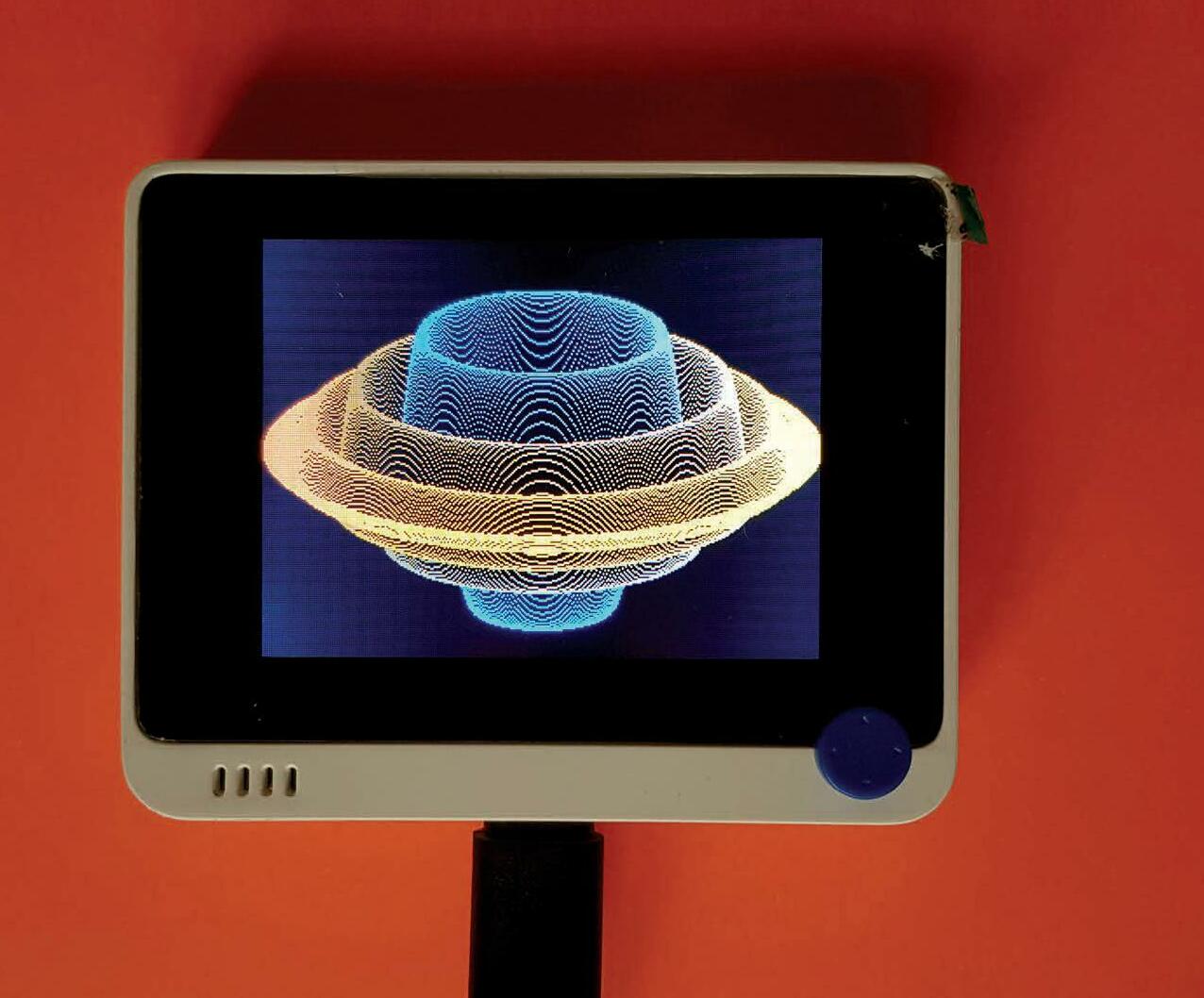
μLisp is a dialect of the Lisp programming language. It is tailored to microcontrollers having limited amounts of RAM, and can be run on various platforms—from the Arduino Uno based on the ATmega328, up to the Teensy 4.0/4.1 [1]. To follow the topics discussed here, you need to be acquainted with the Arduino platform and any programming language from the Lisp family. Please see Part 1 of this article series (“Crash Course Offers Insight into Pioneering Language,” Circuit Cellar 411, October, 2024) for a brief introduction to Lisp programming and the µLisp dialect [2].
With µLisp, it is possible to add your own extension functions, such that they appear as built into the language after re-compiling and flashing the µLisp interpreter to your Arduino board. There’s an excellent tutorial on how to do this on the µLisp website [3]. I will build on that tutorial to discuss how to add custom functions. For the examples presented here, I will continue to use Seeed Studio’s Wio Terminal MCU development board; but the information discussed also can be applied to other µLisp-supported Arduino boards.
EXTENDING µLISP
In general, any function not supported by default in µLisp can possibly be added as an extension to the language—for instance, hardware access functions for servomotor control. Let’s explore a simple example to help us understand how the language extension system works.
Listing 1 shows the Arduino C code for adding the pulsein extension to µLisp, which is not available by default. This extension will make it possible to measure digital pulse widths. Five sections of the listing show the µLisp extensions structure. Like the core µLisp interpreter, extensions are also written in Arduino C language. So, any extensions to the interpreter imply basically writing C code. That makes adding them straightforward, using the Arduino C language built-in functions and external libraries.


Bu hikaye Circuit Cellar dergisinin February 2025 baskısından alınmıştır.
Binlerce özenle seçilmiş premium hikayeye ve 9.000'den fazla dergi ve gazeteye erişmek için Magzter GOLD'a abone olun.
Zaten abone misiniz? Oturum aç
Circuit Cellar'den DAHA FAZLA HİKAYE
Circuit Cellar
The Future of Sensors in Safety Systems Sensing the Stop
How Magnetic Sensors Are Enabling the Next Generation of Braking Systems

5 mins
December 2025

Circuit Cellar
Alif Semiconductor Elevates Generative AI at the Edge with New Support for ExecuTorch Runtime in Its Ensemble MCUs
Alif Semiconductor, the leading global supplier of secure, connected, power efficient Artificial Intelligence and Machine Learning (AI/ML) microcontrollers (MCUs) and fusion processors, announced that developers can now use the ExecuTorch Runtime, a quantization extension of the popular PyTorch ML framework, for AI applications built to run on its Ensemble E4/E6/E8 series of MCUs and fusion processors.
1 min
December 2025

Circuit Cellar
Encrypted MQTT Protocol for Critical Sectors
Mechanisms, Challenges, and Best Practices
3 mins
December 2025

Circuit Cellar
Datasheet: Small Size, Big Power
Smaller Microcontrollers Bring New Possibilities
9 mins
December 2025

Circuit Cellar
Analog Devices Launches ADI Power Studio and New Web-Based Tools
Analog Devices, Inc. (ADI), a global semiconductor leader, announced the launch of ADI Power Studio, a comprehensive family of products that offers advanced modeling, component recommendations, and efficiency analysis with simulation.
1 mins
December 2025
Circuit Cellar
Compact IBR300 2.5" SBC Powered by NXP i.MX 93 from IBASE
IBASE Technology, Inc., a leading provider of rugged embedded computing platforms, announced the release of the IBR300, a 2.5\" RISC-based single board computer (SBC) powered by the NXP i.MX 93 processor with dualcore ARM Cortex-A55 (up to 1.7GHz) and a Cortex-M33 MCU.
1 min
December 2025

Circuit Cellar
Sensors in the Spotlight
The Next Decade of Embedded Sensor Systems
12 mins
December 2025

Circuit Cellar
Bob's Wrap Up
In Bob's last article with Circuit Cellar, he attempts to wrap up a career of more than 50 years as an embedded systems engineer and 14 years with Circuit Cellar. He looks at each of his 58 articles by category and provides some recommendations for his fellow engineers.
7 mins
December 2025

Circuit Cellar
Designing Embedded Software Architectures That Last
I've reviewed hundreds of firmware projects over the years, and one thing always stands out: the most successful projects have a clear, deliberate architecture.
10 mins
December 2025

Circuit Cellar
Broadcom Introduces Industry's First Wi-Fi 8 Silicon Ecosystem Powering the AI Era
Broadcom, Inc. unveiled the first Wi-Fi 8 silicon solutions for broadband wireless, targeting residential gateways, enterprise access points, and smart mobile clients.
1 mins
December 2025
Listen
Translate
Change font size