Prøve GULL - Gratis
Learn Lisp Programming Using MCUs - Part 2: Extending µLisp with Custom Functions
Circuit Cellar
|February 2025
In the second installment of this series, Raul delves into the world of µLisp and shows how to extend capabilities by adding custom functions such as "pulsein" and "servo-create", enabling developers to interface with ultrasonic sensors and control servomotors. In Part 1, Raul presented µLisp concepts and syntax, and extensions specific to MCUs.
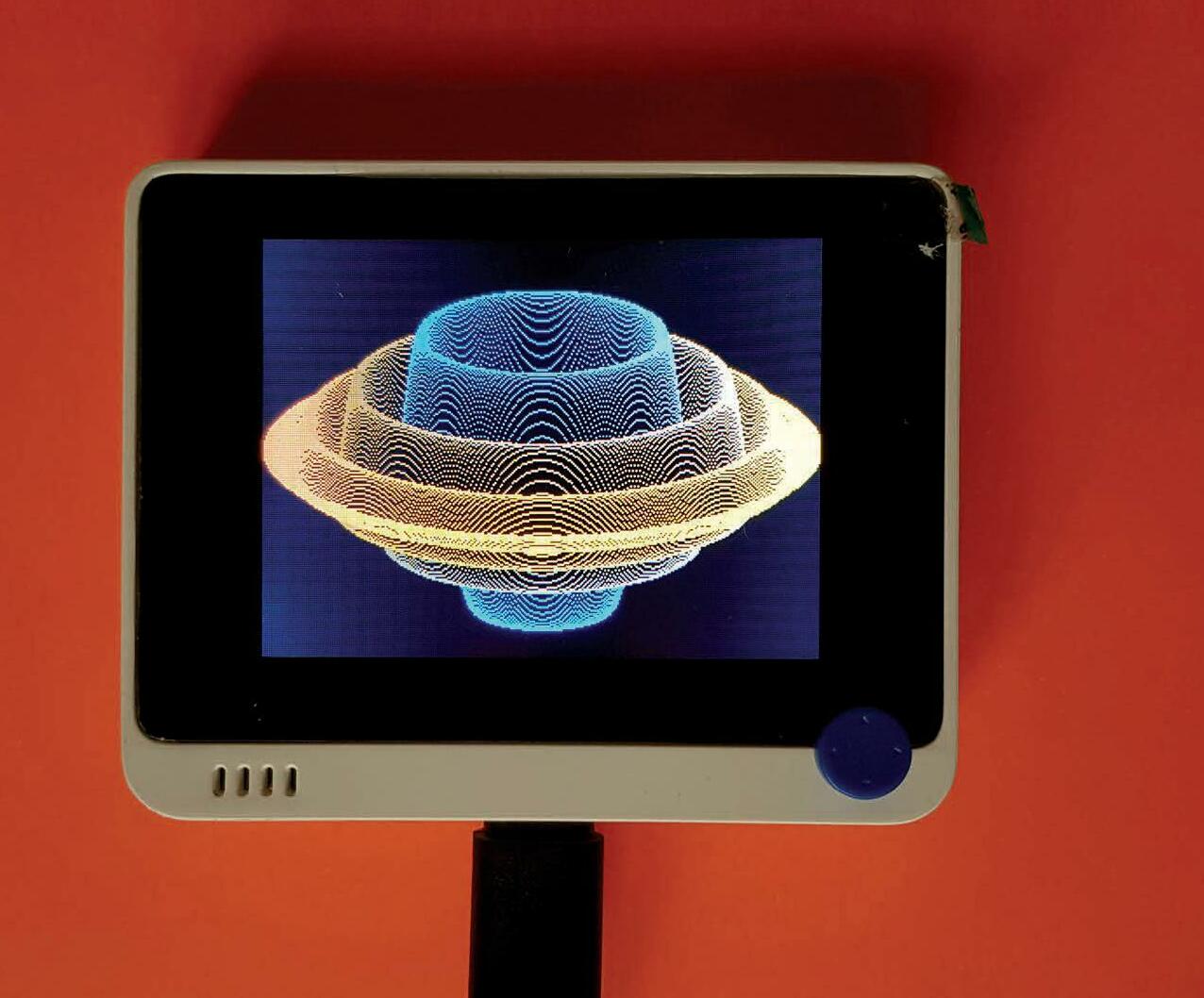
μLisp is a dialect of the Lisp programming language. It is tailored to microcontrollers having limited amounts of RAM, and can be run on various platforms—from the Arduino Uno based on the ATmega328, up to the Teensy 4.0/4.1 [1]. To follow the topics discussed here, you need to be acquainted with the Arduino platform and any programming language from the Lisp family. Please see Part 1 of this article series (“Crash Course Offers Insight into Pioneering Language,” Circuit Cellar 411, October, 2024) for a brief introduction to Lisp programming and the µLisp dialect [2].
With µLisp, it is possible to add your own extension functions, such that they appear as built into the language after re-compiling and flashing the µLisp interpreter to your Arduino board. There’s an excellent tutorial on how to do this on the µLisp website [3]. I will build on that tutorial to discuss how to add custom functions. For the examples presented here, I will continue to use Seeed Studio’s Wio Terminal MCU development board; but the information discussed also can be applied to other µLisp-supported Arduino boards.
EXTENDING µLISP
In general, any function not supported by default in µLisp can possibly be added as an extension to the language—for instance, hardware access functions for servomotor control. Let’s explore a simple example to help us understand how the language extension system works.
Listing 1 shows the Arduino C code for adding the pulsein extension to µLisp, which is not available by default. This extension will make it possible to measure digital pulse widths. Five sections of the listing show the µLisp extensions structure. Like the core µLisp interpreter, extensions are also written in Arduino C language. So, any extensions to the interpreter imply basically writing C code. That makes adding them straightforward, using the Arduino C language built-in functions and external libraries.


Denne historien er fra February 2025-utgaven av Circuit Cellar.
Abonner på Magzter GOLD for å få tilgang til tusenvis av kuraterte premiumhistorier og over 9000 magasiner og aviser.
Allerede abonnent? Logg på
FLERE HISTORIER FRA Circuit Cellar

Circuit Cellar
IDES Converge Toward VS Code
Your Next IDE Might Look Very Familiar

12 mins
April 2026

Circuit Cellar
New KYOCERA AVX Capacitors for Optical Communications
KYOCERA AVX, a leading global manufacturer of advanced electronic components engineered to accelerate technological innovation and build a better future, has expanded its selection of 550/560 Series ultra-broadband capacitors to better satisfy surging cross-market demand for high-speed, high-bandwidth optical communication systems.
2 mins
April 2026

Circuit Cellar
Wireless Convergence Reshaping Autonomous Transportation
The future of transportation will not be defined by a single technology milestone.
4 mins
April 2026

Circuit Cellar
STMicroelectronics' New STM32 Series Redefines Entry-Level Microcontroller Performance and Value for Smart Devices Everywhere
STMicroelectronics (ST), a global semiconductor leader serving customers across the spectrum of electronics applications, has announced a new generation of entry-level microcontrollers (MCUs) to boost the performance of billions of tiny smart devices throughout factories, homes, cities, and infrastructures while meeting cost, size, and power limitations.
1 min
April 2026

Circuit Cellar
Datasheet: Haptic Components Things That Go Buzz in the App
Haptic Devices Bring Physical Feedback to the Human Interface
7 mins
April 2026

Circuit Cellar
Software-Defined Systems
Reshaping the Future of Modern Cars
7 mins
April 2026

Circuit Cellar
Vishay Intertechnology Phototransistor Optocouplers Deliver Accuracy and Energy Efficiency for Industrial Applications
Vishay Intertechnology, Inc. introduced a new series of phototransistor optocouplers that combine a high and linear current transfer ratio (CTR) over temperature with a low forward current of 0.5mA.
1 mins
April 2026

Circuit Cellar
B MCU Real-Time Tracing
How to Trace MCU Code in (Almost) Real Time
13 mins
April 2026

Circuit Cellar
Getting Started with Zephyr RTOS
Sometimes, too much can be just enough. In this article, Jacob shows why learning an RTOS that's more than you need can be just what you need for your growing skillset.
8 mins
April 2026

Circuit Cellar
A Tribute to Robert Tinney
A Captivating Artist in the Early Days of Circuit Cellar
3 mins
April 2026
Listen
Translate
Change font size