
Magzter GOLD ile Sınırsız Olun
Sadece 9.000'den fazla dergi, gazete ve Premium hikayeye sınırsız erişim elde edin
Denemek ALTIN - Özgür
ACID REFLUX
The New Yorker
|January 29, 2024
When America first went tripping.

One evening in September of 1957, viewers across America could turn on their television sets and tune in to a CBS broadcast during which a young woman dropped acid. She sat next to a man in a suit: Sidney Cohen, the researcher who had given her the LSD. The woman wore lipstick and nail polish, and her eyes were shining. "I wish I could talk in Technicolor," she said. And, at another point, "I can see the molecules. I... I'm part of it. Can't you see it?" "I'm trying," Cohen replied.
Were some families maybe-oh, I don't know-eating meat loaf on TV trays as they watched this nice lady undergo her mind-bending, molecule-revealing journey through inner space? Did they switch to "Father Knows Best" or "The Perry Como Show" afterward? One of the feats that the historian Benjamin Breen pulls off in his lively and engrossing new book, "Tripping on Utopia: Margaret Mead, the Cold War, and the Troubled Birth of Psychedelic Science" (Grand Central), is to make a cultural moment like the anonymous woman's televised trip seem less incongruous, if no less fascinating.
In Breen's telling, the buttoned-down nineteen-fifties, not the freewheeling nineteen-sixties, brought together the ingredients, some of them toxic, for the first large-scale cultural experiment with consciousness-expanding substances.
The psychedelic flowering of the sixties has, it turns out, a prequel-a rich and partly forgotten chapter before the hippie movement, before the shamanistic preening and posturing of Timothy Leary, and before the war on drugs shut all that down. This earlier history encompasses not only the now notorious C.I.A. research into mind-altering drugs but also a lighter, brighter, more public dimension of better living through chemistry, buoyed by postwar scientific optimism and public reverence for expertise. "Timothy Leary and the Baby Boomers did not usher in the first psychedelic era," Breen writes.


Bu hikaye The New Yorker dergisinin January 29, 2024 baskısından alınmıştır.
Binlerce özenle seçilmiş premium hikayeye ve 9.000'den fazla dergi ve gazeteye erişmek için Magzter GOLD'a abone olun.
Zaten abone misiniz? Oturum aç
The New Yorker'den DAHA FAZLA HİKAYE
The New Yorker
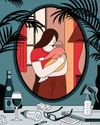
HOW SHOULD A MOTHER BE?
We keep revising the maternal ideal—and keep falling short of it.

11 mins
January 26, 2026

The New Yorker
THE VERMONTER
What happened when Bernie Sanders left Brooklyn for Burlington.
16 mins
January 26, 2026

The New Yorker
BREAKING NEWS
Inside Bari Weiss's hostile takeover at CBS.
37 mins
January 26, 2026
The New Yorker
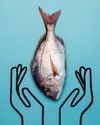
SCHOOL OF FISH
On the water with a Southern California seafood savant.
7 mins
January 26, 2026

The New Yorker
COLD COMFORT
The wintry triumphs of Helene Schjerfbeck.
6 mins
January 26, 2026

The New Yorker
WON'T BACK DOWN
The stubborn songs of Zach Bryan.
6 mins
January 26, 2026
The New Yorker
POWER AND PROTEST
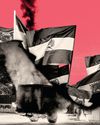
On January 8th, the twelfth day of mass protests in Iran, which began when shopkeepers, responding to runaway inflation, closed Tehran’s Grand Bazaar, the Iranian government shut down public access to the internet, further shrouding an already largely closed society. Nevertheless, isolated images and details have been smuggled out, giving a hint of how brutal and monumental these events are.
4 mins
January 26, 2026
The New Yorker
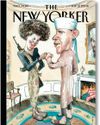
Vinson Cunningham on Barry Blitt's "The Politics of Fear"
I was in a yellow cab in high summer when I saw it. Twenty-three at the time, I sometimes skimmed articles about politics on my clunky BlackBerry while cruising through Central Park to my first real job, fundraising for Barack Obama’s 2008 Presidential campaign. Usually, the ride was placid.
2 mins
January 26, 2026

The New Yorker
SHOW OF FORCE
After a chaotic visit to an ICE jail, a congresswoman faces felony charges in Trump's war against his critics.
37 mins
January 26, 2026
The New Yorker
THE ICE CURTAIN
Nome, Alaska, seems farther from Russia than ever.
26 mins
January 26, 2026
Listen
Translate
Change font size