Versuchen GOLD - Frei
ACID REFLUX
The New Yorker
|January 29, 2024
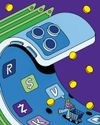
When America first went tripping.

One evening in September of 1957, viewers across America could turn on their television sets and tune in to a CBS broadcast during which a young woman dropped acid. She sat next to a man in a suit: Sidney Cohen, the researcher who had given her the LSD. The woman wore lipstick and nail polish, and her eyes were shining. "I wish I could talk in Technicolor," she said. And, at another point, "I can see the molecules. I... I'm part of it. Can't you see it?" "I'm trying," Cohen replied.
Were some families maybe-oh, I don't know-eating meat loaf on TV trays as they watched this nice lady undergo her mind-bending, molecule-revealing journey through inner space? Did they switch to "Father Knows Best" or "The Perry Como Show" afterward? One of the feats that the historian Benjamin Breen pulls off in his lively and engrossing new book, "Tripping on Utopia: Margaret Mead, the Cold War, and the Troubled Birth of Psychedelic Science" (Grand Central), is to make a cultural moment like the anonymous woman's televised trip seem less incongruous, if no less fascinating.
In Breen's telling, the buttoned-down nineteen-fifties, not the freewheeling nineteen-sixties, brought together the ingredients, some of them toxic, for the first large-scale cultural experiment with consciousness-expanding substances.
The psychedelic flowering of the sixties has, it turns out, a prequel-a rich and partly forgotten chapter before the hippie movement, before the shamanistic preening and posturing of Timothy Leary, and before the war on drugs shut all that down. This earlier history encompasses not only the now notorious C.I.A. research into mind-altering drugs but also a lighter, brighter, more public dimension of better living through chemistry, buoyed by postwar scientific optimism and public reverence for expertise. "Timothy Leary and the Baby Boomers did not usher in the first psychedelic era," Breen writes.


Diese Geschichte stammt aus der January 29, 2024-Ausgabe von The New Yorker.
Abonnieren Sie Magzter GOLD, um auf Tausende kuratierter Premium-Geschichten und über 9.000 Zeitschriften und Zeitungen zuzugreifen.
Sie sind bereits Abonnent? Anmelden
WEITERE GESCHICHTEN VON The New Yorker
The New Yorker
SEVERANCE
The end of the government's compact with universities.

30 mins
March 16, 2026
The New Yorker
THE CITY IS A GRAVEYARD
It is late August, at the time of day when the air in New Orleans is heavy, hard to take in and harder to let out.
17 mins
March 16, 2026
The New Yorker
JUST ONE
What makes monotheism so powerful?
16 mins
March 16, 2026
The New Yorker
VALLEY BOY
The worlds of Paul Thomas Anderson.
16 mins
March 16, 2026

The New Yorker
COUNTRY BUFFET
Winter in Vermont's Northeast Kingdom.
7 mins
March 16, 2026

The New Yorker
SWEET NOTHINGS
People are using A.I. companions for love, sex, and friendship. Is everyone hanging out without you?
34 mins
March 16, 2026

The New Yorker
LYING LOW
What everyday life was like in wartime Berlin.
13 mins
March 16, 2026

The New Yorker
LEAVE IT TO BEAVERS
\"Hoppers.\"
6 mins
March 16, 2026

The New Yorker
THE HATING GAME
In \"Giant,\" Mark Rosenblatt takes on Roald Dahl and his antisemitism.
23 mins
March 16, 2026
The New Yorker
PAY LATER
The gutting of the Consumer Financial Protection Bureau.
26 mins
March 16, 2026
Listen
Translate
Change font size