Denemek ALTIN - Özgür
“lo Saturnalia!"
All About History UK
|Issue 150
What was the 'Roman Christmas"?

It’s the dark of midwinter but all around you are bright candles – gifts have been exchanged, you’re digging in to a hearty meal and you’re surrounded by friends and family, many of whom might be a little the worse for drink. The mood is jolly and relaxed, no one has to work today and everyone can enjoy themselves as they see fit. Outside, you can hear people walking up the street singing songs of the season, but they aren’t Christmas carols. No, this celebration is Saturnalia, the multi-day festival of the god of farming and the harvest and, as you can likely tell, a celebration that had a lot of influence on religious holidays that followed.
As the name implies, Saturnalia was a celebration of Saturn, the Roman god of farming and the harvest. It was originally honoured on 19 December each year, according to the old Roman calendar, to coincide with the end of the winter sowing season. Columella, a Roman soldier and farmer who wrote extensively about Roman agriculture, states that a farmer should be done with planting their autumn crops by the beginning of December. As such, this was a natural time to rest and relax in the lead up to the solstice, before the work of the farm would pick up once again.
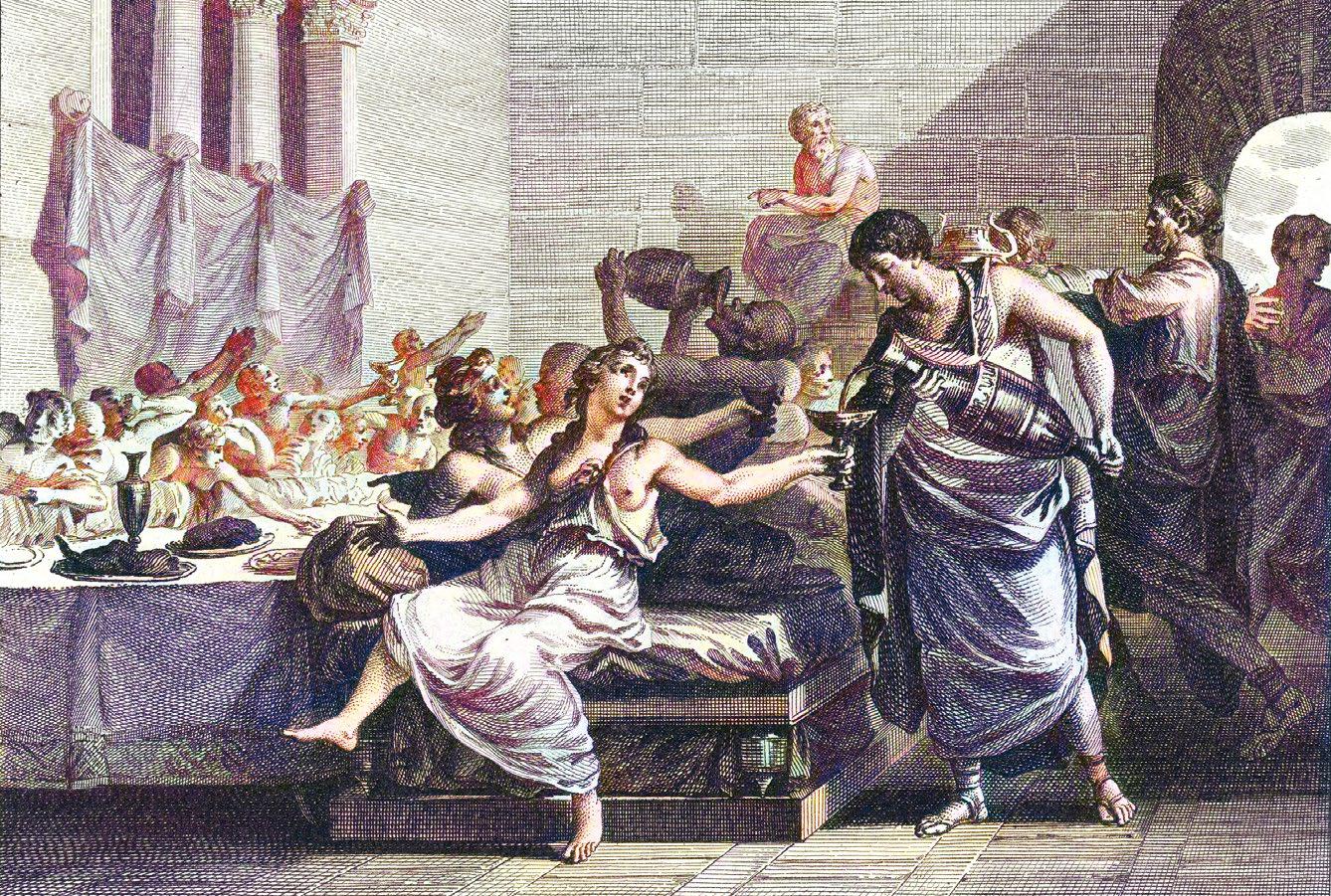 Who was Saturn?
A quick guide to the god of the harvest
Saturn was the god of sowing and by extension the god of farmers and harvests for the ancient Romans. He was connected to the Greek Titan Cronus, who had been exiled from Olympus by Zeus. In Roman mythology he went on to a more peaceful life as the ruler of Latium, the region in which Rome was established, and taught the local people to cultivate the land.

Bu hikaye All About History UK dergisinin Issue 150 baskısından alınmıştır.
Binlerce özenle seçilmiş premium hikayeye ve 9.000'den fazla dergi ve gazeteye erişmek için Magzter GOLD'a abone olun.
Zaten abone misiniz? Oturum aç
All About History UK'den DAHA FAZLA HİKAYE

All About History UK
SOUTHERN FRIED CHICKEN
UNITED STATES, 18-19TH CENTURY

2 mins
Issue 168
All About History UK
16 CRUEL & UNUSUAL PUNISHMENTS
SOME OF HISTORY'S MOST BARBARIC AND TWISTED WAYS TO HAND OUT 'JUSTICE'
7 mins
Issue 168

All About History UK
NUCLEAR WEAPONS AN INTERNATIONAL HISTORY
Explore the role and impact of this deadly technology during the Cold War
1 mins
Issue 168

All About History UK
WHAT IF...HITLER HAD NOT KILLED HIMSELF?
The Nazi leader decides to look his enemies in the eye in defence of his beloved Fatherland
8 mins
Issue 168

All About History UK
LIVING WITH THE DEAD
A new publication explores the history of funerary sites and traditions
2 mins
Issue 168
All About History UK
THE MODERNISING OF JAPAN
How the Meiji Restoration rapidly changed the nation from a feudal state into a regional power
12 mins
Issue 168

All About History UK
HOW TO FLY A SPITFIRE
A joyous breakdown of Britain's groundbreaking fighter aircraft
1 min
Issue 168

All About History UK
BOUDICA
Why does this biopic of a legendary queen veer off so far into myth
1 min
Issue 168

All About History UK
The Real Colonel Sanders Kentucky Fried Legend
At the age of 65 an unknown entrepreneur defied the odds and established a global fast food empire
11 mins
Issue 168
All About History UK
Betrayal, Romance & Power ELIZABETH'S COURT
Uncover the shadow politics and throne-flattering that held sway over Tudor England
15 mins
Issue 168
Listen
Translate
Change font size