Denemek ALTIN - Özgür
Softening the blow
Down To Earth
|August 16, 2020
In absence of a robust forecasting infrastructure, mobile phones can improve climate resilience of African farmers

NO CONTINENT will be struck as severely by climate change as Africa, estimates the UN Environment Programme. This will definitely wreak havoc in the lives of farmers who depend on rainfall for agriculture. To adjust to the new climate reality, farmers urgently need a reliable and regular weather information service.
Recent estimates indicate that Africa has less than 2,000 AWSs, with less than a quarter of those meeting the World Meteorological Organization’s (WMO) technical requirements. On an average, one AWS in Africa covers 27,000 sq km.
The problem is that the distribution of weather stations across the continent is too uneven to have the required impact. While South Africa, spanning 1.2 million sq km, has the lion’s share of the weather station network in Africa, it is almost non-existent in subSaharan Africa. South Africa, the southern most country in the continent, has 550 automatic weather stations (AWSs), apart from 2,000 manually operated rainfall gauges.
WMO considers that generating reliable climate services requires eight times the stations currently available—that means 12,000 new stations across Africa. For this, the World Bank estimates an additional investment of US $1 billion, and $400-500 million per year for staff, operations and maintenance.
Peter Johnson, climate scientist at the University of Cape Town, South Africa, points at the trend over the past decade which shows a shrinking number of reliable weather stations. Apart from the upfront cost of $1,000, the maintenance cost of an AWS is high— two or three times the upfront cost. “Also, there is the menace of vandalism which must be considered,” he says.
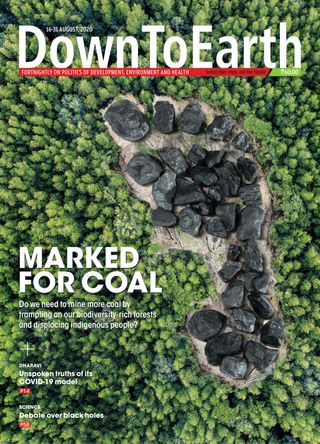

Bu hikaye Down To Earth dergisinin August 16, 2020 baskısından alınmıştır.
Binlerce özenle seçilmiş premium hikayeye ve 9.000'den fazla dergi ve gazeteye erişmek için Magzter GOLD'a abone olun.
Zaten abone misiniz? Oturum aç
Down To Earth'den DAHA FAZLA HİKAYE

Down To Earth
THE GREAT PIVOT
China's moves to transition to clean energy offer critical lessons to India

4 mins
March 01, 2026

Down To Earth
COAL V CORRIDOR
A proposal to mine coal along a corridor that links two tiger reserves in central India is a step away from getting final clearance. The move could affect movement and genetic diversity of tiger populations in the region
8 mins
March 01, 2026

Down To Earth
India's challenging AI predicament
Hobbled by lack of innovation and AI skills in its crucial technology sector, India is focusing on a ruinous plan to host data centres
4 mins
March 01, 2026
Down To Earth
China to implement zero tariffs across Africa
CHINA ON February 14 announced that it will implement zero tariffs for imports from all the 53 African nations it has diplomatic relations with, starting from May 1.
1 min
March 01, 2026
Down To Earth
Poverty, sans the threshold
MEASUREMENT OF poverty is a fundamental exercise, needed to direct development programmes.
2 mins
March 01, 2026
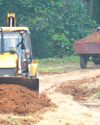
Down To Earth
A bridge across forever
For two decades, a Chhattisgarh village remains stuck in a loop of building temporary river crossings to access markets and sell forest produce
4 mins
March 01, 2026
Down To Earth
Liveable cities need a new model
CRY FOR my Delhi. This is my city—my family records many generations who have lived here.
3 mins
March 01, 2026
Down To Earth
Real impacts of the changing seasons
This refers to the article \"1,500 days, and an alarm for new climate\" (1-15 December, 2025).
1 mins
March 01, 2026

Down To Earth
‘It’s a systematic effort by US to dismantle climate policy’
The US, the world's largest historical emitter of greenhouse gases, has overturned its “endangerment finding”, the legal foundation for regulating emissions under the Clean Air Act since 2009.
4 mins
March 01, 2026
Down To Earth
Amazon turned carbon source in 2023 drought
EXTREME DROUGHT and a prolonged heatwave in 2023 pushed parts of the Amazon rainforest from acting as a carbon sink to becoming a carbon source for three months, according to a February 13 study published in the journal AGU Advances of the American Geophysical Union.
1 min
March 01, 2026
Translate
Change font size