
Gå ubegrenset med Magzter GOLD
Få ubegrenset tilgang til over 9000 magasiner, aviser og premiumhistorier for bare
Softening the blow
Down To Earth
|August 16, 2020
In absence of a robust forecasting infrastructure, mobile phones can improve climate resilience of African farmers

NO CONTINENT will be struck as severely by climate change as Africa, estimates the UN Environment Programme. This will definitely wreak havoc in the lives of farmers who depend on rainfall for agriculture. To adjust to the new climate reality, farmers urgently need a reliable and regular weather information service.
Recent estimates indicate that Africa has less than 2,000 AWSs, with less than a quarter of those meeting the World Meteorological Organization’s (WMO) technical requirements. On an average, one AWS in Africa covers 27,000 sq km.
The problem is that the distribution of weather stations across the continent is too uneven to have the required impact. While South Africa, spanning 1.2 million sq km, has the lion’s share of the weather station network in Africa, it is almost non-existent in subSaharan Africa. South Africa, the southern most country in the continent, has 550 automatic weather stations (AWSs), apart from 2,000 manually operated rainfall gauges.
WMO considers that generating reliable climate services requires eight times the stations currently available—that means 12,000 new stations across Africa. For this, the World Bank estimates an additional investment of US $1 billion, and $400-500 million per year for staff, operations and maintenance.
Peter Johnson, climate scientist at the University of Cape Town, South Africa, points at the trend over the past decade which shows a shrinking number of reliable weather stations. Apart from the upfront cost of $1,000, the maintenance cost of an AWS is high— two or three times the upfront cost. “Also, there is the menace of vandalism which must be considered,” he says.

Denne historien er fra August 16, 2020-utgaven av Down To Earth.
Abonner på Magzter GOLD for å få tilgang til tusenvis av kuraterte premiumhistorier og over 9000 magasiner og aviser.
Allerede abonnent? Logg på
FLERE HISTORIER FRA Down To Earth
Down To Earth
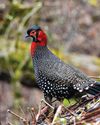
KING OF BIRDS
Revered for centuries, western tragopan now needs protection as its forests shrink, human pressures mount

3 mins
December 16, 2025

Down To Earth
WHISKERS ALL AQUIVER
Climate change threatens creatures that have weathered extreme environments for thousands of years
2 mins
December 16, 2025

Down To Earth
GOLDEN SPIRIT
Survival of the shy primate is closely tied to the health of Western Ghats
3 mins
December 16, 2025

Down To Earth
RINGED EYES IN THE CANOPY
Rapid habitat destruction forces arboreal langur to alter habits
2 mins
December 16, 2025

Down To Earth
HANGING BY THE CLIFF
The Himalaya's rarest wild goat is on the brink of local extinction
2 mins
December 16, 2025

Down To Earth
ANGEL OF THE BEAS
Conservation reserves, citizen science, and habitat protection give the Indus River dolphin a fighting chance in India
2 mins
December 16, 2025

Down To Earth
UNDER MOONLIT SCRUB
Survival of this hidden guardian tells us whether our scrublands still breathe
2 mins
December 16, 2025

Down To Earth
SYMBOL OF SILENT VALLEY
Lion-tailed macaque remains vulnerable despite past victories
2 mins
December 16, 2025

Down To Earth
THE APE IN OUR STORIES
India's only non-human ape species is a cultural icon threatened by forest fragmentation
2 mins
December 16, 2025

Down To Earth
SENTINEL OF THE HIGH COLD DESERT
The bird's evocative call may not continue to roll across the cold desert valley for long
3 mins
December 16, 2025
Translate
Change font size