Denemek ALTIN - Özgür
What Art Can Do
The Atlantic
|December 2019
The power of stories that are unshakably true

All art is political. Intense, fractious times—like our current moment—all art is political. But even during those times when politics and the future of our country itself are not the source of constant worry and anxiety, art is still political. Art lives in the world, and we exist in the world, and we cannot create honest work about the world in which we live without reflecting it. If the work tells the truth, it will live on.
Public Enemy’s “911 Is a Joke,” George Orwell’s 1984, Rodgers and Hammerstein’s whole damn catalog—all are political works that tell the truth.
Yes, Rodgers and Hammerstein. Consider The Sound of Music. It isn’t just about climbing mountains and fording streams. Look beyond the adorable von Trapp children: It’s about the looming existential threat of Nazism. No longer relevant? A GIF of Captain von Trapp tearing up a Nazi flag is something we see 10 times a day on Twitter, because all sorts of Nazis are out there again in 2019. As last spring’s searing Broadway revival of Oklahoma! revealed, lying underneath Hammer stein’s elephant-eye-high corn and chirping birds is a lawless society becoming itself, bending its rules and procedures based on who is considered part of the community (Curly) and who is marginalized (poor Jud … seriously, poor Jud). Or consider your parents’ favorite, South Pacific. At its center, our hero, Nellie Forbush, must confront her own internalized racism when she learns that the new love of her life has biracial children from a previous marriage. Let your parents know if they forgot: Rodgers and Hammerstein musicals form the spine of Broadway’s “golden age,” and they also deeply engage with the politics of their era.
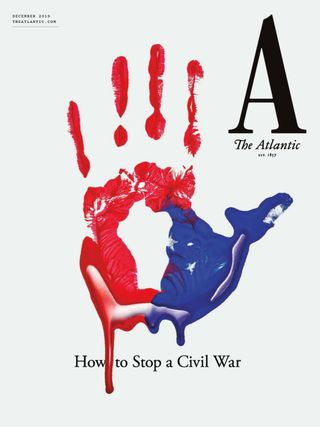

Bu hikaye The Atlantic dergisinin December 2019 baskısından alınmıştır.
Binlerce özenle seçilmiş premium hikayeye ve 9.000'den fazla dergi ve gazeteye erişmek için Magzter GOLD'a abone olun.
Zaten abone misiniz? Oturum aç
The Atlantic'den DAHA FAZLA HİKAYE
The Atlantic
You Had to Be There
An emerging field of history asks if we can ever really understand how our forebears experienced love, anger, fear, and sorrow.

23 mins
January 2026

The Atlantic
By the Horns
The week before the biggest bullfight of her career, in Cádiz, Spain, this past July, 24-year-old Miriam Cabas posted a carefully produced video on Instagram.
1 mins
January 2026

The Atlantic
The New German War Machine
After World War II, Germany embraced pacifism as a form of atonement. Now the country is arming itself again.
18 mins
January 2026
The Atlantic
The Eloquence
The prime minister was watching a disaster movie when we found him.
4 mins
January 2026

The Atlantic
What's for Dinner, Mom?
The women who want to change the way America eats
12 mins
January 2026

The Atlantic
How Terror Works
A 1947 German novel explores the sometimes corrosive, sometimes energizing nature of fear.
8 mins
January 2026

The Atlantic
Yesterday's Idea of a Modern Man
Sam Shepard, a self-made cowboy, was also a poet of masculine angst.
7 mins
January 2026

The Atlantic
ACCOMMODATION NATION
America's colleges have an extra-time-on-tests problem.
11 mins
January 2026

The Atlantic
Respect the Drummer
A new history of rock, told through its overlooked heroes
5 mins
January 2026

The Atlantic
THE MOST POWERFUL MAN IN SCIENCE
WHY IS ROBERT F. KENNEDY JR. SO CONVINCED HE'S RIGHT?
42 mins
January 2026
Translate
Change font size