Denemek ALTIN - Özgür
INFORMATION AS WARFARE
Geopolitics
|May 2020
It seems that Pakistan is always ahead of India in projecting its anti-Delhi viewpoints in international capitals and other international platforms. The reason that India performs in such a lackluster manner on the information front lies both in a systemic lack of understanding of how to wage an information campaign as well as the Modi government’s inability to communicate effectively, points out AMIT GUPTA

In 2019, the Indian government took some very bold and decisive measures: it sent warplanes across the border to Balakot to bomb a terrorist training facility; and then,it finally got rid of Article-370 which had been a running sore on the Indian polity. Yet, despite such bold moves the Indian government got one thing very wrong—it did a poor job of waging an information campaign to let the broader global audience know why it took the steps it did. Instead, in both cases, it allowed Pakistan to dominate the global narrative and the Indian government had to play a game of catch-up to attempt to counter Islamabad’s version of both events.
Thus, after the Pakistanis carried out Operation Swift Retort and shot down an Indian MiG-21, it took the Indian government and the Indian Air Force (IAF) far too long to make their own case and to provide evidence that the IAF had shot down an F-16. Similarly, after getting rid of Article-370, the Indian government failed to put its diplomats out and about to present the Indian case to the global media and to the international community’s political leadership. Instead, Pakistan’s diplomats and lobbyists were able to get Imran Khan on various American news channels to make the Pakistani case on Kashmir and to call for American intervention. Worse, Imran Khan was able to raise the sceptre of impending nuclear war in South Asia and that always finds a ready audience in Washington D C where South Asia is viewed as a nuclear tinderbox, perennially waiting to explode. The reason that India performs in such a lackluster manner on the information front lies both in a systemic lack of understanding of how to wage an information campaign as well as the Modi government’s inability to communicate effectively.

Information as policy

Bu hikaye Geopolitics dergisinin May 2020 baskısından alınmıştır.
Binlerce özenle seçilmiş premium hikayeye ve 9.000'den fazla dergi ve gazeteye erişmek için Magzter GOLD'a abone olun.
Zaten abone misiniz? Oturum aç
Geopolitics'den DAHA FAZLA HİKAYE
Geopolitics
Tata expands Morocco push with LAMV offer
After securing an order for its WhAP 8x8 armoured vehicle from the Royal Moroccan Army, Tata Advanced Systems Limited is now actively promoting its Light Armoured Multipurpose Vehicle in the same market.

1 min
February 2026
Geopolitics
Armenia eyes India's Astra Missile for Su-30SM fleet
Armenia is in advanced discussions with India to acquire the Astra beyond-visual-range air-to-air missile, signalling a deepening of defence ties between the two countries.
1 min
February 2026
Geopolitics
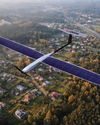
SUVI V1 becomes India's first Type-Certified UAV
In India's unmanned aviation sector has reached a significant regulatory milestone with Okulo Aerospace announcing that its SUVI V1 platform has received Type Certification from the Directorate General of Civil Aviation.
1 min
February 2026

Geopolitics
Swan Defence wins Oman naval training ship contract
Swan Defence and Heavy Industries has secured a defence export contract from the Government of the Sultanate of Oman for the construction and supply of an advanced naval training ship for the Royal Navy of Oman.
1 min
February 2026

Geopolitics
HAL'S 'DHRUV' BET
Hindustan Aeronautics Limited (HAL) is attempting a careful reset of the Dhruv helicopter narrative, positioning the platform simultaneously as a cornerstone of India's future civil helicopter market and as a rehabilitated workhorse returning to frontline maritime service.
2 mins
February 2026
Geopolitics
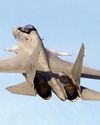
India Offers Su-30MKM Upgrade to Malaysia
India has offered a midlife modernisation package for Malaysia's fleet of 18 Sukhoi Su-30MKM fighters, marking a significant step in bilateral defence-industrial cooperation.
1 min
February 2026
Geopolitics
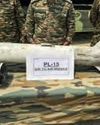
Astra upgrade rooted in indigenous R and D
Recent reports linking the Indian Air Force's Astra missile upgrades to Chinese PL-15 technology have been firmly dismissed by defence officials and scientists.
1 min
February 2026

Geopolitics
COMMAND OR COMPLIANCE? RECLAIMING THE SPIRIT OF MILITARY INITIATIVE
What does it truly mean to be a military leader in a democracy? It is a question sparked by the recent controversy surrounding General Manoj Naravane's memoir. While the government always has the final say, a great general shouldn't just wait for instructions; they must lead with confidence, give honest advice, and take decisive action on the battlefield. KARAN KHARAB highlights why India needs a military culture that rewards bold Initiative over hesitation and \"seeking orders.\"
8 mins
February 2026
Geopolitics
India's integrated air combat plan from Mk1A to MkIII
India's combat aviation landscape is entering a defining phase, marked by parallel developments in aircraft production and missile technology that together reflect a broader push toward operational self-reliance.
3 mins
February 2026
Geopolitics
DEFENCE BUDGET 2026-27: FOCUS ON CAPITAL ACQUISITIONS
While there is an overall increase in the latest defence budget, the statistics only tell half of the story, explains AMIT COWSHISH
11 mins
February 2026
Translate
Change font size