Denemek ALTIN - Özgür
The Rise Of The Intelligent Authors
Philosophy Now
|December 2017 / January 2018
Lochlan Bloom wonders what writers will do when computers become better writers than humans.
-

Over the past century the pursuit of facts has come to be the central goal of human progresss, with the dominant perception being that facts are important while fiction is at best superfluous. Yet there is increasing evidence that we as humans live our lives in a realm of fictions. It seems we are preconditioned to accept stories and embed them in the deepest fabric of our societies – for example, stories of nationhood, society, economics, or religion. And yet the ability to determine facts is now normally seen as the more vital human trait: facts are important, fiction is superfluous. Reading a book or watching a film of an evening is something to do to relax after a hard day of productivity, a hard day discerning the facts in whatever area of work you are engaged.
But as the philosopher-historian Yuval Noah Harari claims in an interview, “We cooperate with millions of strangers if and only if we all believe in the same fictional stories. The human superpower is really based on fiction. As far we know we are the only animal that can create and believe in fictional stories. And all large scale human cooperation is based on fiction” (youtube.com/watch?v=JJ1yS9JIJKs).
Here I want to argue that the coming rise of artificial intelligence presents a threat to our way of life not only because it is very likely we will become much worse than machines at determining facts, but also because we will, in all likelihood, become worse than machines at creating fictions.
Recommendations for the Useless

Bu hikaye Philosophy Now dergisinin December 2017 / January 2018 baskısından alınmıştır.
Binlerce özenle seçilmiş premium hikayeye ve 9.000'den fazla dergi ve gazeteye erişmek için Magzter GOLD'a abone olun.
Zaten abone misiniz? Oturum aç
Philosophy Now'den DAHA FAZLA HİKAYE

Philosophy Now
The Possibility- Bearing Animal
Raymond Tallis explores a twilight zone.

7 mins
February/March 2026

Philosophy Now
Amazing Times at the Pub Agora
John Douglas Mullen is a philosophical bar fly on the wall.
8 mins
February/March 2026

Philosophy Now
Friedrich Nietzsche (1844-1900)
Hilarius Bogbinder considers the all too human life of the notorious iconoclast.
11 mins
February/March 2026
Philosophy Now
Heisenberg's Philosophy of Quantum Mechanics
Kanan Purkayastha explains how Werner Heisenberg's 1925 paper turned the quantum theory of the early 1900s into the quantum mechanics of today.
10 mins
February/March 2026
Philosophy Now
Cicero & the Ideal of Virtue
Abdullah Shaikh explores Cicero's ideas about the core Roman principle of virtus.
13 mins
February/March 2026

Philosophy Now
ROPE
Les Jones has a Nietzschean take on a Hitchcock thriller.
6 mins
February/March 2026
Philosophy Now
What Have the Romans Ever Done For Us?
Salve! This issue's theme is Roman Philosophy. But as the rebels in Monty Python's Life of Brian asked, what have the Romans ever done for us? The question seems relevant here; we are philosophers, not archaeologists.
2 mins
February/March 2026

Philosophy Now
Paul Guyer
Paul Guyer is an American philosopher and a leading scholar of both Immanuel Kant and aesthetics. AmirAli Maleki interviews him about Kant's political and moral vision.
9 mins
February/March 2026
Philosophy Now
Identity in the Age of Connectivity
Sara Asran explores the dynamics of identity online.
6 mins
February/March 2026
Philosophy Now
A Very Short History of Critical Thinking
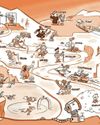
Luc de Brabandere summarises a long history through key figures of thought.
7 mins
February/March 2026
Translate
Change font size