Try GOLD - Free
Setting up a Security Testbed in Windows Using Docker
Open Source For You
|July 2025
Docker's versatility and cross-platform support make it essential for developers, DevOps engineers, and systems administrators. This tutorial will guide you through setting up Docker on your operating system and introduce a complete security testing environment using Docker. By the end of it, you'll have a functional test bed ready to explore vulnerabilities and security tools in a streamlined containerised environment.

Docker has revolutionised how developers and IT professionals deploy and manage applications, including security environments. According to a 2024 survey, over 70% of organisations now use containerisation, with Docker being the leading platform, powering millions of applications across different infrastructures. Docker's ability to create isolated, replicable, and scalable environments makes it ideal for setting up security test beds. Whether you are a cybersecurity enthusiast or a professional looking to test vulnerabilities, Docker allows you to deploy complex environments like Kali Linux, Damn Vulnerable Web Application (DVWA), and Metasploitable across Windows, Linux, and macOS.
Setting up a security test bed using Docker
After successfully installing Docker Desktop on your system, the next step is to build a security test bed using Docker Compose, a powerful orchestration tool that simplifies the management of multi-container Docker environments. Docker Compose is particularly beneficial when you need to run multiple containers that must interact with each other, such as in a security test bed where you may be working with different vulnerable applications and security tools. By defining your setup in a simple YAML configuration file (compose.yml), Docker Compose allows you to easily deploy and manage multiple containers with a single command, making the process efficient and repeatable.
In this security lab, we will deploy three essential security-focused containers.
Kali Linux: A Debian-based Linux distribution known for penetration testing and security auditing. It comes with hundreds of pre-installed tools covering areas like network scanning, password cracking, forensics, and reverse engineering, making it a must-have for security professionals and researchers.


This story is from the July 2025 edition of Open Source For You.
Subscribe to Magzter GOLD to access thousands of curated premium stories, and 10,000+ magazines and newspapers.
Already a subscriber? Sign In
MORE STORIES FROM Open Source For You

Open Source For You
Apache Paimon: Lakehouse Storage for Real-Time Analytics
Apache Paimon brings a streaming-first approach to lakehouse storage, making it ideal for real-time analytics and evolving data workloads.

2 mins
July 2026
Open Source For You
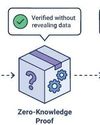
How Zero-Knowledge Proofs Enhance Privacy in Blockchains
Zero-Knowledge Proofs address a fundamental challenge that has existed since the birth of public blockchains: how can a decentralised network verify that the rules are being followed, without making all data public?
10 mins
July 2026

Open Source For You
Building Trust and Adoption Through Compliance in Open Source
Open source projects that adopt compliance as a core tenet lay the foundation for long-term success.
3 mins
July 2026

Open Source For You
The Necessity of Observability for AI and LLM Applications
Open source tools are allowing teams to build observability into AI and LLM applications without surrendering control of sensitive prompts, outputs, or internal workflows.
11 mins
July 2026
Open Source For You
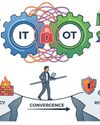
Navigating the Security Paradox of IT/OT Convergence
With physical systems no longer isolated from the digital infrastructure, organisations must adopt new ways of ensuring cybersecurity.
10 mins
July 2026

Open Source For You
Building Intelligent Retrieval Augmented AI Systems
LLMs and vector databases work together to create intelligent Al systems that understand data.
6 mins
July 2026
Open Source For You
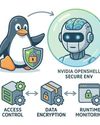
Securing AI Agents on Linux: Understanding Nvidia OpenShell
Nvidia OpenShell is an Apache 2.0-licensed open source runtime designed to provide security, privacy, and operational guardrails for AI workloads.
3 mins
July 2026

Open Source For You
A Beginner’s Guide to Open Source Security Tools
Open source security tools are as good as their commercial counterparts, if not better.
5 mins
July 2026
Open Source For You
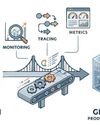
From Black Box to Glass Box: Observability Strategies for Production AI
Most enterprises are running AI in production without being able to see what it's doing. Open source tools like OpenTelemetry, LangFuse, Grafana and Arize Phoenix bring real observability to LLM pipelines, agents, and inference at scale.
5 mins
July 2026

Open Source For You
Observability: The Nervous System of Modern Digital Infrastructure
Observability helps turn operational data into knowledge that enables resilient, efficient, and intelligent digital systems.
9 mins
July 2026
Listen
Translate
Change font size