
Go Unlimited with Magzter GOLD
Get unlimited access to 10,000+ magazines, newspapers and Premium stories for just
Try GOLD - Free
DO YOU BELIEVE IN GHOSTS?
How It Works UK
|Issue 208
REAL GHOST STORIES FROM THE HOST AND CREATOR OF BBC'S UNCANNY
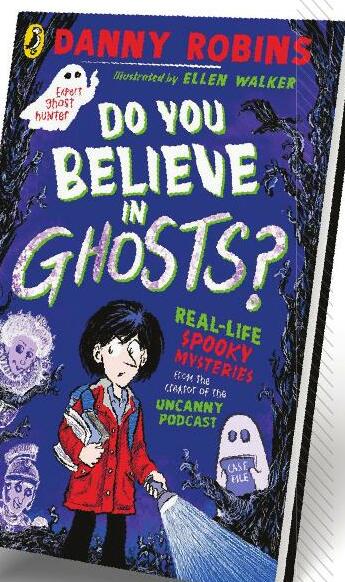
You may have watched the Uncanny series on BBC Two or listened to the Uncanny podcast on BBC Sounds, but not to worry if you haven't - it's a series hosted by its creator Danny Robins that investigates real ghost stories sent in by listeners and challenges both its resident sceptic and believer experts to explain the phenomena in each story. It's excellent, but we don't recommend listening to it in the evening if you need to get a good night's sleep. Some of the testimonies will send serious chills down your spine.
This is Danny Robins' first ghost book for kids, and it follows a similar structure to his Uncanny podcast and TV show. Robins and Do You Believe in Ghosts? illustrator Ellen Walker take the reader on a journey through a number of spooky hauntings, some of them famous, like the Battersea Poltergeist, and some of them not-so-famous, like the Haunted Toilet. And rather than simply tell you all these ghost stories, which are spooky enough in their own right, Danny sometimes has you shadow the person as they experienced a haunting, or sit in the same room as a spook makes its presence felt.
One of the most terrifying cases he investigates in Uncanny is Luibeilt, the haunted Scottish mountain shelter. He tells this story in Do You Believe in Ghosts? too, unvarnished and undiluted, but without setting out to frighten anyone - and in such a way that a younger reader could enjoy this spine-tingling tale safely in the comfort of their home. With each gripping tale, Robins invites the reader to examine the facts to decide whether they're on 'team sceptic' or 'team believer'. He also explains some of the theories behind ghostly phenomena, including the more pseudoscience stuff... we're looking at you, Stone Tape theory.
All in all, Do You Believe in Ghosts? is an incredibly effective way of engaging a younger audience and telling them the spooky tales their parents won't tell them - without scaring the pants off them.
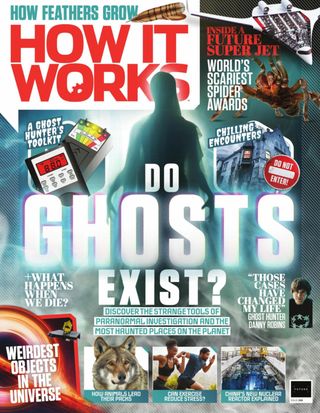

This story is from the Issue 208 edition of How It Works UK.
Subscribe to Magzter GOLD to access thousands of curated premium stories, and 10,000+ magazines and newspapers.
Already a subscriber? Sign In
MORE STORIES FROM How It Works UK

How It Works UK
WHY ANIMALS PLAY DEAD
These species have mastered faking their own deaths for several different reasons

1 min
Issue 214

How It Works UK
THE JAMES WEBB SPACE TELESCOPE MAPS 3D AURORAE ON URANUS
An international team of researchers has uncovered new insights into the upper atmosphere of Uranus, where ions swirling above the ice giant's clouds meet its magnetic field.
1 min
Issue 214
How It Works UK
LASERS BEAM 'ARTIFICIAL STARS' INTO CHILE'S SKIES
The European Southern Observatory has released a breathtaking photo of the Milky Way shining over Paranal Observatory in Chile as lasers create artificial 'guide stars' in the dark sky above.
1 min
Issue 214

How It Works UK
WHISKERS AT WORK
How long hairs on a cat's face fine-tune their senses
2 mins
Issue 214

How It Works UK
HOW AI IMPROVES CAR SAFETY
The vehicle technology that saves lives today - and the innovations that will soon make the roads safer for everyone
4 mins
Issue 214

How It Works UK
APOLLO 17: THE LAST CREWED MOON LANDING
It's been over 50 years since the final Apollo mission, so why haven't we put astronauts on the Moon since then?
4 mins
Issue 214

How It Works UK
WHAT IS LIMESCALE?
Why 'hard' water leaves chalky, flaky deposits wherever it settles
2 mins
Issue 214

How It Works UK
Astronauts describe the moment a crack was discovered on their spacecraft
Chinese astronauts have described what happened when they were nearly stranded in space last year after a suspected piece of space junk struck their return capsule.
2 mins
Issue 214

How It Works UK
The Vera C. Rubin Observatory found 800,000 objects of interest in a single night
The newly commissioned Vera C. Rubin Observatory has issued 800,000 astronomy alerts in just one night, a staggering number of nightly discoveries that's expected to grow nearly tenfold by the end of this year.
2 mins
Issue 214

How It Works UK
RETURN TO THE MOON
Project Artemis is accelerating its push to put humans back on Earth's orbital dancing partner before the end of the decade
5 mins
Issue 214
Listen
Translate
Change font size