
Go Unlimited with Magzter GOLD
Get unlimited access to 10,000+ magazines, newspapers and Premium stories for just
Try GOLD - Free
All in the name
Down To Earth
|August 01, 2025
Draft UN resolution on trans-fats elimination fails to distinguish industrial and natural sources, threatening nutrition in poorer nations

IN MANY parts of the world, a glass of milk or a piece of meat can mean the difference between a child growing up healthy or undernourished. That is why a proposed UN resolution, though well-intentioned, could end up doing more harm than good.
This September, global leaders will adopt the Political Declaration on Prevention and Control of Non-Communicable Diseases (NCDS), a roadmap to address the growing burden of heart disease, diabetes, obesity and cancer. A draft resolution, released in May, is currently under review by member-states, with the final version expected later this year. The draft outlines a series of proposed actions related to alcohol, tobacco, processed foods and sugar-sweetened beverages, among other items. Most of the commitments have received broad support. However, buried within the 10-page document is a call for “eliminating trans-fatty acids” in processed food and beverages—a provision that raises concerns among agriculture and livestock experts, scientists and animal health officials in several countries.
The objective of this goal is to reduce unhealthy diets, overweight conditions and obesity. However, it does not highlight whether it targets just industrial trans-fatty acids (or trans-fats) or even naturally-occurring trans-fats found in animal-sourced products like milk, meat and cheese. The distinction is important because foods in the latter category are often the most reliable sources of essential nutrition, especially for vulnerable populations, and are not considered harmful.
Experts Down To Earth (DTE) spoke to warn that if the language is not revised or clarified, the impacts could be far-reaching and potentially harmful, particularly in low- and middle-income countries (LMICS) where child stunting, malnutrition and micronutrient deficiencies are widespread.
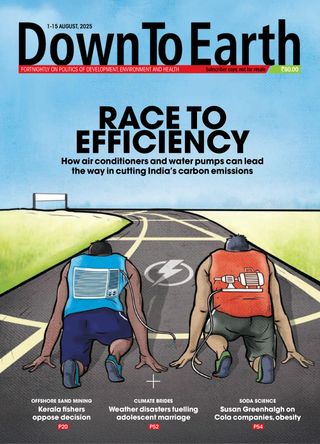

This story is from the August 01, 2025 edition of Down To Earth.
Subscribe to Magzter GOLD to access thousands of curated premium stories, and 10,000+ magazines and newspapers.
Already a subscriber? Sign In
MORE STORIES FROM Down To Earth

Down To Earth
The fossilised ICAR needs to be shaken up
India’s vast agricultural research network has made no breakthroughs as crop yields drop and imports soar, especially in oilseeds

4 mins
June 01, 2026
Down To Earth
Reimagine renewable expansion in the Thar
This refers to the article, \"Unwanted barter” (1-15 March, 2026).
2 mins
June 01, 2026

Down To Earth
Harvest of heritage
India's wealth of traditional seeds hold the key to its nutritional security amid a changing climate. Yet comprehensive data on these seeds remain scarce VIBHA VARSHNEY reports from KORAPUT, ODISHA and DHARWAD, KARNATAKA
7 mins
June 01, 2026

Down To Earth
TIGERS, CATTLE AND LANTANA
The story of tigers, cattle and lantana is not a feel-good conservation tale. It is a warning wrapped in ecological ingenuity
5 mins
June 01, 2026

Down To Earth
Fruitful cashews
Farmers and scientists across southern India promote the use of nutrient-rich yet underused cashew apples by developing a zero-additive juice that creates an additional source of income
2 mins
June 01, 2026
Down To Earth
No feather in the cap
NO TO a Switzerland with 10 million! (Sustainability Initiative).” On June 14, when Switzerland votes in the referendum, it will be the world’s first attempt to cap a country’s population at a specific level.
2 mins
June 01, 2026

Down To Earth
FARM-SIDE SLAY
India's agriculture sector is no longer remunerative, and there is no support from the government to make it so
3 mins
June 01, 2026

Down To Earth
RETHINKING CONSERVATION
Tiger numbers have seen a healthy rise in India over the past couple of decades. But the surge in the tiger population has been accompanied by an increase in cases of infighting, poaching and attacks on humans, which suggest that the animal is cramped for space and venturing out of reserves in search of food. Managing the species now requires a complete reimagining of the way tiger conservation is practised in India, reports HIMANSHU NITNAWARE
11 mins
June 01, 2026

Down To Earth
Ganga runs polluted
Uttarakhand's river-cleaning efforts face scrutiny as audit reveals untreated sewage discharge and incomplete infrastructure
3 mins
June 01, 2026
Down To Earth
The new environmentalism
EACH YEAR, when the UN-designated World Environment Day is observed on June 5, it is a moment to reflect on where we stand and where we must head.
3 mins
June 01, 2026
Listen
Translate
Change font size