
Go Unlimited with Magzter GOLD
Get unlimited access to 10,000+ magazines, newspapers and Premium stories for just
Try GOLD - Free
Make a Sun, Moon and Earth model
BBC Sky at Night Magazine
|July 2023
DIY ASTRONOMY | Practical astronomy projects for every level of expertise | A simple, hands-on project to teach their surface features and orbits to beginners and youngsters

The concept of lunar and planetary orbits can be difficult for beginners to grasp. This simple flat model will help you to introduce these ideas by showing that the Moon is in orbit around Earth, but the Earth-Moon system is also orbiting the Sun. The model is easy to make using just one sheet of A4 card, some paper fasteners and a dash of artistic flare.
Although Earth and the Moon in our model are the correct sizes relative to each other, it goes without saying that the size of the Sun and the distances between the bodies are not to scale. If they were, our Sun would have a diameter of 10.9 metres, the distance between Earth and the Moon would be 2.76 metres and the distance between the Sun and Earth would be 1.2km. If the Sun and Earth were the correct sizes relative to the distance in our model, the Sun would have a diameter of approximately 2mm and the Earth a diameter of approximately 0.018mm. The surprising size of these numbers is a great teaching opportunity, conveying the fact that space is big! Models and diagrams commonly used to show our Solar System are never to scale because the relative sizes and distances are far too large.
There are several more learning outcomes from creating this project. When drawing Earth, there is much to learn about the geography of our home planet - not just the shapes of the continents, but also why some areas are very green and lush while others are brown and arid. There are many photographs of Earth as seen from space online, so choose one that shows the continent where you live.


This story is from the July 2023 edition of BBC Sky at Night Magazine.
Subscribe to Magzter GOLD to access thousands of curated premium stories, and 10,000+ magazines and newspapers.
Already a subscriber? Sign In
MORE STORIES FROM BBC Sky at Night Magazine
BBC Sky at Night Magazine
Q&A WITH A STAR DIMMING EXPERT
Extraordinary flickering in a distant star has led astronomers to the wreckage of two planets colliding. We meet one of the team behind the rare discovery

3 mins
June 2026
BBC Sky at Night Magazine
Don't let stars overpower your images
How to use Siril freeware to turn down the stars and turn up delicate details
3 mins
June 2026

BBC Sky at Night Magazine
Chasing UFOs on the web
Robert Pateman investigates how the internet has changed the way we view and report on UFO sightings
6 mins
June 2026

BBC Sky at Night Magazine
Under southern SKIES Stargazing in Australia's Warrumbungles
Ten years after Australia gained its first International Dark Sky Park, Yvette Cook finds out exactly why Warrumbungle National Park is a world-class astrotourism destination
7 mins
June 2026
BBC Sky at Night Magazine
Pick the perfect eyepiece
How to choose the right match for your target, telescope and sky conditions
3 mins
June 2026
BBC Sky at Night Magazine
What's really at the heart of our GALAXY?
Colin Stuart investigates the radical claim that our Milky Way's central supermassive black hole may not exist after all
7 mins
June 2026
BBC Sky at Night Magazine
New moons found around Jupiter and Saturn
And we think we know why Jupiter has more big moons than its neighbour
1 min
June 2026
BBC Sky at Night Magazine
A new way to find advanced alien life
Model could find patterns across multiple planets that reveal life - whatever form it takes
1 mins
June 2026
BBC Sky at Night Magazine
Star-forming region captured in amazing clarity
Piercing the dust clouds allows astronomers to see little-known, youthful massive stars
1 min
June 2026
BBC Sky at Night Magazine
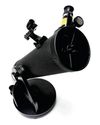
RVO Horizon 102 tabletop Dobsonian
An affordable, easy, carry-anywhere telescope that makes learning the sky a pleasure
4 mins
June 2026
Translate
Change font size