
Go Unlimited with Magzter GOLD
Get unlimited access to 10,000+ magazines, newspapers and Premium stories for just
Try GOLD - Free
Cleaner, greener fuels are coming to Formula 1. Here's what that means
BBC Science Focus
|November 2025
The 2026 F1 championship will be raced using 'sustainable' fuels. But how much of a difference will it actually make to the sport's carbon footprint?
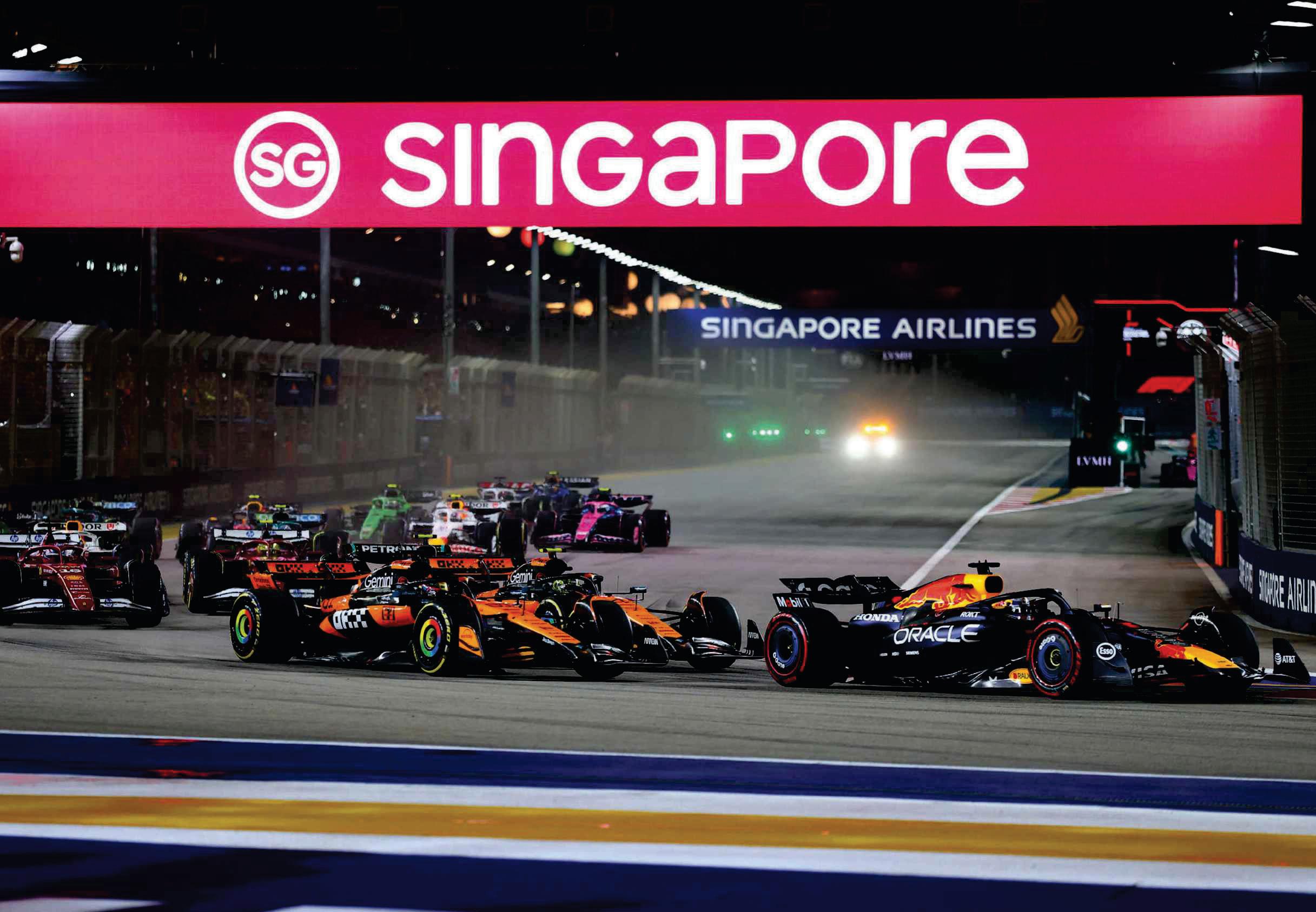
Next year, Formula 1 (F1) will pull into the pits for one of its most ambitious overhauls yet – trading fossil fuel for a 100-per-cent sustainable alternative.
It's part of a broader effort to meet new environmental rules and to prove the sport can, in F1’s words, “keep us driving without building new cars.”
But not everyone’s convinced. With fuel from races making up less than one per cent of the sport’s total carbon footprint, experts say F1 has far bigger environmental problems to solve. So, what are they and how can they be tackled?
FRESH FUEL
In 2020, F1’s governing body, the Fédération Internationale de l'Automobile (FIA), set a deadline for race cars’ engines to run on 100-per-cent sustainable fuels from 2026 and for the sport to be carbon neutral by 2030.
The transition began in 2023 and 2024, when Formula 2 and Formula 3 (Fl’s feeder racing series) started using 55-per-cent ‘sustainable bio-sourced fuel’, before switching to 100-per-cent ‘advanced sustainable fuel’ in 2025.
Now, F1 has developed its own ‘sustainable’ fuel for 2026. This fuel has been designed specifically for the hybrid engines in today’s F1 cars, which rely on both an internal combustion engine and two electric motor-generators.
F1 says the new fuel won’t add to the overall amount of carbon in the atmosphere. Instead, the carbon used in the new fuel will be extracted from existing sources – including household waste and nonfood biomass – or captured as carbon dioxide directly from the atmosphere.
This will then be used to make a synthetic fuel - an artificially-produced fuel designed to do the same job as the fossil fuel-derived petrol that’s currently being used. In the long term, the FIA says that F1, 2 and 3 will all eventually adopt this “fully synthetic hybrid fuel”.

This story is from the November 2025 edition of BBC Science Focus.
Subscribe to Magzter GOLD to access thousands of curated premium stories, and 10,000+ magazines and newspapers.
Already a subscriber? Sign In
MORE STORIES FROM BBC Science Focus
BBC Science Focus
HOW FISH COULD SAVE MILLIONS OF PEOPLE'S SIGHT
There's nowhere near enough donors to meet the demand for corneal transplants. A pioneering treatment that relies on fish scales could change that

3 mins
May 2026

BBC Science Focus
Your Wi-Fi is lying to you
Wi-Fi 7's giant speed claims might look impressive, but the realities of our homes – and the laws of physics – mean that real-world performance will never get close
6 mins
May 2026

BBC Science Focus
WHICH ANIMAL IS MOST LIKELY TO ESCAPE FROM THE ZOO?
Have you heard the one about the monkey and the Yorkshire pudding?
2 mins
May 2026

BBC Science Focus
THE BLACK SERVAL
The black serval (Leptailurus serval) is an unusual, melanistic version of the African serval, a medium-sized wild cat that's native to Africa.
2 mins
May 2026
BBC Science Focus
Cryosleep vs hibernation: What's the difference?
When hibernating animals, such as hedgehogs and dormice, disappear for winter, they don't freeze like the Siberian salamander.
1 mins
May 2026
BBC Science Focus
Space brain
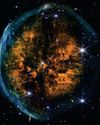
The greatest names in science are often said to be 'big-brained', but this cosmic wonder puts them all to shame. Nebula PMR 1 - otherwise known as the 'Exposed Cranium' nebula for its distinctive shape - measures around 3.2 light-years across.
1 min
May 2026

BBC Science Focus
Your most draining relationships are taking years off your life, study suggests
Difficult people don't just zap your energy - they may also accelerate your biological ageing
4 mins
May 2026

BBC Science Focus
DOES EARTH HAVE A HEARTBEAT?
Move over, Ringo Starr.
1 mins
May 2026
BBC Science Focus
WEIGHT-LOSS DRUGS FOR ALL?
The obesity crisis is ruining lives and costing governments trillions. But some healthcare experts think there's now a radical solution: roll out GLP-1 jabs to everyone who needs them for free. Could it work?
9 mins
May 2026
BBC Science Focus
HOW TO SEE VENUS ON APPROACH TO JUPITER
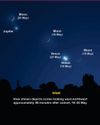
Venus has been slowly moving away from the Sun's glare over the past few weeks, heading into the evening twilight after sunset.
1 mins
May 2026
Listen
Translate
Change font size