
Go Unlimited with Magzter GOLD
Get unlimited access to 10,000+ magazines, newspapers and Premium stories for just
Try GOLD - Free
No lessons learned
The Guardian
|March 07, 2026
Two Gulf wars left the region in chaos. Why has US started a third?
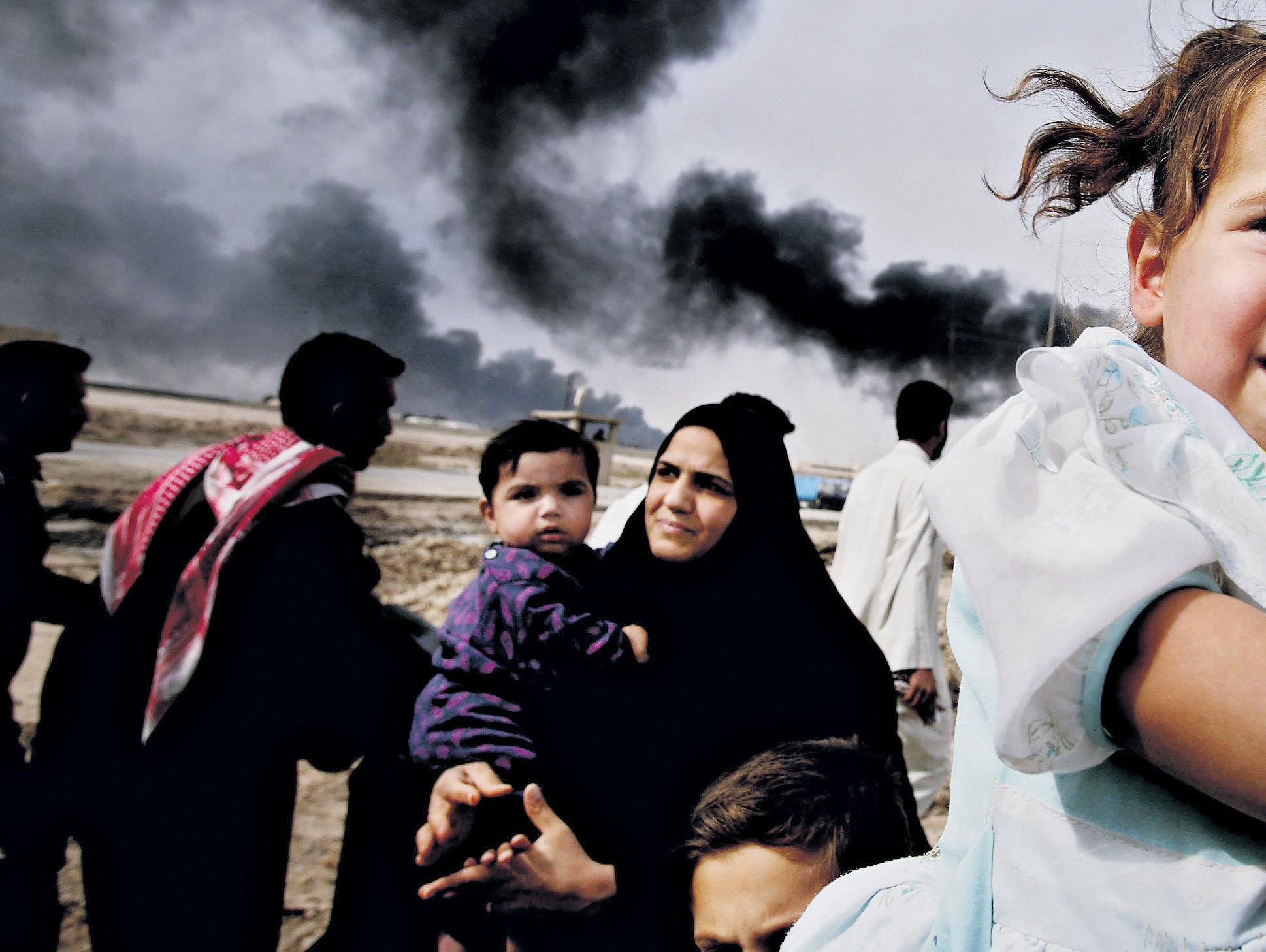
This is the third Gulf war and umpteenth conflict since the United States took over as the dominant power and influence in the Middle East at the end of the cold war. And it is arguably the most dangerous, consequential and confused of them all.
The destruction and chaos spreading across the region confirms the Middle East's status as the world's preeminent crisis factory, but also raises questions as to why US presidents so often declare they are ending US interference in the region, only to be lured back. Since the second world war the US has set out to oust a government in the Middle East on average once a decade and on almost every occasion it has left the country, and the US, worse off as unexpected consequences eventually emerge. As Donald Trump embarks on yet another regime change - this time in Iran, a country of 90 million people - the sense of foreboding is profound. Already the timelines are extending and the sense is growing by the day that Trump is gambling with the fate of a country about which he knows next to nothing.
The first Gulf war, in 1990-91, at least had the advantage of being of a containable scope, purpose and duration. Once Saddam Hussein invaded Kuwait in a warped blow for pan-Arabism, George HW Bush pushed the Iraqi leader's forces back with relative ease, maintaining a broad supportive Arab coalition, partly by ensuring Israel did not respond to Saddam's provocations to become involved. Famously respecting the UN security council mandate to liberate Kuwait, but not invade Iraq, Bush decided not to pursue the routed Iraqi army to Baghdad. The ground campaign took only 100 hours.
The onesidedness of that war has parallels with what is happening in Iran. Azmi Bishara, the Arab intellectual, called the former a model of war that meant one side waging it without risk, the other without hope; "one side accidentally losing a half dozen people, the other losing a few hundred thousand by force of arms".
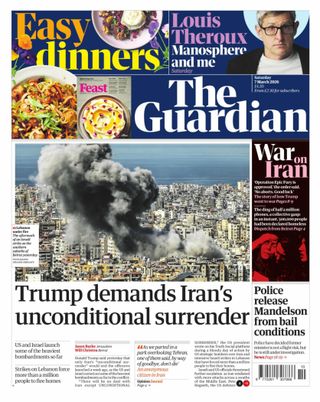

This story is from the March 07, 2026 edition of The Guardian.
Subscribe to Magzter GOLD to access thousands of curated premium stories, and 10,000+ magazines and newspapers.
Already a subscriber? Sign In
MORE STORIES FROM The Guardian

The Guardian
Scotland Triumph and trepidation infuse return to World Cup
Scotland is leaning into one of its most treasured traditions: embracing the hope and anxiety of a football World Cup, with a healthy dose of self-deprecating style.

2 mins
June 13, 2026
The Guardian
Violence in Belfast and Southampton has stirred fear and racism throughout the country as police struggle to get a grip on mobs Has unrest become the new normal?
As the people of Glengormley, on the northern edge of Belfast, tidied up and prepared for more violence in the midst of what has been described as a modern-day pogrom, a court 500 miles away in Southampton started to deal with its own outbreak of thuggery.
6 mins
June 13, 2026
The Guardian
Pure visual joy Hockney changed the world just by looking at it
David Hockney changed the world just by looking at it. His art was a feast of unabashed visual pleasure, one long orgy of the gaze, the delighted lifelong epiphany of someone who cherished flowers in a vase and freeways in the sun and thought endlessly about new ways of capturing such passing treasures.
4 mins
June 13, 2026

The Guardian
'Beware a vacuum' Why paramilitaries in Belfast decided not to stop the violence
As racist rioting unfolded in Northern Ireland this week, there was a striking dissonance behind the mobs and flames.
4 mins
June 13, 2026

The Guardian
Playing on enemy soil The tug of war facing Iran’s World Cup squad in the US
Iran will present a full-on challenge to Fifa’s “football unites the world” slogan next week by becoming the first country in World Cup history to compete on the soil of a host nation with which it is at war.
3 mins
June 13, 2026
The Guardian
Betfair owner delists from London market
The gambling group that owns Paddy Power and Betfair is to scrap its listing on the London Stock Exchange, in another blow for Britain’s shrinking stock market.
1 min
June 13, 2026

The Guardian
The World Cup bonus What late opening hours could mean for pubs and drinkers
Keir Starmer may have imagined a national morale-boosting programme when his government told hospitality venues that they could stay open until 2am on some World Cup match days, to allow for the time difference with the US, Mexico and Canada, the tournament’s co-hosts, which means many England and Scotland games kick off at night.
4 mins
June 13, 2026

The Guardian
The bee crisis Hidden health costs of world’s disappearing pollinators
There are few ways in and out of Nepal’s Jumla district. The Karnali highway, one of the world’s most dangerous roads, provides the only land link, splicing through the Himalayas to connect Jumla’s terraced valleys to the rest of the country.
3 mins
June 13, 2026

The Guardian
$960 for Keaton nail clippers? The boom in selling off dead celebrities' personal items
From Diane Keaton’s bowler hats and polka dot scarfs, to Gene Hackman’s used paint brushes, to Terence Stamp’s love letters from Jean Shrimpton and even Matthew Perry’s black leather wallet (his credit cards still inside), fans are being offered - for a price - increasingly personal items from the estates of dead celebrities.
3 mins
June 13, 2026

The Guardian
Trees may not store as much carbon as thought
Trees may not be able to store as much planet-heating carbon as hoped, a new study suggests, with researchers finding photosynthesis does not always lead to wood growth.
1 min
June 13, 2026
Listen
Translate
Change font size