Try GOLD - Free
Hunger by design: colonialism's legacy
Mail & Guardian
|M&G 13 February 2026
The Blue Book explicitly warned that the production of food by African people in excess of their own requirements was undesirable, 'as it diminishes their incentive to labour'
-
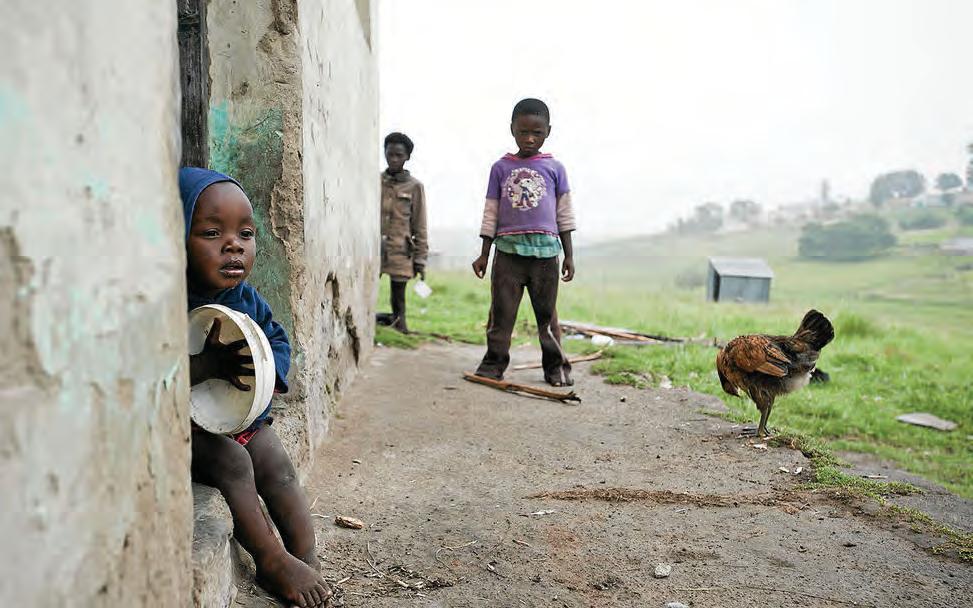
Shameful legacy: Land dispossession, the destruction of indigenous food systems, the criminalisation of informal trade and the concentration of food production and distribution were deliberate, legal acts, the effects of which endure today. Photo: Madelene Cronje
(Madelene Cronje)
The demographic character of South Africa's food and hunger crisis is often framed as a contemporary, post-1994 failure, resulting from unemployment, inequality or weak governance.
But in reality, the racial, geographic and class-based nature of present-day hunger draws its roots from a well-designed, carefully legislated and openly defended colonial system.
To understand why millions are hungry in a country with a globally enviable climate and land that produces an abundance of food, we need to revisit the archive and bear witness to what the colonial and apartheid state said about food when it constructed South Africa's political economy.
The archival record is candid.
By the late 19th century, African farmers across the Cape and KwaZulu, in particular, were producing surplus grain and livestock. Far from celebrating this, colonial authorities saw it as a threat.
The 1881 Blue Book of the Cape government documented surplus production by African populations, noting their use of technologies, commercial surpluses and labour stability. The Blue Book explicitly warned that the production of food by African people in excess of their own requirements was undesirable, “as it diminishes their incentive to labour”.
This position reflects the core logic of colonial governance in relation to the political nature of food. Food production and independence by African people undermined the colony’s labour needs. Hunger, by contrast, was a necessary element of the colonial labour system.


This story is from the M&G 13 February 2026 edition of Mail & Guardian.
Subscribe to Magzter GOLD to access thousands of curated premium stories, and 10,000+ magazines and newspapers.
Already a subscriber? Sign In
MORE STORIES FROM Mail & Guardian

Mail & Guardian
Manana and the freedom to expand
The SBYA winner in music for 2026 has had a steady and intentional rise shaped by collaboration, experimentation and a deep commitment to musical honesty and long-term growth

6 mins
M&G 17 April 2026

Mail & Guardian
Eskom still backbone of economic recovery
Reliable and affordable energy, with predictable tariffs, is indispensable. Even so, it is significant that Eskom's leadership recognises the central role it plays: without this backbone, large-scale manufacturing and job creation cannot exist
3 mins
M&G 17 April 2026
Mail & Guardian
Legal fight deepens over lion bone trade
A legal battle over South Africa’s captive lion bone trade has deepened in the Pretoria high court after the National Council of the Society for the Prevention of Cruelty to Animals (NSPCA) and the EMS Foundation were granted leave as intervening respondents in a case that could determine whether the state is legally required to set export quotas for lion bones at all
3 mins
M&G 17 April 2026

Mail & Guardian
Dangers of killing peacekeepers
Each unaddressed attack undermines the UN's legitimacy and reinforces perceptions of impotence
3 mins
M&G 17 April 2026

Mail & Guardian
Malema avoids jail for now
The EFF leader will appeal his five-year prison sentence after a court upheld his conviction for firing a rifle at a political rally, while granting leave to challenge the punishment
6 mins
M&G 17 April 2026

Mail & Guardian
EMPD and the missing R14m lithium
The Madlanga Commission has heard evidence of a metro police operation in which the precious metal was seized but then vanished
3 mins
M&G 17 April 2026

Mail & Guardian
Sexual violence and the weaponisation of the law
When we condemn Israeli apartheid but remain silent on Indian occupation, we fail to recognise that these are not separate struggles but part of a shared architecture of domination — one that specifically targets women who resist committed.
4 mins
M&G 17 April 2026

Mail & Guardian
Quiet crossing, big route
A quiet mountain crossing is forming a corridor from the Great Lakes toward southern Africa
5 mins
M&G 17 April 2026

Mail & Guardian
The weight of movement
A deeply personal portrait of Litchi HOV, the award-winning choreographer turning movement into a language of memory, resilience and generational change
5 mins
M&G 17 April 2026

Mail & Guardian
The DA's colour conundrum
Can the party construct a narrative that acknowledges its past while speaking to the aspirations of a diverse and changing society? Its ability to do so may depend on its willingness to engage with the discomfort of its own history and the expectations of its evolving constituency
3 mins
M&G 17 April 2026
Listen
Translate
Change font size