Try GOLD - Free
In a Minor Key
The Caravan
|August 2025
How Cyrus Mistry replaces drama with stillness
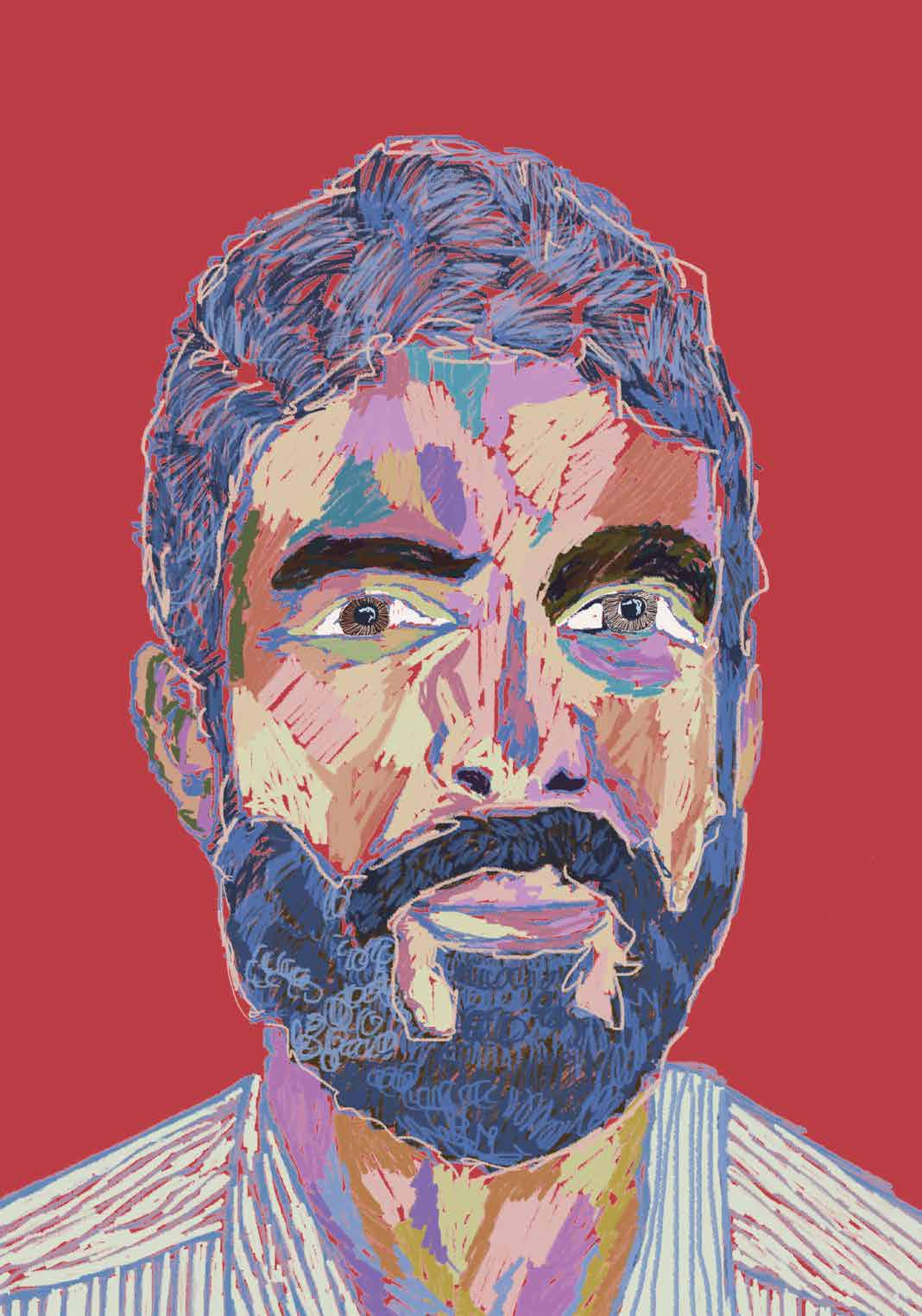
BEFORE CYRUS MISTRY TURNED TO FICTION, his voice first emerged on the stage with a play, Doongaji House, that already carried many of the hallmarks of his later prose: no rousing speeches, no climactic scenes of catharsis. He wrote it in 1977, at 21. It won an award for playwriting the following year but was first performed only in the 1990s. This delay prefigures the kind of reception that would come to define Mistry's work.
Often introduced as the younger brother of novelist Rohinton Mistry, or as one of the few chroniclers of Parsi life in Indian English literature, Cyrus has remained curiously under-discussed in mainstream literary discourse. His novels Chronicle of a Corpse Bearer and The Radiance of Ashes, the novella Passion Flower, the play Percy, and his early theatrical success with Doongaji House, have all received accolades at various points, but little has been written about them as a collective literary vision.
What ties these works together is a stylistic restraint, a quiet politics that resists melodrama and easy resolutions. Mistry's oeuvre offers us literary works stripped of performance. His fiction does not drive us towards moments of epiphany or action. It is shaped by weariness, repetition, omission and delay. The politics lies not in what the story argues but in how it is told.
There is something deliberate about the way Mistry constructs grief—through atmosphere, indicating a steady erosion of spirit. Mistry's prose does not try to transform pain. It simply stays with it, whether it is the weight of a body on a rainy hillside, the silence of a son failing to connect with his mother, or the fading architecture of a once-proud community.
The language for grief is slow, elliptical and textured. In Chronicle of a Corpse Bearer, it is bodily, anchored in caste-based labour surrounding death.

This story is from the August 2025 edition of The Caravan.
Subscribe to Magzter GOLD to access thousands of curated premium stories, and 10,000+ magazines and newspapers.
Already a subscriber? Sign In
MORE STORIES FROM The Caravan

The Caravan
Dim Views
Punjab's new media suffers from old problems

22 mins
February 2026

The Caravan
ON FIRM GROUND
The civic struggle against uranium mining in the West Khasi Hills
6 mins
February 2026

The Caravan
DANGEROUS LIAISON
Why India enabled Israel's genocide in Gaza
44 mins
February 2026

The Caravan
Platform for Change
A women-led union gives voice to India's gig workers
6 mins
February 2026

The Caravan
NARAVANE'S Moment of Truth
An army chief's unpublished memoir exposes how the Modi government spun the China border crisis
44 mins
February 2026
The Caravan
A Brief History of the Slap
How Telugu cinema's heroes turn violence against women into romance
9 mins
February 2026
The Caravan
FACE PALM
Why the Congress keeps losing elections
33 mins
January 2025

The Caravan
The Great Transformation
Challenges facing independent news outlets in the digital age/Media
6 mins
January 2025

The Caravan
The Mob Comes for Film Critics
Dhurandhar and the manufacture of a national consensus
11 mins
January 2025
The Caravan
Memories Are Made of This
FOOD IN DALIT AND ADIVASI WRITING
15 mins
January 2025
Listen
Translate
Change font size