Try GOLD - Free
The Cranky Visionary
The Atlantic
|April 2025
Albert Barnes believed in the liberating power of art—but you had to look at it his way.
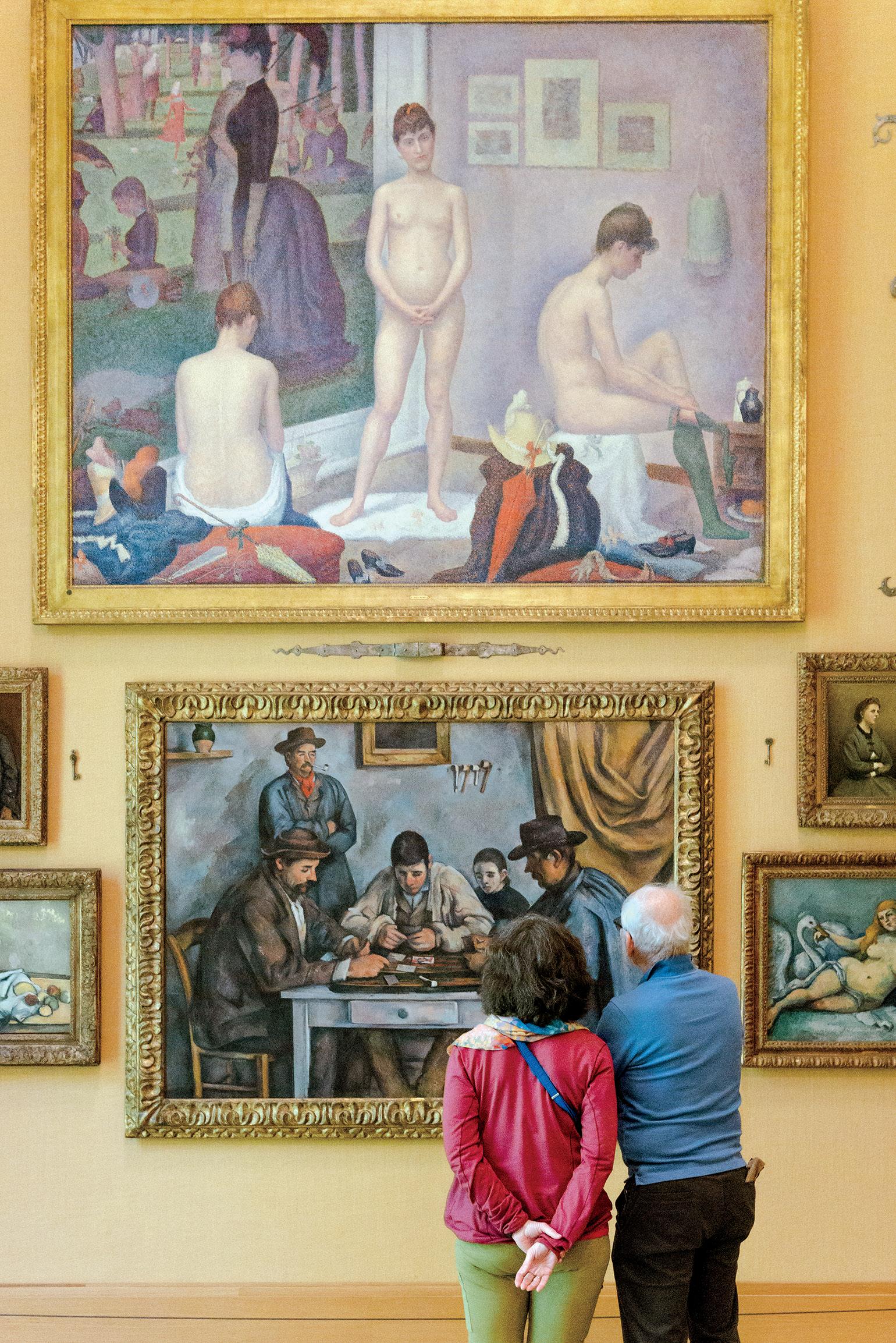
Of all the ways that today’s plutocrats spend their billions, founding an art museum is one of the more benign, somewhere behind eradicating malaria but ahead of eradicating democracy. The art in these museums is almost always contemporary, reflecting the dearth of available old masters along with a global chattering-classes consensus that avant-garde art is socially, intellectually, and culturally important. Few of these tycoons, though, are likely to find the stakes as agonizingly high as Albert C. Barnes did.
From 1912 to 1951, Barnes amassed one of the world’s greatest private collections of modern European artwork—more Cézannes (69) and Renoirs (an absurd 181) than any other museum; Matisse’s game-changing The Joy of Life; Seurat’s extraordinary Models; the list goes on and on. The Barnes Foundation was officially an educational institution, but was effectively America’s first museum of modern art. (The New York organization that put capital letters on those words is four years younger.) But if Barnes’s collection is a model to emulate, the saga of his organization is a lesson in founder’s-syndrome perils.
Coinciding with the centennial of the Barnes’s opening, we have Blake Gopnik’s breezy new biography of the man, The Maverick’s Museum, and Neil L. Rudenstine’s reissued history of the institution, The House of Barnes, first published in 2012, when its legal struggles were above-the-fold news. The two deserve to be read together, because the slippage of identity between the man, the art, and the institution provides both the melodrama and the farce of the tale.
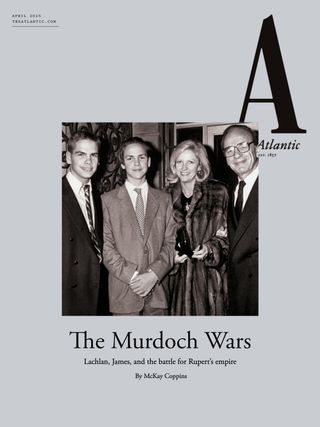

This story is from the April 2025 edition of The Atlantic.
Subscribe to Magzter GOLD to access thousands of curated premium stories, and 10,000+ magazines and newspapers.
Already a subscriber? Sign In
MORE STORIES FROM The Atlantic

The Atlantic
The First 18 Months
A Cabinet meeting with my son, who is exactly as old as the current administration

2 mins
July 2026

The Atlantic
What Dogs See
To understand a painting, look for the canine.
10 mins
July 2026

The Atlantic
Boy George
Finally, an action movie about Washington’s French and Indian War years.
5 mins
July 2026

The Atlantic
Disneyland With No People
When I was 17, I worked at Fantasyland’s magic shop as a magician demonstrating Svengali decks, cups and balls, and the Incredible (their word) Shrinking Die.
4 mins
July 2026

The Atlantic
THE REBELLIOUS ORIGINS OF AMERICAN SPORTS
FROM THE BEGINNING, PATRIOTISM AND PLAY HAVE BEEN INEXTRICABLY LINKED.
12 mins
July 2026

The Atlantic
Queen of the Skies
The Boeing 747, the world’s first jumbo jet, has started its final descent.
18 mins
July 2026

The Atlantic
HOW TO TELL THE AMERICAN STORY
Finding a common history that’s both unsparing and unifying has proved all but impossible in recent years. It shouldn’t be.
17 mins
July 2026

The Atlantic
Nathaniel Hawthorne’s American Horror Story
The author wrote a tale that challenged the nation’s founding myths. Then it disappeared.
13 mins
July 2026

The Atlantic
The Surprising, Liberating History of Marriage
To find a future for the institution, Stephanie Coontz turns to its wildly varying past.
11 mins
July 2026
The Atlantic
USE IT OR LOSE IT
Freedom of speech, and of the press, can be guaranteed only if Americans exercise their rights.
8 mins
July 2026
Listen
Translate
Change font size