Try GOLD - Free
The Art of the (New) Deal
The Atlantic
|May 2026
What the murals of the Wilbur J. Cohen Federal Building can teach us about patriotism, propaganda, and beauty
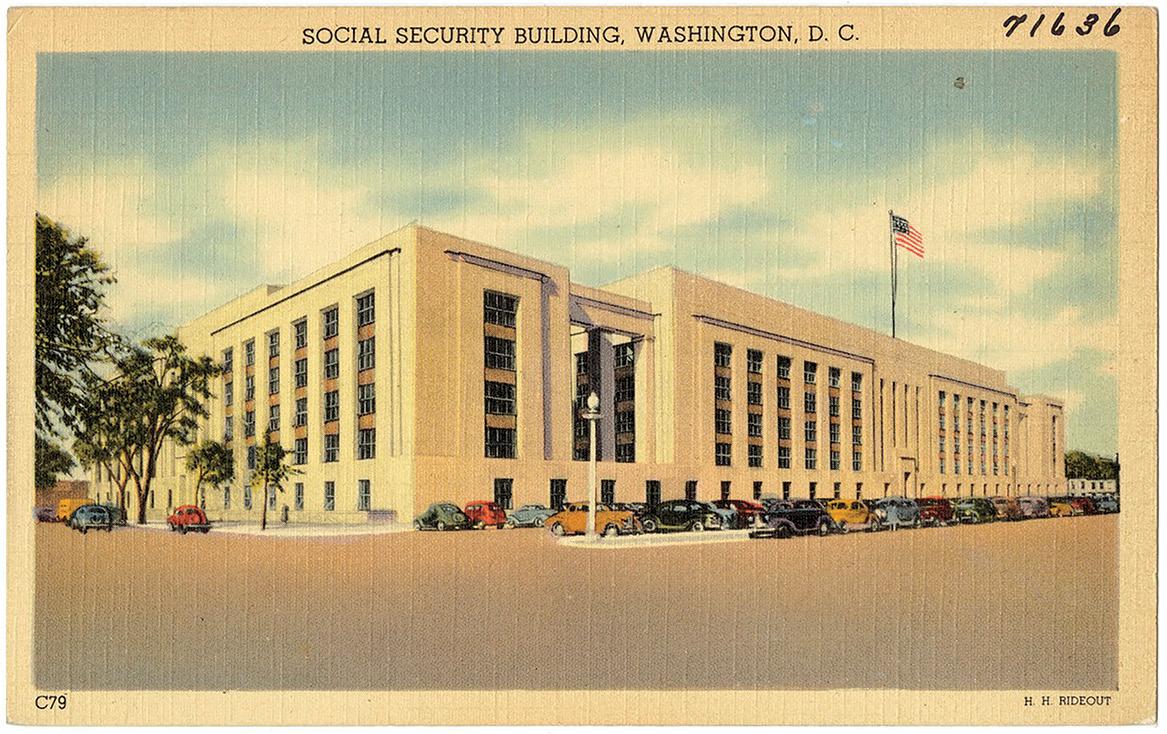
To forge a new social contract is one thing.
To explain it to people is another. The bureaucrats of the New Deal understood that very well. They also knew that art and architecture could be powerful spreaders of political ideas. As it brought America out of the Depression, the Franklin D. Roosevelt administration built or funded courthouses, post offices, town halls, gyms, pools, auditoriums, and much more—tens of thousands of public buildings and facilities—and its arts programs employed as many as 10,000 artists to decorate them.
The Wilbur J. Cohen Federal Building, originally the Social Security Board Building, exemplifies New Deal art and architecture at their best. It’s the “Sistine Chapel of the New Deal,” in the words of the founder of the Living New Deal, an organization dedicated to documenting and preserving the history and culture of the period. In 1935, Roosevelt's Social Security Act changed the covenant between the American people and the state. Social Security enshrined a new right to be protected against economic vicissitudes, reversing the assumption that Americans would scrape by on the strength of “rugged individualism”—a phrase made popular by Roosevelt’s predecessor Herbert Hoover, who was being blamed for America’s woes. Seeking muralists and sculptors to work on the new building, the office in charge of the most prestigious commissions, the U.S. Treasury's Section of Fine Arts, held competitions and published an essay that effectively provided the theme. Its title was “The Meaning of Social Security.”

This story is from the May 2026 edition of The Atlantic.
Subscribe to Magzter GOLD to access thousands of curated premium stories, and 10,000+ magazines and newspapers.
Already a subscriber? Sign In
MORE STORIES FROM The Atlantic

The Atlantic
The First 18 Months
A Cabinet meeting with my son, who is exactly as old as the current administration

2 mins
July 2026
The Atlantic
What Dogs See
To understand a painting, look for the canine.
10 mins
July 2026

The Atlantic
Boy George
Finally, an action movie about Washington’s French and Indian War years.
5 mins
July 2026
The Atlantic
Disneyland With No People
When I was 17, I worked at Fantasyland’s magic shop as a magician demonstrating Svengali decks, cups and balls, and the Incredible (their word) Shrinking Die.
4 mins
July 2026
The Atlantic
THE REBELLIOUS ORIGINS OF AMERICAN SPORTS
FROM THE BEGINNING, PATRIOTISM AND PLAY HAVE BEEN INEXTRICABLY LINKED.
12 mins
July 2026

The Atlantic
Queen of the Skies
The Boeing 747, the world’s first jumbo jet, has started its final descent.
18 mins
July 2026
The Atlantic
HOW TO TELL THE AMERICAN STORY
Finding a common history that’s both unsparing and unifying has proved all but impossible in recent years. It shouldn’t be.
17 mins
July 2026

The Atlantic
Nathaniel Hawthorne’s American Horror Story
The author wrote a tale that challenged the nation’s founding myths. Then it disappeared.
13 mins
July 2026
The Atlantic
The Surprising, Liberating History of Marriage
To find a future for the institution, Stephanie Coontz turns to its wildly varying past.
11 mins
July 2026
The Atlantic
USE IT OR LOSE IT
Freedom of speech, and of the press, can be guaranteed only if Americans exercise their rights.
8 mins
July 2026
Listen
Translate
Change font size