Try GOLD - Free
Tales of Hope in a Time of Climate Crisis Wonder Tales for a Warming Planet
TerraGreen
|October 2025
Children will inherit a planet more vulnerable than ever before—one already reeling under the effects of climate change. How do we equip young minds to not just understand these crises but also imagine alternatives?
-
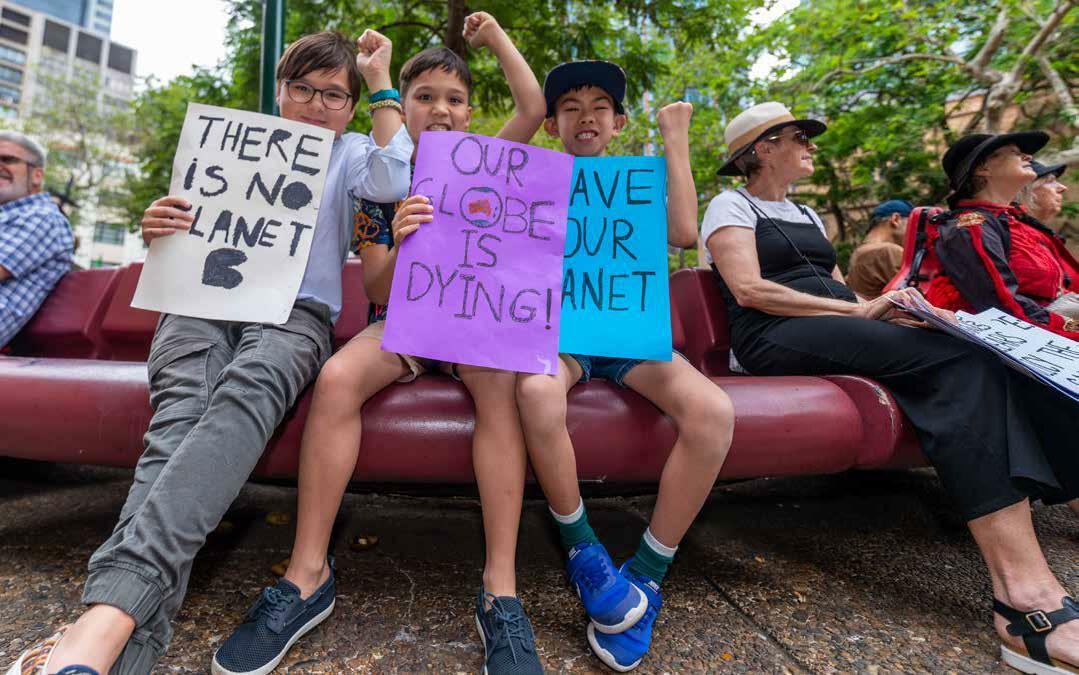
In his new book titled, Wonder Tales for a Warming Planet (illustrated by Isha Nagar and published by Niyogi Books) author Rajat Chaudhuri attempts to do precisely that. What is fascinating about his work is the ability to balance and achieve synergy between immediate scientific issues with the imaginative pull of fiction.
For children, that means exposure to the realities of climate change by way of wonder, curiosity, and possibility. With its unique storytelling, "Learning Notes," and vibrant illustrations, Wonder Tales for a Warming Planet creates space for conversations that extend from the classroom to the dinner table.
In this conversation with TerraGreen, Rajat Chaudhuri tells Dr Ipshita Mitra why stories matter, how they can complement climate education in India, and what children can teach us about reimagining our future.
Excerpts... therein. This will ultimately help to deepen awareness and perhaps we can expect some climate warriors to emerge from among the readers of the book!
Ipshita Mitra: Your book combines fantasy with urgent environmental facts-sea-level rise, disappearing forests, and unmanageable urban sprawl. Why did you think that stories, as opposed to fact-based exposition, were the most effective method of addressing children about the climate emergency?
Rajat Chaudhuri: I think both are important and personally, I try to blend the two. I've been involved with the climate movement right from the World Summit on Sustainable Development (WSSD) in Johannesburg (2002), actually from even earlier, in advocacy and activist roles. Alongside these, I have been involved in major projects on ozone depletion, climate change, waste reduction, and sustainability at the national and regional levels where among other things, fact-based exposition was important.
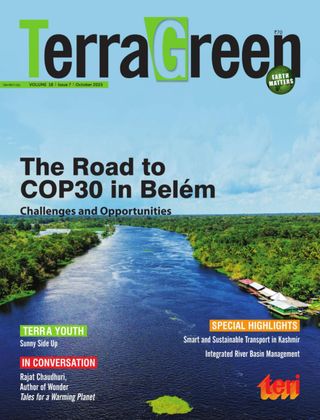

This story is from the October 2025 edition of TerraGreen.
Subscribe to Magzter GOLD to access thousands of curated premium stories, and 10,000+ magazines and newspapers.
Already a subscriber? Sign In
MORE STORIES FROM TerraGreen

TerraGreen
Motor Efficiency
The Silent Catalyst of India's Green Industrial Revolution

4 mins
January 2026

TerraGreen
Beauty That Betrays!
The Quiet Invasion of An Ornamental Plant
3 mins
January 2026
TerraGreen
Farming Innovation Addresses Food Shortages
Also Halves Methane Emissions
4 mins
January 2026
TerraGreen
Aravalli on the Edge
Saving India's Ancient Green Shield from Collapse
3 mins
January 2026
TerraGreen
From Orchard to Table
Apple Picking, Family Time, and Fall Colours
4 mins
January 2026

TerraGreen
Coral Reefs Could Feed Millions
If We Let Them Rebuild
3 mins
January 2026

TerraGreen
Resting on Deodars
How Fallen Trees are Being Reimagined as Urban Assets in Shimla
3 mins
January 2026

TerraGreen
India's Clean-Air Innovation at Risk
Nationwide Assessment by WeNaturalists
2 mins
January 2026

TerraGreen
CNFF-25
Highlights Environmental Concern Amid India's Cultural Heritage
3 mins
January 2026
TerraGreen
Green Farming through Circular Economy
Sustainable Practices for Waste Reduction
8 mins
January 2026
Listen
Translate
Change font size