
Go Unlimited with Magzter GOLD
Get unlimited access to 10,000+ magazines, newspapers and Premium stories for just
Try GOLD - Free
Unfair and Outdated
Outlook
|June 01, 2025
The Indus Waters Treaty's blatantly unfair division of water, climate change and upstream actions by China are valid reasons for India to abrogate it or keep it in abeyance
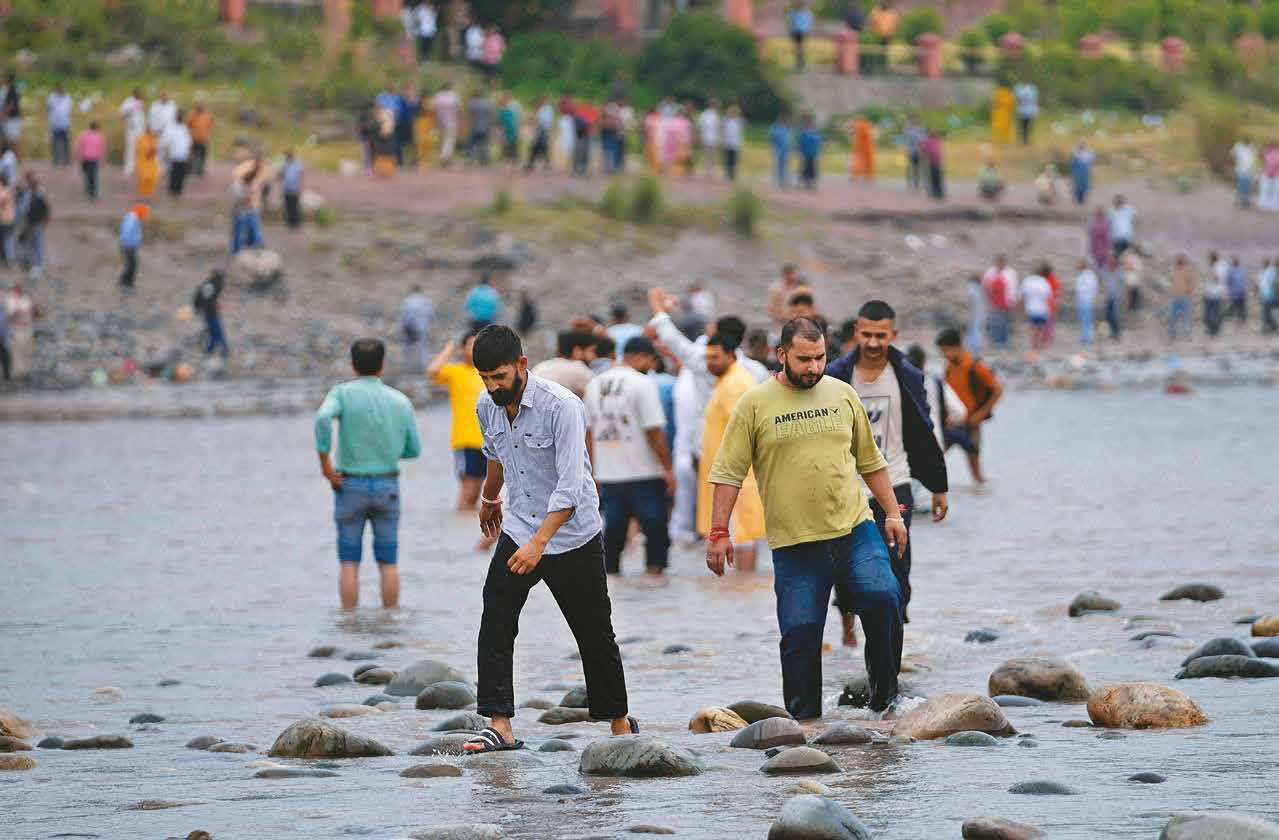
PAKISTAN has written to India seeking reconsideration of its decision to keep the Indus Waters Treaty (IWT) in abeyance. Its letter declares India's action to be “unilateral and illegal”. The tone is not conciliatory, but for the first time, signals willingness to discuss India's concerns. India has declared that it will keep the treaty in abeyance until Pakistan “credibly and irrevocably” abjures support for cross-border terrorism.
Linking talks on the IWT to action on terrorism can be tricky. India has tried in the past to pin Pakistan on its support to terrorism, but each time it wriggled out with insincere promises. The IWT deals with our country's water rights. And our own water needs should have priority over international commitments, especially since there is no accepted international law on river water sharing.
The IWT, signed in 1960, divided the waters of the Indus and its five tributaries, Jhelum, Chenab, Ravi, Beas and Sutlej. India got full rights to the waters of the Ravi, Beas and Sutlej (the 'eastern rivers'), which have an average annual flow of 33 million acre-feet (MAF). Pakistan got near-full rights to the other three rivers—Indus, Jhelum and Chenab—with an average annual flow of 135 MAF. On these rivers, India was allowed very limited consumptive use for agriculture and run-of-river hydel projects. The aggregate storage it could build for all purposes, including flood control, was limited to 3.6 MAF.
Pakistan was given inspection rights to ensure that India adhered to the prescribed storage and consumption limits. The treaty provided for a two-pronged dispute settlement mechanism—a neutral expert for technical questions and a court of arbitration for other issues—enforceable by the World Bank in a time-bound manner. A fund, paid for by both countries, was placed with the World Bank to pay for the expenses.

This story is from the June 01, 2025 edition of Outlook.
Subscribe to Magzter GOLD to access thousands of curated premium stories, and 10,000+ magazines and newspapers.
Already a subscriber? Sign In
MORE STORIES FROM Outlook
Outlook
Those Who Should Not be Named
“And then there were those who shouldn’t be named.”

3 mins
May 01, 2026

Outlook
Tactical Pause
The US is trying to force an outcome through economic and military leverage, while Iran is resisting being drawn into talks on unfavourable terms
4 mins
May 01, 2026

Outlook
Can Thalapathy be Thala?
Stardom in Tamil Nadu has been one of the most persuasive languages of power
7 mins
May 01, 2026

Outlook
The Curious Case of Akhtar Ali
The BJP's all-out war against the TMC's rule in Bengal has turned it into the most intense assembly election of 2026, albeit with greater democratic concerns
7 mins
May 01, 2026

Outlook
Shaping Leaders With Purpose
Dr Shashi Tharoor inspired IMT Ghaziabad's Class of 2026 to pursue purpose-led success grounded in ethics and leadership
2 mins
May 01, 2026
Outlook
S&P Global Strengthens India Presence with New Gurugram Hub
S&P Global has inaugurated a state-of-the-art office in Downtown Gurugram, reinforcing India's position as a strategic talent hub, with over 16,000 professionals based in the country.
1 min
May 01, 2026
Outlook
Black is for Kali
The Women's Reservation Bill got a thumbs down in the Lok Sabha. Here's what happened
2 mins
May 01, 2026

Outlook
King vs. Kingmaker
Samrat Choudhary, Bihar's first BJP chief minister, faces many challenges; among them, the task of carrying forward Nitish Kumar's model of governance
5 mins
May 01, 2026

Outlook
Intricate cancer case showcases surgical mastery
Dr. Neeraj Goel led a team at Dharamshila Narayana Superspeciality Hospital, carrying out a high-risk cancer procedure that saved a 65-year-old woman's life.
2 mins
May 01, 2026

Outlook
What it is to be a Man
Many years ago, when I used to drive down Ring Road to work, I often noticed her.
7 mins
May 01, 2026
Listen
Translate
Change font size