
Go Unlimited with Magzter GOLD
Get unlimited access to 10,000+ magazines, newspapers and Premium stories for just
Try GOLD - Free
Two to Tango
Outlook
|September 21, 2025
Keeping relations on an even keel with China is important for India's economic growth, but joining a world order led by it would be suicidal
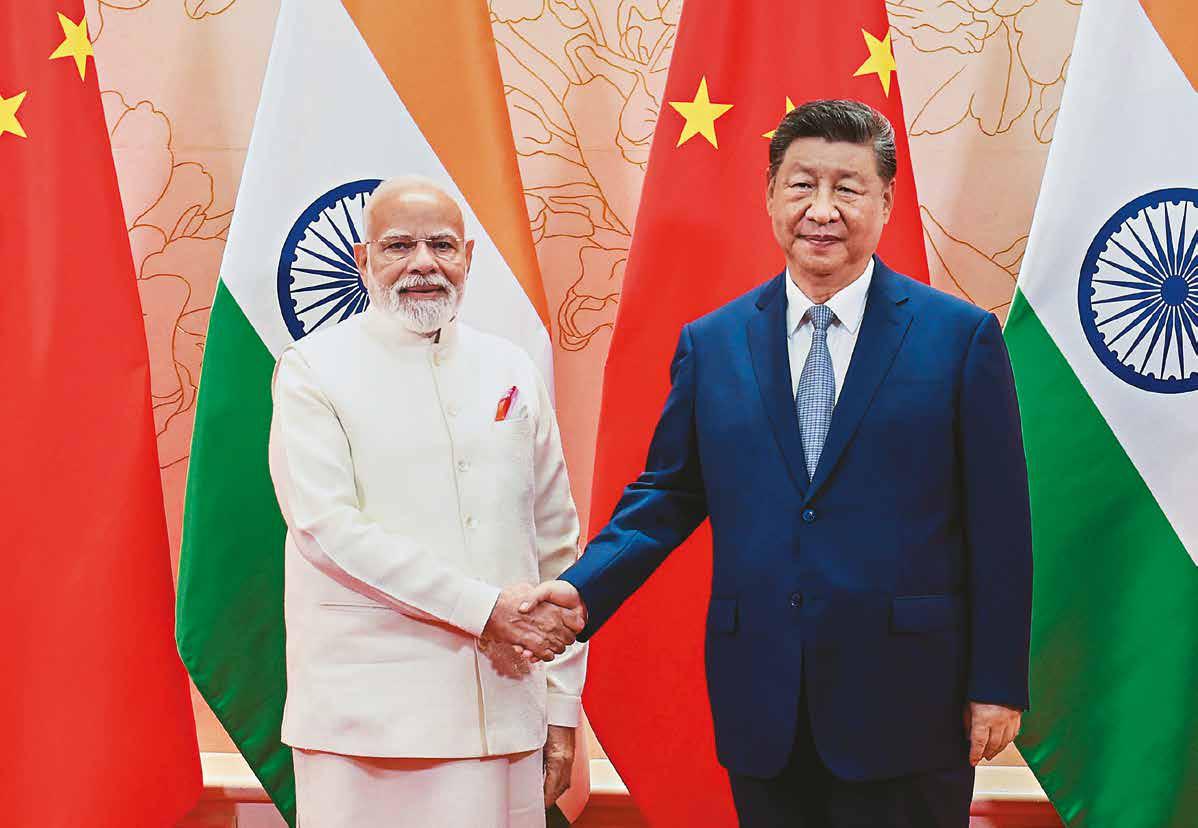
PRIME Minister Narendra Modi's visit to Tianjin to attend the Shanghai Cooperation Organisation (SCO) summit, designed to reset India-China relations after the five-year Galwan hiatus, became the most talked about international event of the day.
The two countries had initiated the process a year earlier when Modi met with Xi Jinping in Kazan at a BRICS (Brazil, Russia, India, China and South Africa) meeting. But coming as it did in the midst of India-US trade tensions and Xi's grandiose talk of a new global order, it sparked unusual interest. Donald Trump's sanctions on India were seen as the provocation for Modi's visit, and the bonhomie between him, Xi and Vladimir Putin a public rebuff to him.
While the summit produced an unprecedented turnout, the extraordinary global attention cannot be attributed to any new dynamism in the organisation. It drew world attention because it came on the heels of the spectacular failure of Trump's Alaska initiative and Putin's rebuff. Trump's tense meeting with European leaders was in sharp contrast to the warmth carefully orchestrated by the leaders in Tianjin.
Modi’s meeting with Xi was the pièce de resistance for the media. Xi played the statesman, his statements replete with platitudes counselling both countries to be partners not rivals, inviting the dragon and the elephant to tango and cautioning against letting the border dispute define the overall relationship. He delighted the Indian delegation by including a strong condemnation of the Pahalgam terror attack, whose exclusion had led Defence Minister Rajnath Singh to refuse to endorse the joint statement of the SCO defence ministers meeting in June.
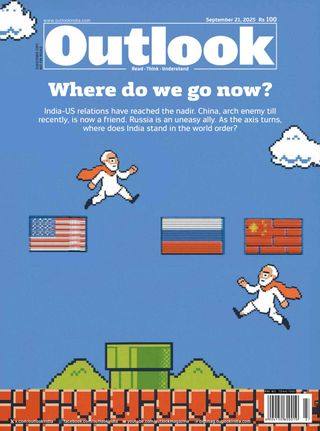

This story is from the September 21, 2025 edition of Outlook.
Subscribe to Magzter GOLD to access thousands of curated premium stories, and 10,000+ magazines and newspapers.
Already a subscriber? Sign In
MORE STORIES FROM Outlook

Outlook
'Why GDP Growth Doesn't Always Translate Into Votes'
The recent election results have once again shown that economic growth alone does not guarantee electoral victory.

3 mins
June 06, 2026

Outlook
Lights, Camera, Othering
The establishment of Israel has been accompanied by a national cinema devoted to negating and erasing the Palestinian Other
5 mins
June 06, 2026

Outlook
Goodbye to All That
Booker-winning British author Julian Barnes' Departure(s) is a unique hybrid work: playful, philosophical, whimsical
4 mins
June 06, 2026

Outlook
Collapse of Trust
As the NEET-UG 2026 paper leak forced the cancellation of India’s biggest medical entrance exam, more than 22 lakh aspirants find themselves trapped in uncertainty
11 mins
June 06, 2026

Outlook
NO LONGER A TWELFTH MAN
Bihar cricket, which has languished in the shadows for long, is all set to improve its strike rate, thanks to Vaibhav Sooryavanshi, the new Bihari kid on the block
5 mins
June 06, 2026

Outlook
BLAZE OF GLORY
The challenges of being a celebrity cricketer at a young age can be tough to handle
5 mins
June 06, 2026

Outlook
THE SWASHBUCKLERS
A new generation of fearless stars is emerging and finding its feet at the very top of an extremely competitive cricketing environment
5 mins
June 06, 2026

Outlook
THE TEEN TORNAD
At the age of 15, Vaibhav Sooryavanshi is already a cricketing legend
10 mins
June 06, 2026

Outlook
A Journey to Remember
The prerecorded message crackled over the din in the compartment: ‘Welcome to the Shatabdi Express.
4 mins
June 06, 2026

Outlook
Crossing Borders
Ruth Martin is the translator of German-Iranian author Shida Bazyar’s novel The Nights are Quiet in Tehran (originally written in German), which has been shortlisted for the 2026 International Booker Prize.
4 mins
June 06, 2026
Listen
Translate
Change font size