
Go Unlimited with Magzter GOLD
Get unlimited access to 10,000+ magazines, newspapers and Premium stories for just
Try GOLD - Free
Life. Together
Outlook
|August 21, 2025
My father suffered from a combine of schizophrenia and bipolar disorder for more than four decades. In all this time, our family battled social ostracisation, structural stigma and the healthcare system's inability to deal with mental illnesses effectively
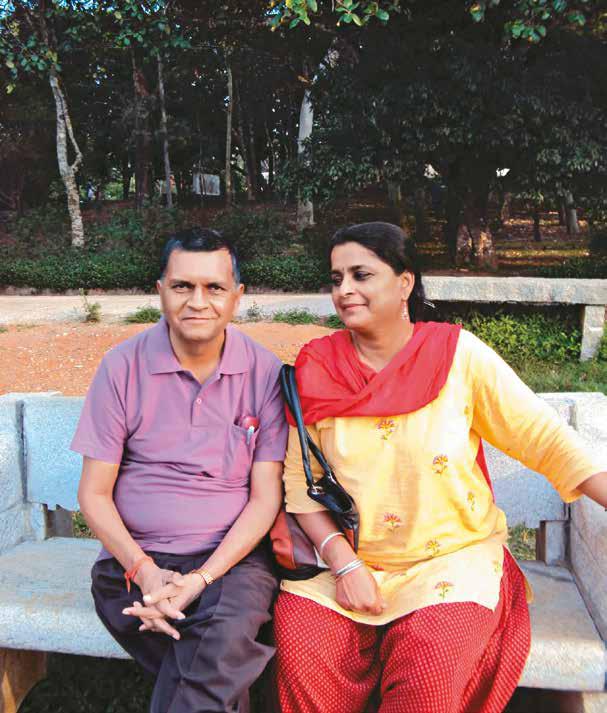
BRIGHT fluorescent light flooded the otherwise dingy room from every corner.
It looked like a prison cell with its grilled gate and armed guards. A low hum of listless chatter filled the air, with occasional yelling. My mother had gone to talk to the psychiatrist about my father's recovery. He seemed a little better, more himself than he had been lately. We were visiting him after some time and I was left to spend a few minutes with him. While he was away for a moment to use the washroom, one of the patients came up to me. I was naturally a little concerned, seeing no one familiar around. He handed me a chit with a phone number in it. Looking over his shoulder, he whispered, “Please call them when you leave from here. They will come to take me. These people won't let me go otherwise." As my father returned, he quickly said, "Please don't forget", and left. I showed the chit to my father. He said, "He's crazy, forget it. His folks have left him here and gone."
It must have been 2010 or 2011—it's hard to remember; years of going in and out of hospitals and rehabilitation centres can do a number on your memory. I would later find out that there were many like this person in that psychiatric ward, who were paid for by their families, but never taken back. My father, however, was always confident that he would eventually be home. Whenever he was admitted to a hospital or a rehab for a prolonged period, the nursing assistants would always report about him asking the same question—"When can I go home?" If not anything else, that was perhaps the one certainty my mother had been able to instil in his fragile mind with her care.
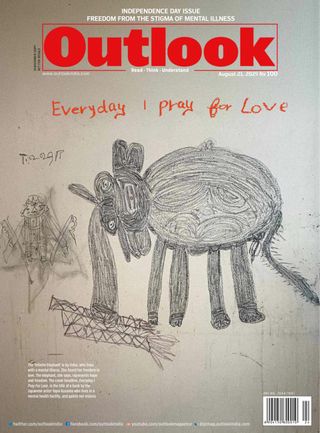

This story is from the August 21, 2025 edition of Outlook.
Subscribe to Magzter GOLD to access thousands of curated premium stories, and 10,000+ magazines and newspapers.
Already a subscriber? Sign In
MORE STORIES FROM Outlook

Outlook
'Why GDP Growth Doesn't Always Translate Into Votes'
The recent election results have once again shown that economic growth alone does not guarantee electoral victory.

3 mins
June 06, 2026

Outlook
Lights, Camera, Othering
The establishment of Israel has been accompanied by a national cinema devoted to negating and erasing the Palestinian Other
5 mins
June 06, 2026

Outlook
Goodbye to All That
Booker-winning British author Julian Barnes' Departure(s) is a unique hybrid work: playful, philosophical, whimsical
4 mins
June 06, 2026

Outlook
Collapse of Trust
As the NEET-UG 2026 paper leak forced the cancellation of India’s biggest medical entrance exam, more than 22 lakh aspirants find themselves trapped in uncertainty
11 mins
June 06, 2026
Outlook
NO LONGER A TWELFTH MAN
Bihar cricket, which has languished in the shadows for long, is all set to improve its strike rate, thanks to Vaibhav Sooryavanshi, the new Bihari kid on the block
5 mins
June 06, 2026

Outlook
BLAZE OF GLORY
The challenges of being a celebrity cricketer at a young age can be tough to handle
5 mins
June 06, 2026

Outlook
THE SWASHBUCKLERS
A new generation of fearless stars is emerging and finding its feet at the very top of an extremely competitive cricketing environment
5 mins
June 06, 2026

Outlook
THE TEEN TORNAD
At the age of 15, Vaibhav Sooryavanshi is already a cricketing legend
10 mins
June 06, 2026
Outlook
A Journey to Remember
The prerecorded message crackled over the din in the compartment: ‘Welcome to the Shatabdi Express.
4 mins
June 06, 2026

Outlook
Crossing Borders
Ruth Martin is the translator of German-Iranian author Shida Bazyar’s novel The Nights are Quiet in Tehran (originally written in German), which has been shortlisted for the 2026 International Booker Prize.
4 mins
June 06, 2026
Listen
Translate
Change font size