
Go Unlimited with Magzter GOLD
Get unlimited access to 10,000+ magazines, newspapers and Premium stories for just
Try GOLD - Free
Irish Philosophy & Me
Philosophy Now
|February/March 2024
Cathy Barry charts her journey through historical Irish thought.

Some claim Britain as the origin-point of the Enlightenment. France and Germany are equally famous for their philosophy. But what about Ireland? Those particularly interested in philosophy may have heard of John Scotus Eriugena and George Berkeley, but probably no more than that. Ireland has not been seen as a philosophical place.
In 2013 I was dabbling in blogging. Just before St Patrick’s Day (17th March), I saw Berkeley and Irish Philosophy on a library shelf, and decided to post about Berkeley, the single isolated genius I expected to find in that book. I had no idea what I was getting myself into. I wasn’t expecting, for example, William Molyneux promoting Enlightenment thought in late seventeenth century Dublin. A correspondent with John Locke, Molyneux set up an Irish philosophical society on the lines of Britain’s Royal Society, and convinced the provost of Trinity College Dublin to add Locke’s Essay Concerning Human Understanding to the syllabus.
As for John Toland, he was a shock to everyone. Born into an Irish-speaking Catholic family in Donegal, he left all that behind and became an advocate of ‘rational religion’ (that is, of deism), as he expounded in Christianity Not Mysterious (1696). The book, which argued that true religion includes no mysteries, caused a furore in both England and Ireland. When Toland arrived in Dublin in 1697 he found himself denounced from the pulpit. A few, including Molyneux, welcomed him, but after months of arguing in taverns and coffee shops, he left just before the Irish Parliament ordered his book banned and burned by the public hangman. Never to return to Ireland, Toland was later an editor of republican writings, a political philosopher supporting the Whigs, a pamphleteer for various political figures, and a hanger-on at the court of Sophia of Hanover.
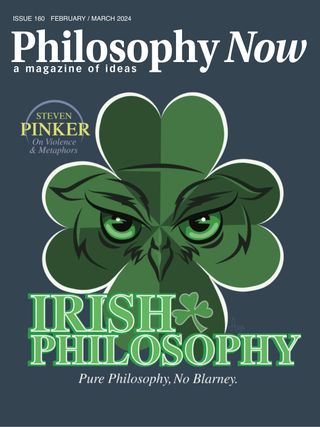

This story is from the February/March 2024 edition of Philosophy Now.
Subscribe to Magzter GOLD to access thousands of curated premium stories, and 10,000+ magazines and newspapers.
Already a subscriber? Sign In
MORE STORIES FROM Philosophy Now

Philosophy Now
Nosferatu
Stefan Bolea considers two very different artistic approaches to love and death.

6 mins
April/May 2025

Philosophy Now
Heidegger's Ghost
Raymond Tallis wonders where Heidegger's body went when he was philosophising.
7 mins
April/May 2025

Philosophy Now
Is Comedy Good For Us?
Damaris Stock has a laugh with Plato and friends.
10 mins
April/May 2025
Philosophy Now
In Defense of Idleness
Wendell O'Brien says, 'Just Don't Do It'.
10 mins
April/May 2025

Philosophy Now
Leaving Nothing to Chance by Carl Knight
LEAVING NOTHING TO Chance (2025) by Carl Knight, is an informed, proficient and lucid defence of luck egalitarianism.
3 mins
April/May 2025

Philosophy Now
Star Maker by Olaf Stapledon
THE 1937 SCIENCE FICTION novel Star Maker was written by philosophy professor Olaf Stapledon in the dark days as Europe awaited the onslaught of Nazi Germany. This casts a shadow over the whole book.
6 mins
April/May 2025
Philosophy Now
Love & Emptiness in the Sufi Tradition
Medha Ninad Tambe meditates on Rumi, love and self-negation.
7 mins
April/May 2025

Philosophy Now
The Hedgehog's Dilemma: A Metaphor About the Challenges of Human Intimacy
Krishna Chaubey explains Arthur Schopenhauer's poignant thought experiment.
4 mins
April/May 2025
Philosophy Now
The Mirror & the Flame
Rebwar Fatah imagines Attar's & Hegel's shared path.
4 mins
April/May 2025
Philosophy Now
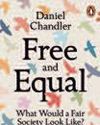
Free and Equal by Daniel Chandler
DANIEL CHANDLER, AN economist and philosopher based at the London School of Economics, begins Free and Equal: What Would a Fair Society Look Like? (2023) by asking an intriguing question. How is it, he wonders, that the most influential political philosopher of the last century has had almost no practical impact on politics or policy? The philosopher in question is John Rawls, whose magnum opus was A Theory of Justice (1971).
5 mins
April/May 2025
Listen
Translate
Change font size