
Go Unlimited with Magzter GOLD
Get unlimited access to 10,000+ magazines, newspapers and Premium stories for just
Try GOLD - Free
How To Be Really Good
Philosophy Now
|August/September 2022
Robert Griffiths considers what it takes to actually be a mensch.
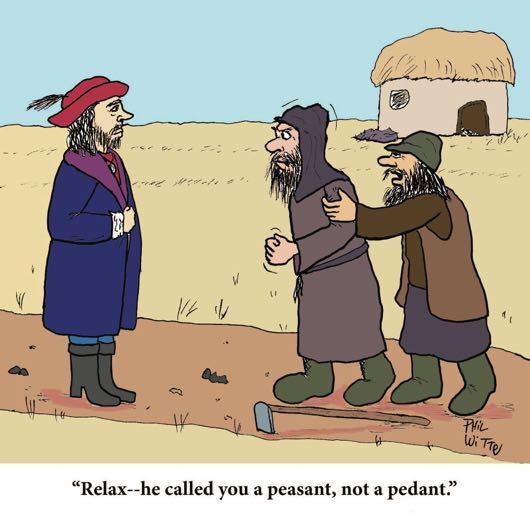
Research shows that most people think of themselves as nice people (see for example, 'People think they're nicer than they actually are', Rachel Hosie, Independent, 13.3.17). What they seem to mean b by this is that they do little things to help people, such as give up a seat on a train. This is what many people probably think being a 'good person' involves - doing good things. However, the same people admit that very often they do not help if it involves a more significant sacrifice. So, if they think of themselves as good, and they think of being good as doing good things, they realise that they are not as good as they could be. They are quite good but they could be a lot better.
Peter Singer has argued that if we see being good as doing good things, and if we really want to be good, then we have a moral obligation to help others up to the point where if we help them any more we would make ourselves worse off than they are (see for example, 'Famine, Affluence and Morality', 1972). Singer admit that not many people would live like this, and in later writings he has played this obligation down, suggesting that people who want to be good should only give up to 25% of their wealth to those less well off. But it's clear that, deep down, he thinks the more demanding principle holds as a moral requirement.
Loveless Goodness
Singer's view is based on his Utilitarian approach to morality. In Utilitarianism actions are judged morally good in so far as they promote the greatest happiness of the greatest number of people. Therefore the best action is the one that promotes the best consequences in this sense. Singer at his most demanding exhorts people to do the most good they can do.

This story is from the August/September 2022 edition of Philosophy Now.
Subscribe to Magzter GOLD to access thousands of curated premium stories, and 10,000+ magazines and newspapers.
Already a subscriber? Sign In
MORE STORIES FROM Philosophy Now

Philosophy Now
Nosferatu
Stefan Bolea considers two very different artistic approaches to love and death.

6 mins
April/May 2025
Philosophy Now
Heidegger's Ghost
Raymond Tallis wonders where Heidegger's body went when he was philosophising.
7 mins
April/May 2025

Philosophy Now
Is Comedy Good For Us?
Damaris Stock has a laugh with Plato and friends.
10 mins
April/May 2025
Philosophy Now
In Defense of Idleness
Wendell O'Brien says, 'Just Don't Do It'.
10 mins
April/May 2025
Philosophy Now
Leaving Nothing to Chance by Carl Knight
LEAVING NOTHING TO Chance (2025) by Carl Knight, is an informed, proficient and lucid defence of luck egalitarianism.
3 mins
April/May 2025
Philosophy Now
Star Maker by Olaf Stapledon
THE 1937 SCIENCE FICTION novel Star Maker was written by philosophy professor Olaf Stapledon in the dark days as Europe awaited the onslaught of Nazi Germany. This casts a shadow over the whole book.
6 mins
April/May 2025
Philosophy Now
Love & Emptiness in the Sufi Tradition
Medha Ninad Tambe meditates on Rumi, love and self-negation.
7 mins
April/May 2025

Philosophy Now
The Hedgehog's Dilemma: A Metaphor About the Challenges of Human Intimacy
Krishna Chaubey explains Arthur Schopenhauer's poignant thought experiment.
4 mins
April/May 2025
Philosophy Now
The Mirror & the Flame
Rebwar Fatah imagines Attar's & Hegel's shared path.
4 mins
April/May 2025
Philosophy Now
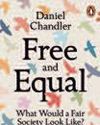
Free and Equal by Daniel Chandler
DANIEL CHANDLER, AN economist and philosopher based at the London School of Economics, begins Free and Equal: What Would a Fair Society Look Like? (2023) by asking an intriguing question. How is it, he wonders, that the most influential political philosopher of the last century has had almost no practical impact on politics or policy? The philosopher in question is John Rawls, whose magnum opus was A Theory of Justice (1971).
5 mins
April/May 2025
Translate
Change font size