Try GOLD - Free
Upland Focus: ACRE BY ACRE, HOPE GROWS FOR ONE OF NEW JERSEY'S LAST WILD GAME BIRDS
The Upland Almanac
|Summer 2025
Every day on the southern tip of New Jersey, a stream of trucks and cars lines up for passage on the Cape May-Lewes Ferry, which has been carting passengers across the Delaware Bay since the 1960s. Cape May has also been a rendezvous point for American woodcock since long before there was a ferry — or a city — at the spot.
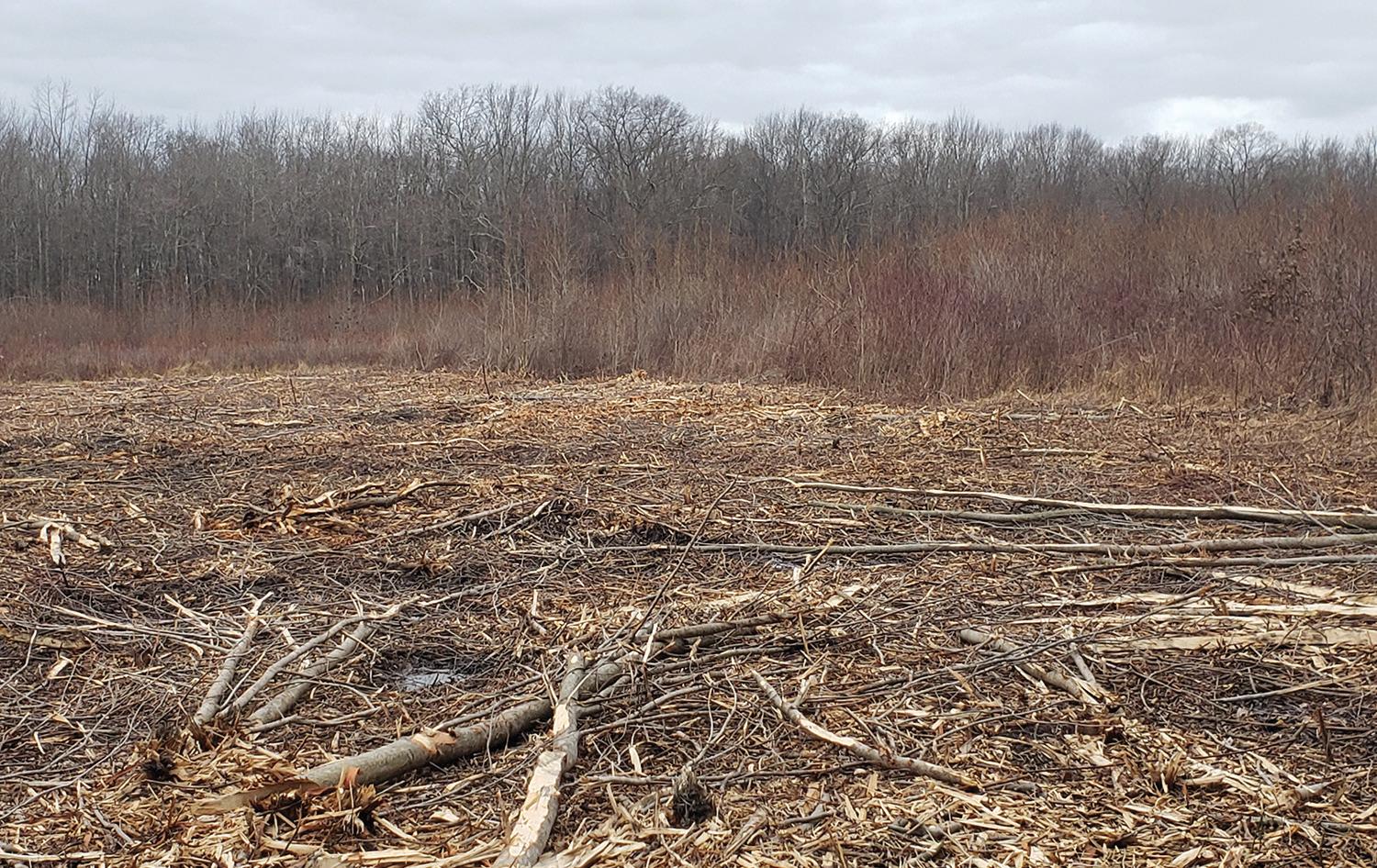
The Hydro-Ax leaves freshly cut terrain behind to allow for the growth of the next generation of woodcock habitat in New Jersey. (Photo/Mark Dreyfus)
“When woodcock are coming south, they sort of bunch up before they cross the Delaware,” says Ben Larson, a forest conservation director for the Ruffed Grouse Society and American Woodcock Society.
New Jersey’s human population is thriving, but its woodcock population, as elsewhere, has been trending in the other direction. A recently formed chapter of the American Woodcock Society is doing what it can to keep timberdoodles hunting for earthworms throughout New Jersey’s forests for generations to come.
Their challenge: New Jersey has lost more early successional forest than any other state in the region, Larson says, and adds, “Diversifying habitats in New Jersey is really, really key.”
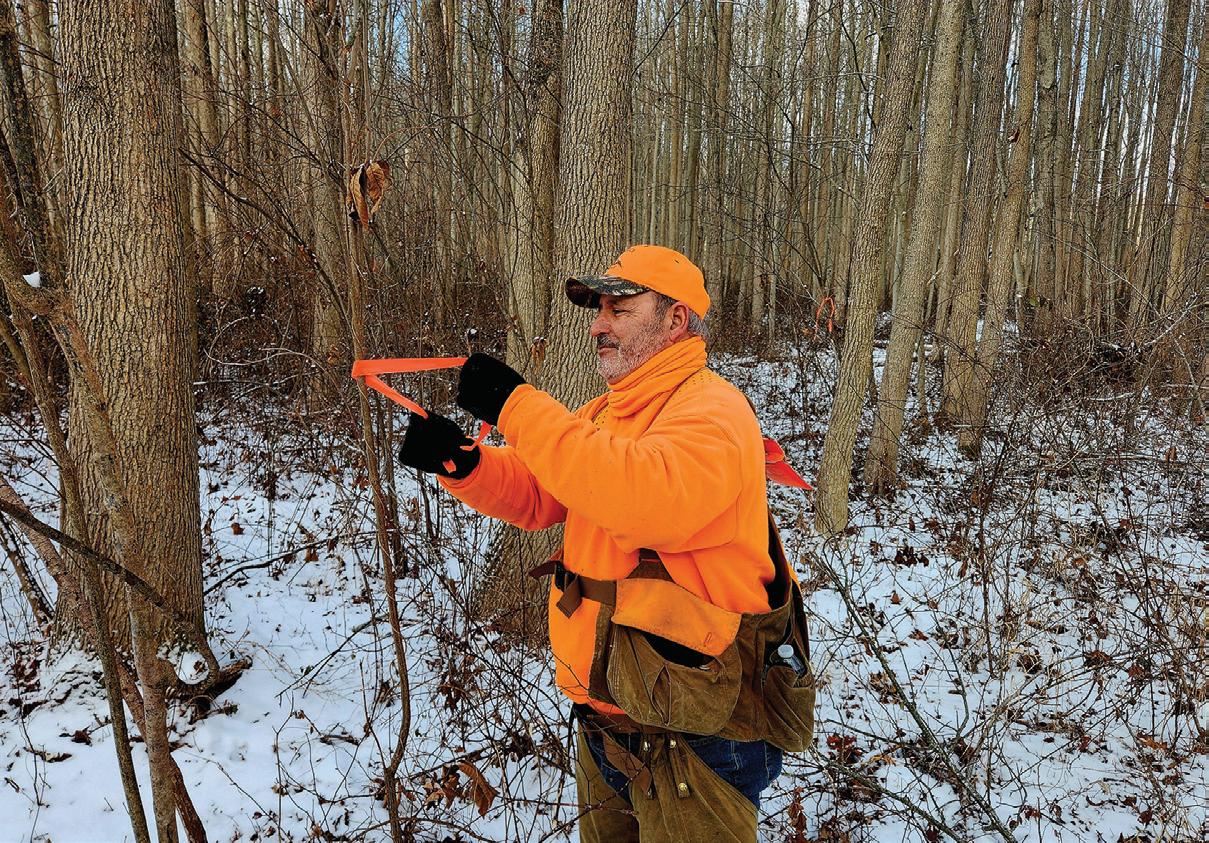 Chapter board member Ralph Di lorio marks an area before the state cuts it to create woodcock habitat. (Photo/Mark Dreyfus)
That’s because as hundreds of thousands of acres of young forest habitat that woodcock crave have disappeared, the Garden State has seen a corresponding decline in the number of these robust little fliers.
The American Woodcock Conservation Plan, developed through the Association of Fish and Wildlife Agencies and released in 2008, remains a rich source of information about woodcock habitat. It noted that in conservation Region 30 alone, which cuts across the southern part of New Jersey and includes its coastal areas, about 778,000 acres of small-diameter forest provided habitat from the 1960s to the 1980s. That number had fallen to about 139,000 acres by 2008. In the region, the prevalence of seedlings and saplings — young forest habitat — dropped from more than 60% to a little over 10%.


This story is from the Summer 2025 edition of The Upland Almanac.
Subscribe to Magzter GOLD to access thousands of curated premium stories, and 10,000+ magazines and newspapers.
Already a subscriber? Sign In
MORE STORIES FROM The Upland Almanac

The Upland Almanac
Mailbox & Insights
I have just finished reading the “Reflections” edition of your magazine, and I can’t say I have ever read a better issue of any magazine.

3 mins
Spring 2026
The Upland Almanac
Grouse Guns
Grouse guns are composed of wood, steel and memories.
2 mins
Spring 2026
The Upland Almanac
Late in an Uplanders's Life
\"The instant ages on the living eye....\" - Theodore Roethke, \"Infirmity\"
7 mins
Spring 2026
The Upland Almanac
HIGH, WIDE & Handsome
That's what I said to myself when I saw the two Hungarian partridge at the edge of a gravel road that winds through the foothills and up into the rugged crags of Montana's Rocky Mountain Front.
6 mins
Spring 2026

The Upland Almanac
THE MORNING OF THE FIRST DAY
On the morning of the day following that of his return, the Captain awakened at an early hour, but he lay quietly for some minutes while gazing out the open windows toward the South Orchard and the well-remembered hump of Rock Pasture beyond.
8 mins
Spring 2026

The Upland Almanac
Pages Past
Building a Book
4 mins
Spring 2026
The Upland Almanac
Everywhere Is Art
Everywhere Is Art
4 mins
Spring 2026
The Upland Almanac
Bird Dogs - Health Matters
Ursolic Acid in Athletic Sporting Dogs
4 mins
Spring 2026

The Upland Almanac
Profile of an Artist: Taylor Lunt
TAYLOR LUNT EXPANDS HIS RANGE
1 mins
Spring 2026

The Upland Almanac
Tailfeathers
The short walk from my work table to the coffee maker in my basement office usually produces no surprises.
4 mins
Spring 2026
Listen
Translate
Change font size