Try GOLD - Free
‘Aim to make India a global education hub, again’
Careers 360
|November 2025
Management Development Institute (MDI) Gurgaon has been granted Category 1 Graded Autonomy by AICTE, a recognition that strengthens its academic independence, enabling it to onboard up to 20% foreign faculty and students, and launch new programmes without prior approvals. Avanish Kumar, dean, School of Public Policy & Governance and Accreditations & Rankings, and co-chairperson (New Initiatives), MDI Gurgaon, during a conversation with Pritha Roy Choudhury, explains what this milestone means for the institute – from greater academic freedom and innovation in curriculum design to its evolution into a multidisciplinary university. Edited excerpts:
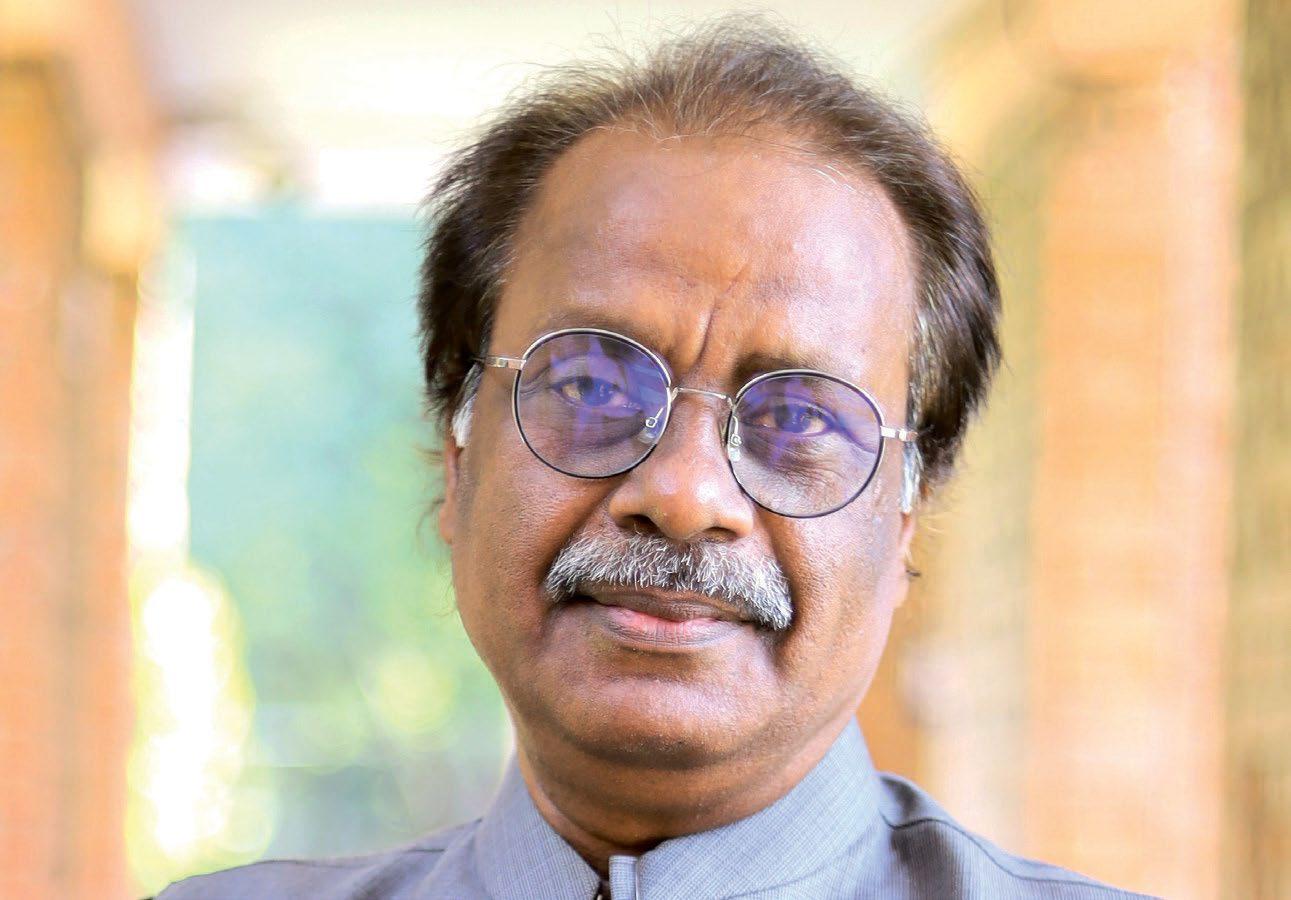
Q. Congratulations on the AICTE Category 1 recognition. How will this help MDI Gurgaon?
A. Graded autonomy is both a recognition of responsibility and a matter of pride for MDI – for our faculty and the institution as a whole. This recognition reaffirms what MDI has been doing for decades – delivering quality education with consistency. It not only acknowledges our past achievements but also gives us the freedom to move ahead with greater responsibility.
Therefore, the AICTE recognition
(1) Reinforces MDI's self-accountability to set an example for many higher education institutions in pursuing quality education beyond compliance, and
(2) MDI AICTE Category 1 recognition is freedom with responsibility to continue towards our vision with possibilities of academic expansion from a standalone to a multidisciplinary higher education university.
If you look at the broader educational paradigm in India, it is rapidly evolving, especially after NEP 2020. During 2014-15 to 2020-21, on average, 59 universities were added annually. By 2035, the NEP 2020 target is to double enrolment in our higher education institutions from 4.33 crores to nearly nine crores (90 million) students. With extreme heterogeneity in India's education system and the aspiration to become Viksit Bharat, regulations are designed to ensure quality assurance through control and compliance.
MDI's graded autonomy is a significant step forward. It allows us to make more responsible academic choices and set new benchmarks. It strengthens our accountability to deliver quality education beyond regulatory frameworks. It aligns with our and India's vision for evolution from a standalone management institute into a multidisciplinary higher education university.
Q. What does this “freedom” mean for MDI faculty and students?

This story is from the November 2025 edition of Careers 360.
Subscribe to Magzter GOLD to access thousands of curated premium stories, and 10,000+ magazines and newspapers.
Already a subscriber? Sign In
MORE STORIES FROM Careers 360

Careers 360
Women dominate NEET, not AIIMS
Even as women account for 58% of NEET qualifiers, AIIMS campuses continue to see heavily skewed gender ratio, reveals NIRF data; experts point to coaching patterns, emphasis on physics as contributing factors

3 mins
June 2026

Careers 360
Where medicine meets technology
IITs are introducing undergraduate programmes in biomedical engineering and allied fields to address the rising demand for indigenous medical devices and fill workforce gaps
5 mins
June 2026

Careers 360
THE COUNTRY'S BEST in medicine, dentistry, AYUSH, pharma
100 medical, 50 dental, 60 pharmaceutical colleges and leading AYUSH courses and colleges ranked
4 mins
June 2026
Careers 360
Becoming a 'major university' for the hills
Darjeeling Hills University is gradually shaping up into a major educational institution for the hills, with plans for a permanent campus at Jogighat in Mongpu and the introduction of employment-oriented and region-specific courses in the coming years. Debasis Dutta, controller of examinations, speaks to Pritha Roy Choudhury about the university’s functioning, future vision, infrastructure challenges, academic expansion, employment-focused initiatives and the overall goal of becoming a leading institution in the region. Edited excerpts:
4 mins
June 2026

Careers 360
A technical university failing on technicalities
A decade after Maharashtra made Dr Babasaheb Ambedkar Technological University the sole affiliating body for technical colleges, students are still waiting for their marksheets — and the state, for a fix
10 mins
June 2026

Careers 360
Paid on paper, broke in practice
NEET exam standardises entry into MBBS, but what students earn during internship remains a patchwork of state whims and private medical college manipulation; a Supreme Court order and NMC warnings have done little to nothing
4 mins
June 2026
Careers 360
'NIPERS are closing education-industry gap'
The National Institutes of Pharmaceutical Education and Research (NIPER) are revising their curriculum and launching programmes to better align pharma education with industry, both domestic and international. Shailendra Saraf, in charge of both NIPER Ahmedabad and NIPER Hyderabad, speaks to Sheena Sachdeva about the establishment of pharma hubs, centers of excellence, new courses, jobs and more. Edited excerpts:
4 mins
June 2026

Careers 360
Pharma college boom going bust?
With over 16,000 seats lying vacant and an alleged bribery scam with the national regulator, the unchecked expansion of Maharashtra’s pharmacy colleges is now threatening the livelihoods of graduates
7 mins
June 2026

Careers 360
The problem with cluster universities
Cluster university schemes, central and state, have found few takers. Funding strain, policy confusion, resource-sharing challenges have slowed implementation
4 mins
June 2026
Careers 360
‘Medical education will be tech-enabled, competency-driven & patient-centric'
SRM Medical College Hospital and Research Centre, Kattankulathur, is expanding its focus on interdisciplinary learning, AI-integrated healthcare education and research-driven medical training. Dr Jayanthi R, dean (medical), speaks to K Nitika Shivani about the institution’s leveraging its multidisciplinary university ecosystem to expose medical students to areas such as artificial intelligence, biomedical engineering, data science and translational research alongside conventional clinical education. SRM Medical College is also encouraging undergraduate students to participate in funded research, community health programmes and healthcare innovation initiatives. Edited excerpts from the conversation:
2 mins
June 2026
Listen
Translate
Change font size