Try GOLD - Free
THE ROAD TO HADRIAN'S WALL
BBC History UK
|August 2022
From Caesar's first invasion in 55 BC to the construction of the famous barrier some 175 years later, Rome engaged in multiple battles to subdue the peoples of Britain. Archaeologist Richard Hingley talks to Rob Attar about how the Romans sought to take control of this distant province

Rob Attar: The journey to the construction of Hadrian's Wall began almost 200 years earlier with the first campaigns of Julius Caesar. What inspired him to launch his expeditions to Britain in 55 and 54 BC?
Richard Hingley: Caesar was already a senior Roman general and politician at this point and he'd spent three years conquering Gaul. To Caesar, Britain was even more remarkable than Gaul because it was almost entirely unknown to the Romans. The islands of Britain had been tied into trade with the continent and we know traders from the Mediterranean in previous decades and centuries had travelled up the Atlantic coast and to Britain. But Britain itself, Caesar wrote, was a mystery to the Romans. The only thing they did know was that the Britons were highly "barbaric", in their own classical terms, lacking urban civilisation.
Caesar also wrote that he was really keen to explore Britain to add to his reputation. One reason for that was that Britain lies in the sea. The Romans inherited a concept about the ocean from the classical Greeks, that the world was an island surrounded by an endless ocean, and the remarkable thing about Britain was that it was set within the waters of this ocean. So Caesar wanted to go to Britain to increase his own status and his image in Rome as somebody who was exploring new lands.
The other thing we're told, by Caesar, is that the Britons had been helping the Gauls to fight him in Gaul itself. He, therefore, had that twin motivation: exploring, doing something really remarkable; and also punishing people who had been fighting him.
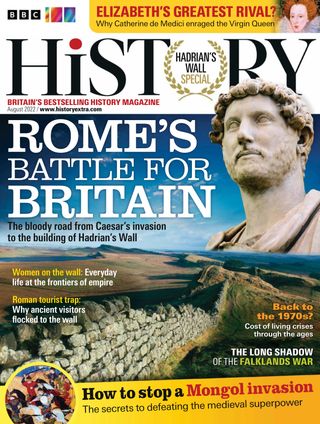

This story is from the August 2022 edition of BBC History UK.
Subscribe to Magzter GOLD to access thousands of curated premium stories, and 10,000+ magazines and newspapers.
Already a subscriber? Sign In
MORE STORIES FROM BBC History UK

History Extra
Personal stories
Few shows have enjoyed the longevity of Who Do You Think You Are? and it's easy to understand why it has endured.

1 min
June 2026

History Extra
Tidal change
Southern mythos notwithstanding, there exists no static, exceptional American South.
1 mins
June 2026

History Extra
Marriage story
Emily Howes on her novel about Catherine Dickens' relationship with her famous husband
1 mins
June 2026
History Extra
Sexual her-story
A witty, wide-ranging account of the myths and power structures behind female sexuality impresses SARAH JONES
2 mins
June 2026

History Extra
History man
According to Tom Hanks, during his childhood 'The War' was a recurring topic in the conversations of the adults around him.
1 min
June 2026
History Extra
How to be a master of disguise
10 do's and don'ts when attending a masquerade
2 mins
June 2026
History Extra
Age of indulgence
Our content producer Charlotte Vosper picks episodes of the HistoryExtra podcast about Georgian Britain
1 min
June 2026

History Extra
Gaffer tape
While Bobby Robson and Gareth Southgate both led England to World Cup semi-finals, Alf Ramsey remains the only manager to actually win the trophy.
1 mins
June 2026

History Extra
What's the origin of the Fosbury Flop?
Like the Salchow in ice skating, the Fosbury Flop is a sport technique that immortalises the name of its creator.
1 min
June 2026

History Extra
EXHIBITIONS
In 1776, the United States of America was born - heralded by the Declaration of Independence.
1 min
June 2026
Translate
Change font size