
Go Unlimited with Magzter GOLD
Get unlimited access to 10,000+ magazines, newspapers and Premium stories for just
Try GOLD - Free
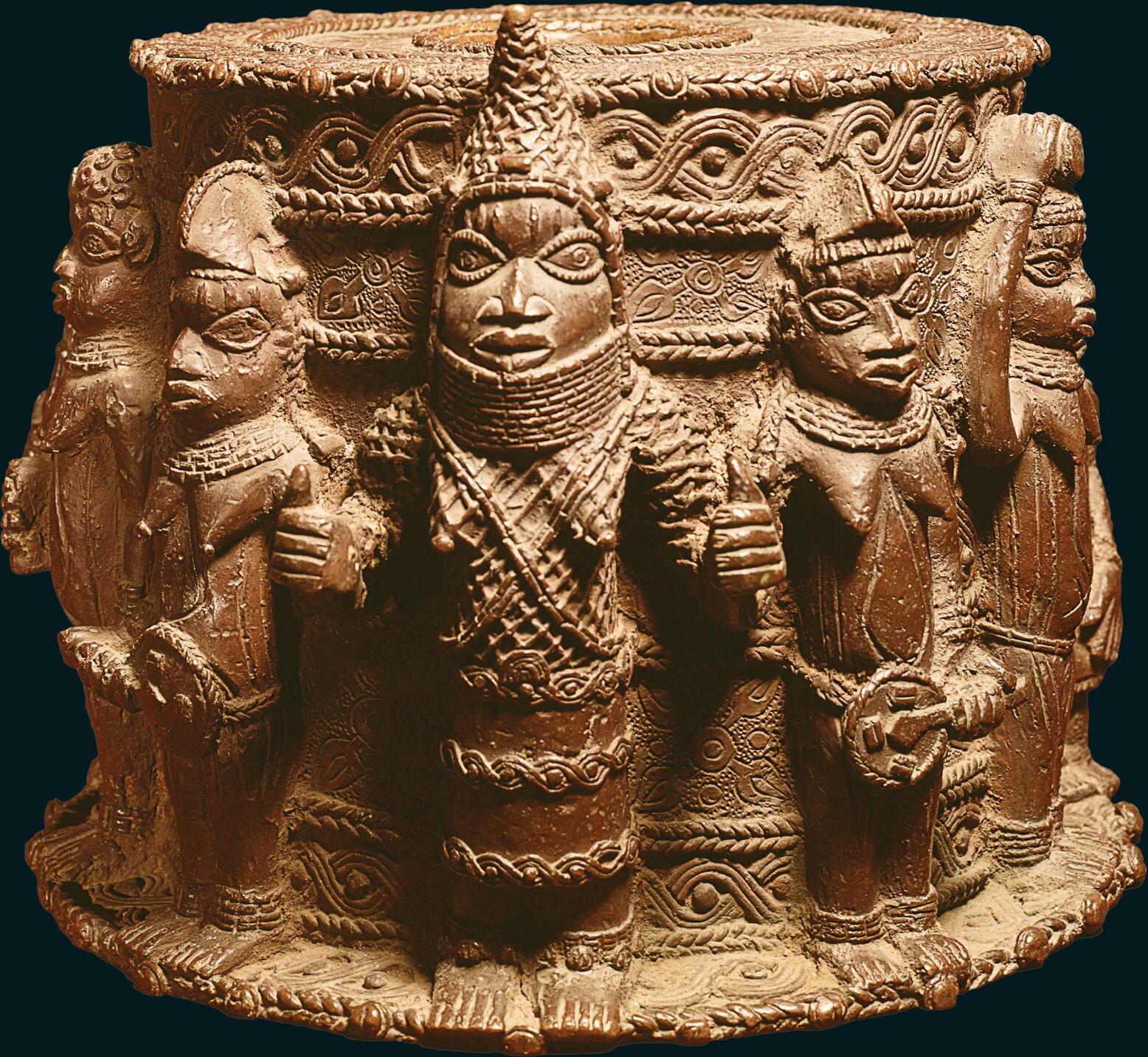
Slavery, exploitation and racism. These tragedies have long dominated histories of Africa. But there's another way to tell this story. And it's one that puts Africans right at the centre of their continent's extraordinarily rich and vibrant past
BBC History UK
|February 2025
An 1414, in the Chinese city of Nanjing, a giraffe caused a stir. Amid a crowd of shocked, noble spectators, an official, leading the creature via a rope tied round its face, presented it to China's Yongle emperor. His officials said it was a qilin - an auspicious unicorn - which his sage governance had made appear.
This giraffe was a gift from the sultan of Bengal. But it had originally come from Africa - specifically, the city-state of Malindi in today's Kenya. In 1415, ambassadors from Malindi and Mogadishu sailed to China. In a special ceremony, the Malindi ambassadors gifted the Yongle emperor another giraffe. Delighted at having received his second qilin, the Yongle emperor gave an order. His senior eunuch, Zheng He, whom he'd charged with overseeing the construction of a 200-strong fleet of treasure ships, was to sail to Malindi to obtain more giraffes and other goods.
With the holds of his ships full of treasures, including gold, silver, silk and ceramics, Zheng He set sail for Malindi in 1417. He exchanged what he had for goods including live animals such as leopards and zebras, frankincense and ivory. Sometime between then and 1423, Malindi's king himself sailed to China to meet the Yongle emperor in Nanjing. He made it as far as Fujian, a province in south-eastern China, where he died, seemingly succumbing to illness. He was buried in Fujian, and the Yongle emperor decreed that his grave be given a small sacrifice every year.
This is an intriguing story. But for Africa, it's not extraordinary. For at least 2,000 years, African civilisations have been plugged into international trade networks. Third-century AD Nubia (now northern Sudan and southern Egypt) exported goods including gold, ivory and ostrich feathers to Rome and Yemen. Along Africa's eastern coast, from northern Somalia to southern Tanzania, east African merchants exchanged similar goods for date syrup from Persian traders, swords from Yemenis and carnelian beads from Indians.
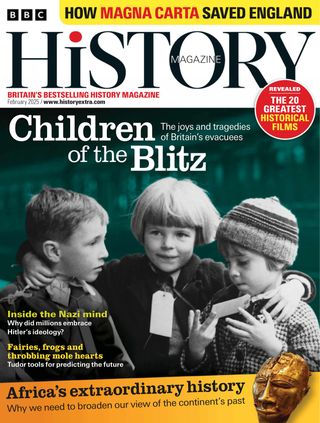

This story is from the February 2025 edition of BBC History UK.
Subscribe to Magzter GOLD to access thousands of curated premium stories, and 10,000+ magazines and newspapers.
Already a subscriber? Sign In
MORE STORIES FROM BBC History UK
History Extra
Going for gold
PATRICIA FARA recommends a globetrotting, time-travelling account of the roots of chemistry

2 mins
May 2026

History Extra
Viking revenge
JAMES OSBORNE indulges his love of Norse history in a role-playing game that scores high on the visuals but only skates over the underlying history
1 mins
May 2026

History Extra
Siena in five places
One of Tuscany's most magical hilltop cities is a medieval marvel of civic pride.
3 mins
May 2026

History Extra
The great survivor
When Elizabeth II ascended the throne in 1952, she could barely have conceived the currents - imperial retreat, multiculturalism, de-industrialiation – that would transform the nation during her reign. On the centenary of the Queen's birth, David Cannadine explores how she navigated seven decades of dizzying change
10 mins
May 2026

History Extra
Georgian Chocolate Tart
ELEANOR BARNETT serves up a rich chocolate tart that was once fit for a recovering king
2 mins
May 2026

History Extra
Capital ideas
A Kingdom and a Village: A One -Thousand-Year History of Moscow
1 mins
May 2026
History Extra
War report
SAM WILLIS enjoys a richly detailed and entertaining account of Admiral Horatio Nelson's greatest victory and its complicated aftermath
2 mins
May 2026
History Extra
The Peasants Revolt erupts
Popular anger at rising living costs shakes feudal England to its core
1 mins
May 2026
History Extra
Tales of coexistence
HEATHER J SHARKEY is impressed by a sweeping yet nuanced book challenging the idea that Jews and Muslims have been locked in a perpetual state of war
2 mins
May 2026

History Extra
"Narratives of victimhood, resistance and sacrifice are core to the Iranian regime's identity"
Revolution, repression and recurring crisis have shaped Iran's recent past – and continue to define its volatile present
10 mins
May 2026
Listen
Translate
Change font size