Try GOLD - Free
HENRY III AND THE MAGNA CARTA THAT MATTERED
BBC History UK
|February 2025
King John's sealing of a charter at Runnymede in 1215 is one of the most feted moments of the Middle Ages. Yet, writes David Carpenter, it was the charter issued by his son 10 years later that became fundamental to England's history
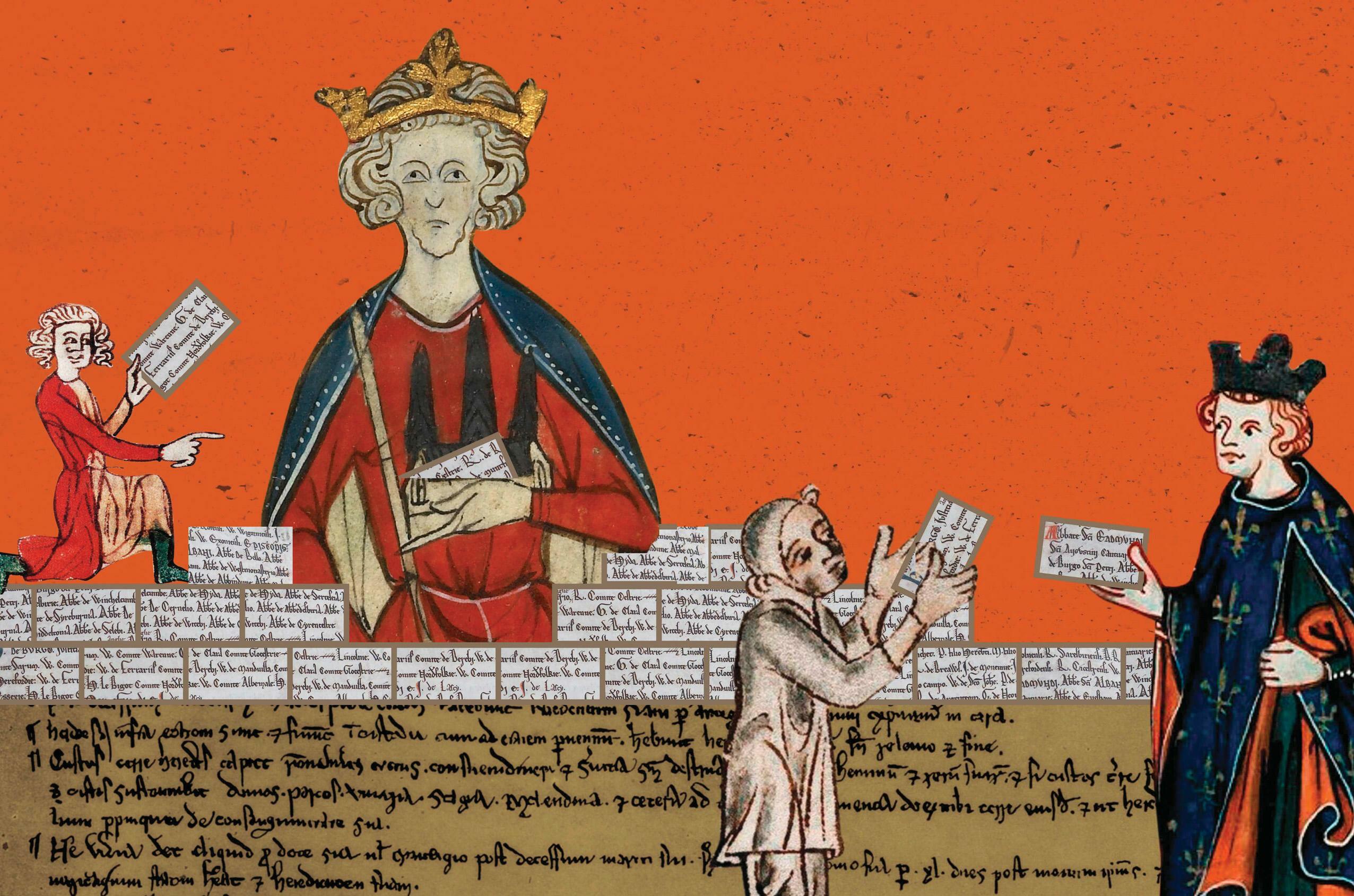
This February marks the 800th anniversary of Magna Carta. But wait - surely we already commemorated that milestone in 2015? Certainly, on 15 June that year, the Queen, the Duke of Edinburgh, the archbishop of Canterbury, prime minister David Cameron and assorted dignitaries gathered at Runnymede. At the meadow by the Thames between Windsor and Staines, they celebrated the charter King John had sealed there exactly 800 years earlier.
That document, sealed under duress from rebel barons and famously subjecting the king to the law and promising justice to all, is widely lauded today as a milestone in the establishment of English law. Yet the fact is that, in the centuries after 1215, the term Magna Carta was hardly ever used for John's document. Rather, that was the name given to the charter issued nearly a decade later by King John's son, Henry III, at Westminster on 11 February 1225.
Although Henry's charter was based on his father's, the earlier iteration was usually called simply the 'Charter of Runnymede'. So when, in 1297 and 1300, Henry's son Edward I confirmed Magna Carta, he meant the charter of 1225 - and the same was true of all later confirmations. Indeed, though most of its provisions have since been repealed, those chapters that remain on the statute book of the UK today are from the 1225 version. So how did the Charter of Runnymede in 1215 become Magna Carta in 1225?
Abandoned promises

This story is from the February 2025 edition of BBC History UK.
Subscribe to Magzter GOLD to access thousands of curated premium stories, and 10,000+ magazines and newspapers.
Already a subscriber? Sign In
MORE STORIES FROM BBC History UK
History Extra
Going for gold
PATRICIA FARA recommends a globetrotting, time-travelling account of the roots of chemistry

2 mins
May 2026

History Extra
Viking revenge
JAMES OSBORNE indulges his love of Norse history in a role-playing game that scores high on the visuals but only skates over the underlying history
1 mins
May 2026

History Extra
Siena in five places
One of Tuscany's most magical hilltop cities is a medieval marvel of civic pride.
3 mins
May 2026
History Extra
The great survivor
When Elizabeth II ascended the throne in 1952, she could barely have conceived the currents - imperial retreat, multiculturalism, de-industrialiation – that would transform the nation during her reign. On the centenary of the Queen's birth, David Cannadine explores how she navigated seven decades of dizzying change
10 mins
May 2026

History Extra
Georgian Chocolate Tart
ELEANOR BARNETT serves up a rich chocolate tart that was once fit for a recovering king
2 mins
May 2026

History Extra
Capital ideas
A Kingdom and a Village: A One -Thousand-Year History of Moscow
1 mins
May 2026
History Extra
War report
SAM WILLIS enjoys a richly detailed and entertaining account of Admiral Horatio Nelson's greatest victory and its complicated aftermath
2 mins
May 2026
History Extra
The Peasants Revolt erupts
Popular anger at rising living costs shakes feudal England to its core
1 mins
May 2026

History Extra
Tales of coexistence
HEATHER J SHARKEY is impressed by a sweeping yet nuanced book challenging the idea that Jews and Muslims have been locked in a perpetual state of war
2 mins
May 2026

History Extra
"Narratives of victimhood, resistance and sacrifice are core to the Iranian regime's identity"
Revolution, repression and recurring crisis have shaped Iran's recent past – and continue to define its volatile present
10 mins
May 2026
Listen
Translate
Change font size