Try GOLD - Free
PRISON BREAKS
The New Yorker
|December 15, 2025
A new study illuminates the origins of incarceration
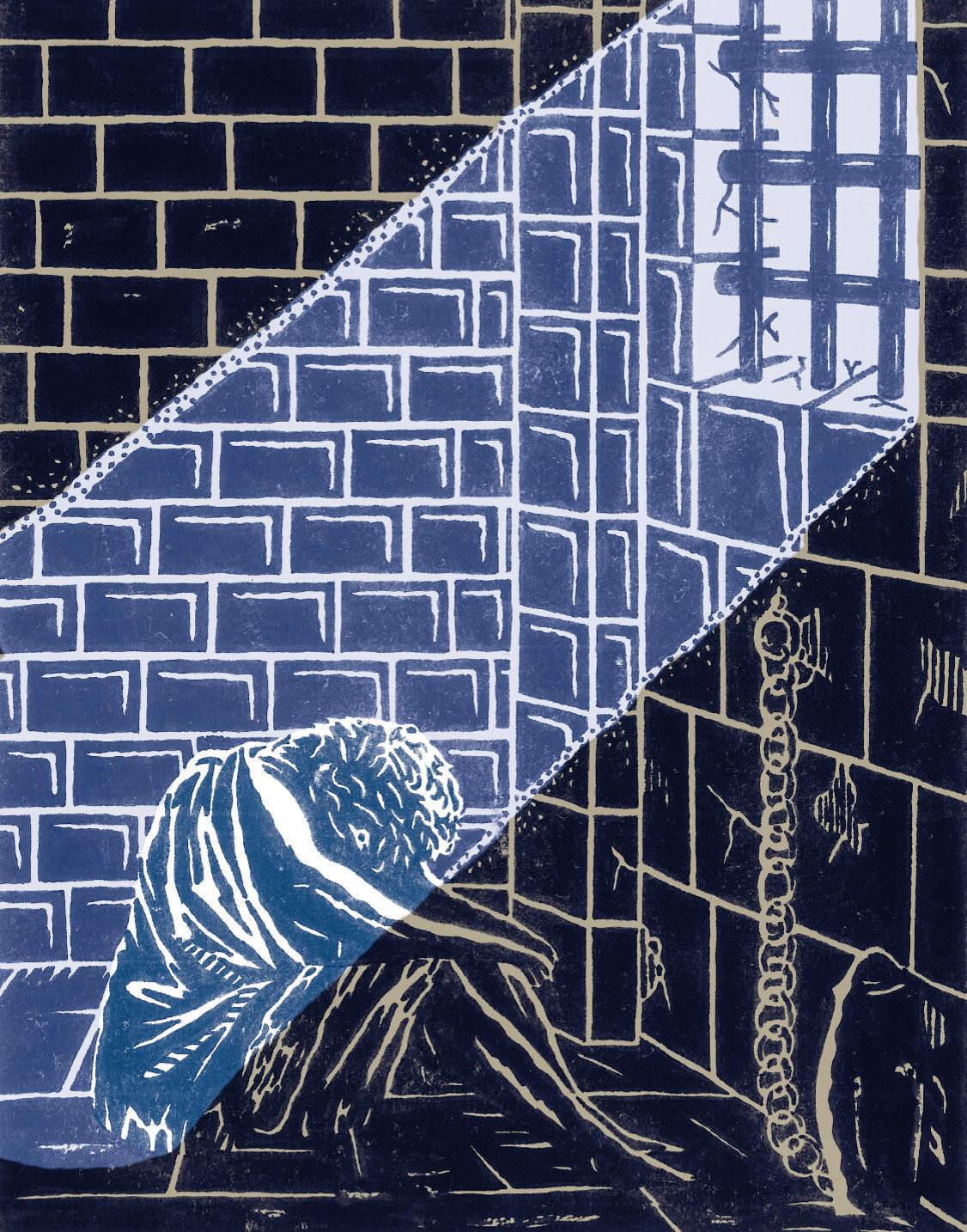
A widespread myth holds extended imprisonment to be a modern development.
In Ryan George’s wonderful “Pitch Meeting” series, on YouTube, the excitable producer character, relishing the eager screenwriter character’s ability to load a conflict with life-or-death consequences, always enunciates “stakes!” with shivering excitement. Similarly, when we read non-narrative scholarly books, what we want in exchange for all the minutiae is a sense that something significant, something we might call stakesy, is on the line. When scholars debate the dating of the Gospels, the time difference may seem small, but the stakes are obvious: Were these texts written by contemporaries of Jesus or not? Another book, say, on eighteenth-century musket design, may take many pages before it reveals that nothing less than the proper interpretation of the Second Amendment is in play.
Matthew D. C. Larsen and Mark Letteney’s “Ancient Mediterranean Incarceration” (California) is a dense, sometimes exhaustingly detailed work, but its stakes turn out to be as high as can be: the origins and meaning of incarceration itself. The central question is whether incarceration is a special affliction of the post-Enlightenment world, as Michel Foucault argued in his epoch-marking 1977 book, “Discipline and Punish”—a position that by the late twentieth century had become, well, almost gospel. What if the history of incarceration is, in fact, remarkably continuous across time, place, and circumstance? Foucault’s enveloping project was to recast Western history as a series of closed “epistemes,” or governing structures of thought, each redefining conventional terms like “reason” and “humanity” according to the brute dictates of power. If the central plank of this hugely influential model is rotten, then the whole might be shakier than it looks.

This story is from the December 15, 2025 edition of The New Yorker.
Subscribe to Magzter GOLD to access thousands of curated premium stories, and 10,000+ magazines and newspapers.
Already a subscriber? Sign In
MORE STORIES FROM The New Yorker

The New Yorker
ROMAN HOLIDAY
Wolfgang Koeppen's sprawling masterpiece of postwar amnesia and hypocrisy.

13 mins
May 04, 2026

The New Yorker
THE TRICKSTER
Marcel Duchamp's belief in possibility radicalized art itself.
14 mins
May 04, 2026

The New Yorker
GROWTH NARRATIVE
The L.A. restaurant that weathered a moldy-jam scandal.
7 mins
May 04, 2026

The New Yorker
PROCESS OF ELIMINATION
Someone must have been telling lies about me because when I came in for my shift this morning, I found out I was going to be fired for stealing the tip jar.
25 mins
May 04, 2026
The New Yorker
AVA'S LIFE LIST
“I can't be sure. I don't want to cheat.”
3 mins
May 04, 2026

The New Yorker
ATTENTION MUST BE PAID
How Scott Rudin turned Laurie Metcalf into the First Lady of American Theatre.
28 mins
May 04, 2026

The New Yorker
SIGNED, SEALED, DELIVERED
What happens when someone throws a message into the sea?
23 mins
May 04, 2026

The New Yorker
BURNING MAN
Lee Zeldin's assault on the E.P.A.
24 mins
May 04, 2026

The New Yorker
BROTHERLY LOVE
\"Half Man,\" on HBO.
5 mins
May 04, 2026

The New Yorker
THE TALK OF THE TOWN
In the midst of a war, Donald Trump has started to get rid of his senior officials. The exact reasons are often left vague, and the successors to be determined, but people are leaving.
17 mins
May 04, 2026
Listen
Translate
Change font size