Try GOLD - Free
SWORD BEACH
History of War
|Issue 133
The easternmost sector of the 6 June Normandy Landings was a mostly British affair, and Saw some of the biggest territorial gains of the first day of the Allied invasion

On 6 June 1944, the long-anticipated assault on occupied France took place along a 50 mile (80km) front – however the amphibious landings were confined to roughly 12 miles (19km) of beaches across five areas. One of the smallest landing areas was the easternmost, where the British 3rd Infantry Division would land on Queen White and Red beaches alongside the town of Ouistreham.
Sword would be a tough nut to crack. The beach itself was well defended by the formidable stützpunkt 20, codenamed strongpoint Cod by the British, a significant company-sized fortification and the largest single strongpoint on all five Normandy beaches. To the east widerstandsnest 18 (Skate) was equipped with a 3in (75mm) anti-tank gun that could fire down the length of the beach, while widerstandsnest 21 (Trout) a little to the west could bring fire down on the attackers’ right flank. A little recognised fact is that, although considerably narrower than Omaha Beach, the average strength of the defences per mile was practically the same on Sword.
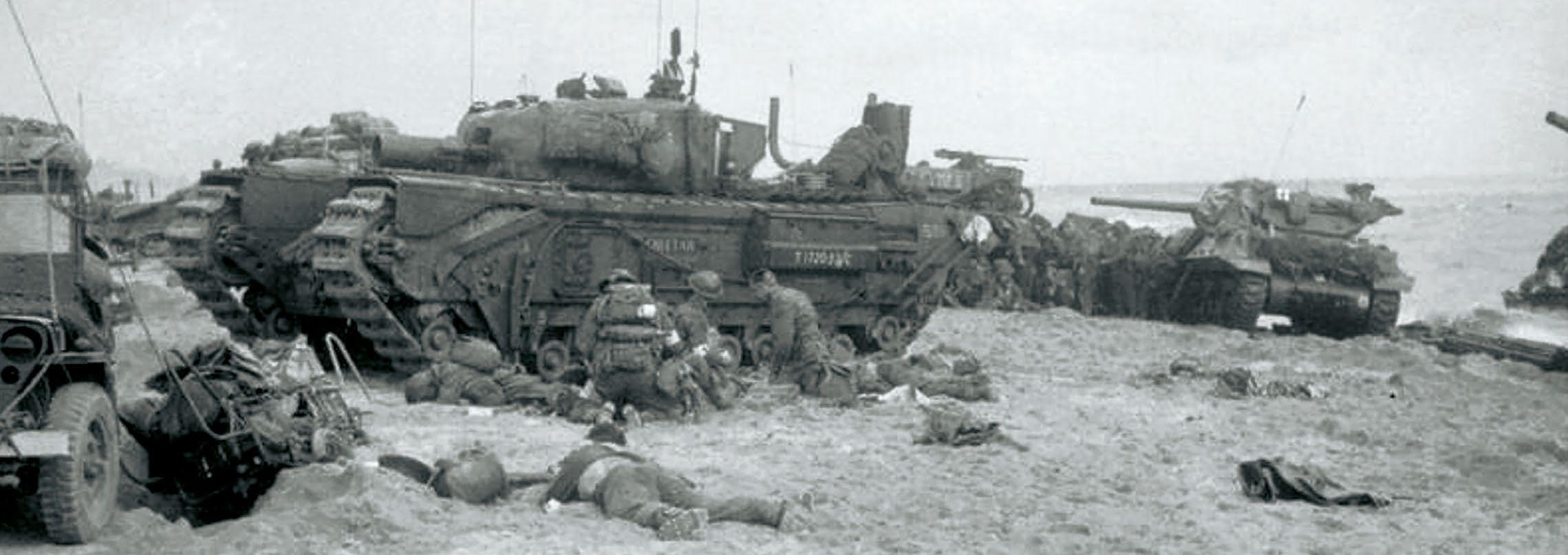
Unlike Omaha, Sword was relatively low-lying and the attackers would not have to contend with the high bluffs that characterised the US beach. But unlike Omaha, 3 Division would have to deal with significant defences inland as well. Once off the beach, several artillery strongpoints and command posts barred the way, the strongest of which was widerstandsnest 17 (Hillman). Set into the broad Periers ridge 2 miles (3km) inland, it boasted numerous underground bunkers, steel cupolas and anti-tank guns. Moreover, its strength had been badly underestimated by Allied intelligence.

This story is from the Issue 133 edition of History of War.
Subscribe to Magzter GOLD to access thousands of curated premium stories, and 10,000+ magazines and newspapers.
Already a subscriber? Sign In
MORE STORIES FROM History of War

History of War
HOW TO BUILD A SPITFIRE
AN ABSORBING TALE OF ONE MAN'S OBSESSION TO BUILD A FULL-SIZE REPLICA SPITFIRE IN HIS GARDEN JUXTAPOSED AGAINST REAL STORIES OF BUILDING SPITFIRES AND THE MEN WHO FLEW THEM

2 mins
Issue 154

History of War
THE AIRLIFT
VICTORIES, MYTHS, AND THE BERLIN BLOCKADE
3 mins
Issue 154

History of War
WITH SPANNERS DESCENDING
Discover the essential role of British Army engineers during Second World War airborne operations
1 min
Issue 154
History of War
HOMEMADE EOKA FLAG
Breaking a ban enforced during the Cyprus Emergency, this flag compared the Cypriot fight against the British Empire to the Greek War of Independence against the Ottoman Empire
1 mins
Issue 154

History of War
SPIES, LIES AND DECEPTION
Introduce your children to over a century of spying as the Imperial War Museum's exhibition on espionage comes to Manchester
1 mins
Issue 154
History of War
DESERT DAREDEVIL
Scientist, explorer and a pioneer of special forces warfare – Ralph Bagnold was responsible for creating a crack unit during WWII
9 mins
Issue 154

History of War
OBJECTS IN FOCUS: VE/VJ DAY
The Royal Armouries Museum's new display commemorates the individuals and weapons who fought in the Pacific during WWII's final months
1 min
Issue 154
History of War
1945 - THE RECKONING WAR, EMPIRE AND THE STRUGGLE FOR A NEW WORLD
THIS EXAMINATION OF WHAT THE END OF WWII MEANT FOR THE BRITISH, DUTCH AND FRENCH EMPIRES POSES SOME UNCOMFORTABLE QUESTIONS
2 mins
Issue 154
History of War
POINTE DU HOC
During D-Day's toughest mission, US Rangers stormed an artillery position between Omaha and Utah beaches, before holding out against two nights of counterattacks
10 mins
Issue 154
History of War
WOLFPACK- INSIDE HITLER'S U-BOAT WAR
GET A TASTE OF THE FEAR, TENSION AND 'DEATH OR GLORY' LIFE OF GERMANY'S SUBMARINE CREWS
1 min
Issue 154
Listen
Translate
Change font size