Try GOLD - Free
Another Route
Successful Farming
|March 2025
What options might ethanol producers consider to lower carbon intensity if pipelines don't work out?
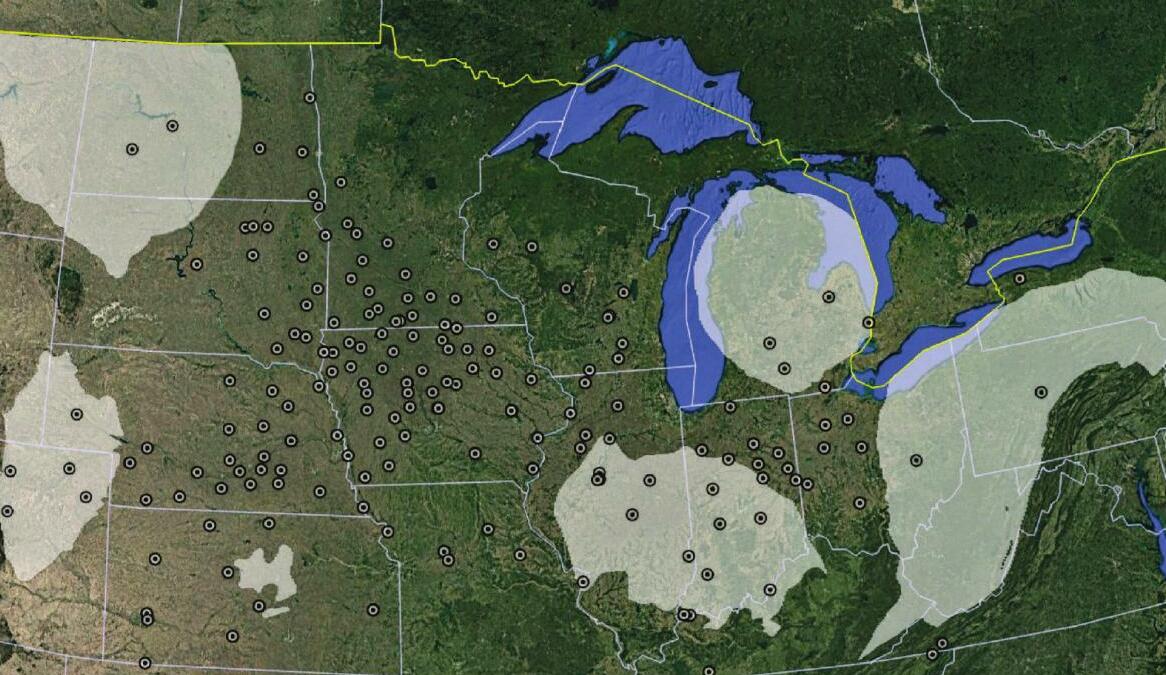
The U.S. ethanol industry has identified carbon capture and sequestration (CCS) pipelines as a solution to achieve lower carbon intensity (CI), but not everyone impacted by the pipelines, such as landowners, is sold. In this installment of our CCS pipeline coverage, we explore why ethanol producers are pursuing pipelines and which other options are available if the pipelines fail.
CCS Pipelines: Silver Bullet or Misfire?
In 2022, former President Joe Biden signed the Inflation Reduction Act, which created the 45Z Clean Fuel Production Credit and upped the benefit for the 45Q tax credit for carbon sequestration.
The year before, the federal government announced the Sustainable Aviation Fuel (SAF) Grand Challenge to escalate SAF's market share in fueling American aircraft. SAF can be made from ethanol and is seen as a potentially immense new market for that cornstarch-based fuel. However, in order for a SAF producer to claim the 45Z credit, they must use ethanol with a carbon intensity (CI) score much lower than the current Midwest average of 55.2.
These factors, combined with growing societal interest in lowering carbon emissions and the looming existential threat of electric vehicles, signaled to the ethanol industry it needed to find a way to lower CI. CCS pipeline projects emerged as a favored solution.
Capturing CO2 from the fermentation process of ethanol production is estimated to reduce ethanol's CI by roughly 30 points, according to a study commissioned by Growth Energy, a national ethanol trade association.
Growth Energy's study looked into the various ways ethanol producers and corn farmers could help lower ethanol CI. Among the many steps a plant could take, the study showed CCS had the best balance between CI reduction and cost of implementation.


This story is from the March 2025 edition of Successful Farming.
Subscribe to Magzter GOLD to access thousands of curated premium stories, and 10,000+ magazines and newspapers.
Already a subscriber? Sign In
MORE STORIES FROM Successful Farming

Successful Farming
When Fire Backfires
Controlled burns and field fires are part of farm life. But when flames or smoke drift beyond your fence line, you could be on the hook for major damages.

4 mins
March 2026

Successful Farming
Planter Calibration Sets Yield Potential
Preparing, calibrating, and verifying planter performance help ensure uniform emergence.
4 mins
March 2026

Successful Farming
all around THE FARM
I built this rolling cart out of two Harbor Freight scissor-lift transmission jacks.
1 mins
March 2026

Successful Farming
Pickup Box Power Utility Center
An easy-access portable energy source serves multiple functions.
1 mins
March 2026

Successful Farming
6 Tips for a Tighter Calving Window
Experts say a shorter calving season can optimize your barn’s productivity and your checkbook.
4 mins
March 2026

Successful Farming
Are We Too Young for an Estate Plan?
Problem: A young couple with children doesn’t have an estate plan, but their assets may change with future inheritance and acquisitions.
2 mins
March 2026

Successful Farming
New Holland PowerStar Electro Command Tractors
High-power machines feature utility size.
2 mins
March 2026

Successful Farming
Claas Jaguar 1000 Forage Harvester for Wide Crop Flow
The 1000 series is launching with four new models.
2 mins
March 2026

Successful Farming
Mark Crave
At this Wisconsin dairy, sustainability and family farming go hand in hand, from milking 2,300 cows to powering the farm with manure.
3 mins
March 2026

Successful Farming
Insuring Against Fire
Being fully covered in case of fire is critical after a disaster.
3 mins
March 2026
Listen
Translate
Change font size