
Go Unlimited with Magzter GOLD
Get unlimited access to 10,000+ magazines, newspapers and Premium stories for just
Try GOLD - Free
Olfaction is a very misunderstood sense in hens
The Country Smallholder
|March 2025
Paul Donovan investigates the sense of smell, and how it impacts behaviour.
-
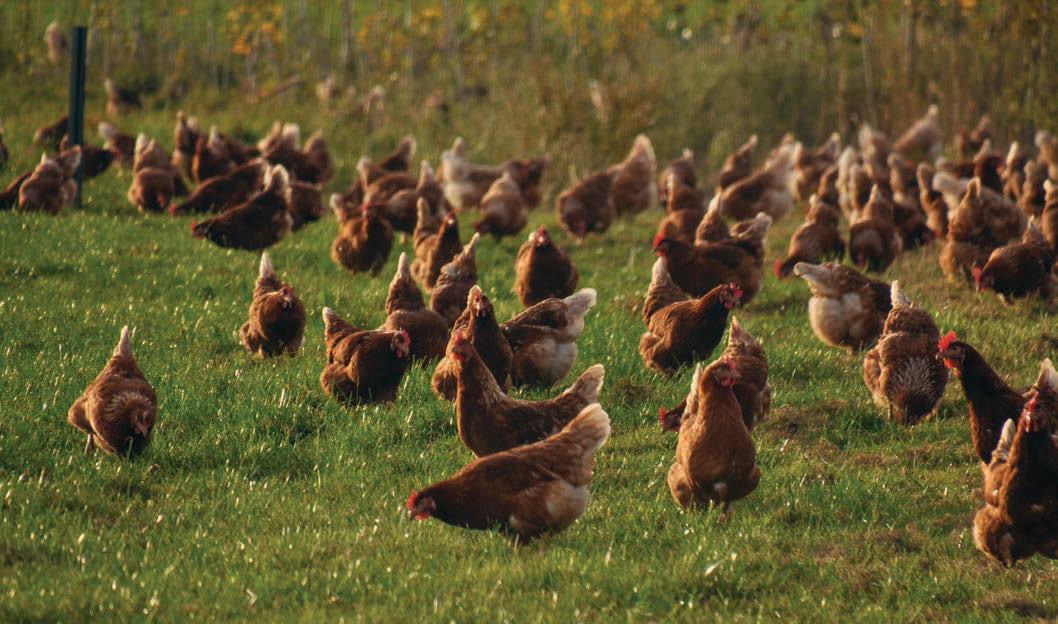
When we think of chickens, we often associate their behaviour with visual and auditory cues - pecking at grain, clucking loudly, or flapping their wings. However, there's a lesser-known sense that plays a vital role in shaping their daily lives: olfaction, or the sense of smell.
Contrary to popular belief, chickens possess a surprisingly well-developed olfactory system, capable of detecting subtle scents, and influencing their behaviour in profound ways. From scratching for food to recognising social hierarchy, chickens also rely heavily on their sense of smell to navigate their environment.
Olfaction plays a critical role in chicken behaviour, affecting everything from stress levels, to spatial memory. Yet, despite its importance, the role of olfaction in chicken behaviour remains poorly understood.
In this article, we'll delve into the fascinating world of chicken olfaction, exploring the anatomy and physiology of their olfactory system, the various roles smell plays in their behaviour, and practical applications for poultry farmers, and smallholders.
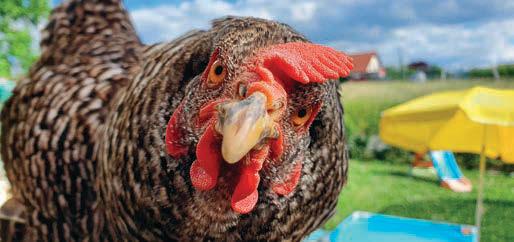 EVOLUTION OF OLFACTION IN CHICKENS
The evolution of olfaction in chickens is deeply rooted in their ancestral history. Birds evolved from theropod dinosaurs, and their olfactory system shares similarities with these ancestral predators.
Fossil records indicate that early birds, such as Archaeopteryx, possessed a relatively developed olfactory system around 150 million years ago. This sensory capability likely aided their survival, enabling them to detect food, predators, and mates.
As birds diversified, olfactory adaptations emerged to suit specific ecological niches. Chickens, descended from Jungle Fowl, and inherited robust olfactory systems suited for foraging and predator avoidance in dense vegetation.

This story is from the March 2025 edition of The Country Smallholder.
Subscribe to Magzter GOLD to access thousands of curated premium stories, and 10,000+ magazines and newspapers.
Already a subscriber? Sign In
MORE STORIES FROM The Country Smallholder
The Country Smallholder
Making sure you put enough nutrition into your dairy goat to support her milk production
Sarah Day, nutritionist for Small Holder Feed offers feeding advice for your dairy goats to help them be happy, healthy and milky animals.

6 mins
March 2026
The Country Smallholder
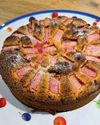
Welcoming the very start of the spring season
Henrietta Balcon makes the most of the new crop rhubarb
2 mins
March 2026
The Country Smallholder
Starting with Pigs - before you start
Linda Aldous outlines what you need to do before anything porcine arrives on your smallholding
3 mins
March 2026
The Country Smallholder
Insurance to protect livestock - and your peace of mind
Looking ahead to a busy 2026 for Pedigree Sales, farmers and breeders will be preparing their livestock for the upcoming markets
2 mins
March 2026
The Country Smallholder
Getting Your Electric Fence Spring-Ready: Expert Q&A
As Spring arrives, it’s the perfect time to give your electric fence some attention. Based on questions we discuss regularly here at www.electricfencing.co.uk, here’s a list of the checks you should be carrying out now, and why they matter.
2 mins
March 2026

The Country Smallholder
Check your kit for the busy seasons ahead
Agricultural journalist, and machinery writer Jane Brooks, joins us for her regular look at the world.
4 mins
March 2026
The Country Smallholder
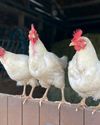
Flock together: is now the right time to add more hens?
Andy Hill explains how to integrate birds into a flock without feathers flying
4 mins
March 2026
The Country Smallholder
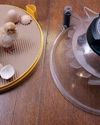
The secrets behind maximising incubator hatch rates
Buying quality point of lay hens can be an expensive proposition these days (even if you can find a local source of the breed that you want). Incubating fertilised eggs can save a great deal of money and make many more breeds accessible. If you already keep poultry that includes a cockerel, an incubator means that you can hatch their eggs either to increase your flock or to sell. Hugh & Fiona Osborne have been using incubators for many years and have learned that getting a good hatch means attention to detail.
7 mins
March 2026
The Country Smallholder
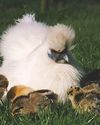
Making choices for your chicks
Victoria Roberts BVSc MRCVS says Natural and Artifical Incubation are not an either/or choice
5 mins
March 2026
The Country Smallholder
An appetite for asparagus
Our Experts answer your questions
1 mins
March 2026
Listen
Translate
Change font size