Try GOLD - Free
IN PURSUIT OF PARADISE
BBC Wildlife
|April 2025
An adventure in Papua New Guinea to seek some of the world's most incredible birds is the culmination of a 40-year dream
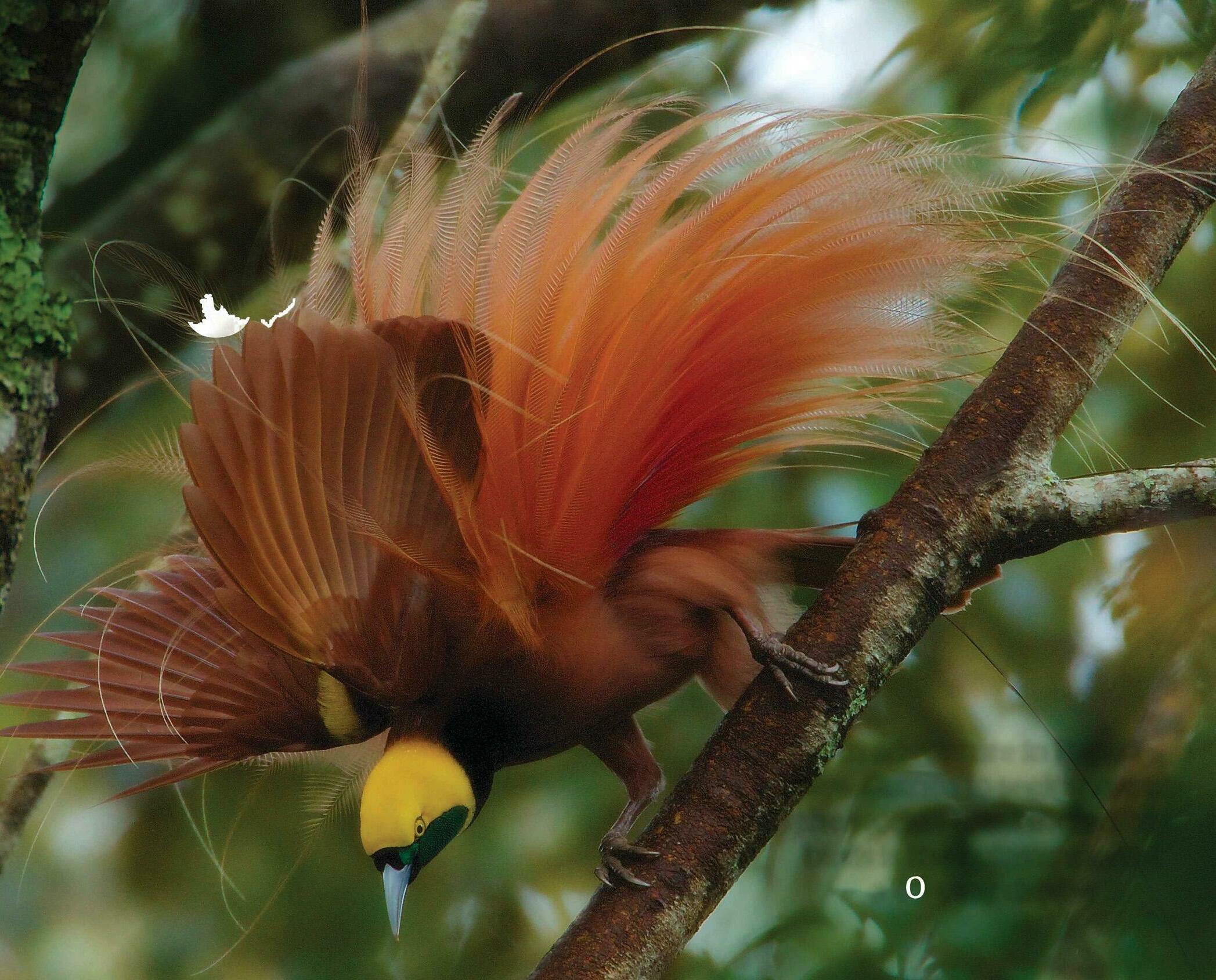
IF THERE WAS EVER proof that good things come to those that wait, it was my recent and unforgettable visit to the renowned birding destination of Papua New Guinea.
Reading Alfred Russel Wallace’s The Malay Archipelago as a teenage birder, I recall being transported to a land of astonishing birds with unparalleled beauty and wonderfully bizarre ornamentation. More inspiration came with Bruce Beehler’s Birds of New Guinea, the first definitive field guide to the island. Flicking through page after page of sumptuous illustrations, it was always the birds of paradise that flew straight off the pages and into my imagination.
I knew I would see them for myself one day but I never imagined that day would take almost four decades to come: it was October 2024 when I finally touched down on the world's second-largest island.
Papua New Guinea is synonymous with birds of paradise, hosting 33 of the world's 45 species. Some 26 also reside in Indonesia's autonomous province of West Papua, with a handful in North Queensland and the remote islands of the Malay Archipelago. But actually finding them, particularly in Papua New Guinea, is widely touted as the 'toughest birding you'll ever do'.
It's not hard to see why. Two-thirds of Papua New Guinea is still forested, with a whopping 85 per cent classified as 'untouched'. Many birding locations are remote and difficult to access, and permission to enter tribal lands is not easy to come by.
Even if you do manage to get there, you have to negotiate steep, rugged terrain and cope with the challenges of dense tropical forest. And finally, with intense hunting pressure in certain locations, these birds have become highly elusive.
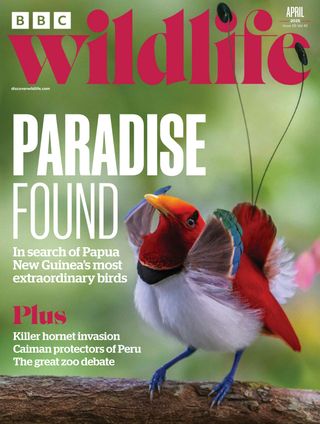

This story is from the April 2025 edition of BBC Wildlife.
Subscribe to Magzter GOLD to access thousands of curated premium stories, and 10,000+ magazines and newspapers.
Already a subscriber? Sign In
MORE STORIES FROM BBC Wildlife
BBC Wildlife
“Our canoe was nearly sunk by a hippo”
Hippos in Niger

3 mins
March 2026

BBC Wildlife
Why does Australia have such weird animals?
AUSTRALIA IS A LONG WAY FROM anywhere and has been for a very long time. The landmass definitively separated from the supercontinent of Gondwana around 40 million years ago and, since then, has existed - as a big blob in the middle of an even bigger ocean - in glorious geographical isolation.
2 mins
March 2026
BBC Wildlife
Which country has the fewest native animals?
AT AROUND 61KM² SAN MARINO, IN Europe, is one of the world's smallest countries. Entirely landlocked, it is surrounded by Italy.
1 min
March 2026

BBC Wildlife
Why do some species sunbathe?
RING-TAILED LEMURS ARE FAMED FOR their 'sun-worshipping' posture, legs and arms outstretched to reveal their pale bellies. Like humans, they do it to save energy and boost health. Sunlight is necessary to many bodily processes. As a source of vitamin D it's required to maintain bone and muscle health. It is also related to the production of serotonin, the chemical that regulates mood, sleep and stress response.
1 mins
March 2026
BBC Wildlife
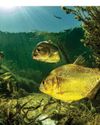
ALL YOU EVER NEEDED TO KNOW ABOUT THE Piranha
PIRANHAS HAVE A REPUTATION as some of the most dangerous freshwater hunters: terrifying predators capable of devouring a large mammal in mere minutes.
3 mins
March 2026
BBC Wildlife
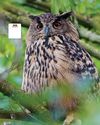
EAGLES LANDING
Eagle owls were once heavily persecuted. But thanks to a new initiative, these magnificent birds are reclaiming a wetland home
7 mins
March 2026
BBC Wildlife
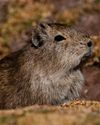
Do wild guinea pigs exist?
GUINEA PIGS, WHICH ARE NOT pigs and not from Guinea, are domesticated rodents that do not exist in the wild.
1 min
March 2026
BBC Wildlife
SNAP-CHAT: THE INSIDE WORLD OF WILDLIFE PHOTOGRAPHY
Boris Belchev on birds, batteries and battling bears with pop music
3 mins
March 2026
BBC Wildlife
Does anything live in the Bermuda Triangle?
THE BERMUDA TRIANGLE, IN THE NORTH Atlantic Ocean, has become infamous for the planes and ships that are said to have vanished without a trace while travelling through the area.
1 min
March 2026
BBC Wildlife
Do animals have different blood types?
HUMANS HAVE FOUR MAIN BLOOD GROUPS: A, B, AB and O.
1 min
March 2026
Listen
Translate
Change font size