
Go Unlimited with Magzter GOLD
Get unlimited access to 10,000+ magazines, newspapers and Premium stories for just
Try GOLD - Free
The Blackener's Cave
Archaeology
|May/June 2017
Viking Age outlaws, taboo, and ritual in Iceland’s lava fields.

THE HALLMUNDARHRAUN lava field—basalt dark, with great swells and a froth of white moss—looks like a stormy sea whipped into a frenzy and frozen in place. It begins under the Langjökull glacier in mountains to the east and winds some 30 miles to Hraunfoss—literally, “Lava Falls”—where a crystalline river of melt water pours directly from its wide, stony face. It’s very Icelandic: fire and ice, water and stone. When the lava flowed at the end of the ninth century, shortly after the Vikings arrived on the island, it was probably the first volcanic activity of its kind that northern Europeans had ever witnessed. Those early residents of western Iceland may have heard eruptions, seen a fiery glow on the horizon, and tracked its spread across the landscape, a spread that ultimately consumed around 90 square miles.
Hallmundarhraun, just a few hours’ drive from Reykjavík, is riven with lava tubes which form when fresh molten rock flows through an existing field of cooled lava. Over time, the ceilings of some of these tunnels partially collapse to form caves. There are some 500 across Iceland, and around 200 hold evidence of human occupation. One of these caves is Surtshellir, part of a lava tube complex that is Iceland’s longest, at more than two miles. It is named for Surtr, the elemental fire giant of Norse mythology, the “scorcher” or “blackener,” ruler of Muspelheim, who will kill all gods and life at the end of time. Inside is one of the more enigmatic archaeological sites on the island.
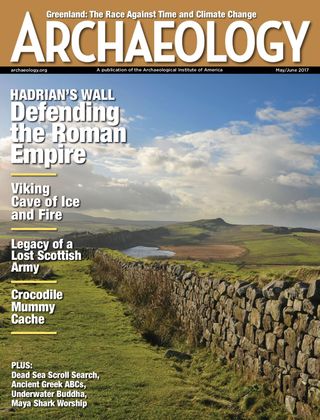

This story is from the May/June 2017 edition of Archaeology.
Subscribe to Magzter GOLD to access thousands of curated premium stories, and 10,000+ magazines and newspapers.
Already a subscriber? Sign In
MORE STORIES FROM Archaeology
Archaeology
THE EGYPTIAN SEQUENCE
Until now, the earliest Egyptians to have even part of their DNA sequenced were three people who lived between 787 and 544 B.C.

1 mins
November/December 2025
Archaeology
SOURCE MATERIAL
As early as 40,000 years ago, some hunter-gatherers in southern Africa ventured long distances to procure special types of stone to make their tools.
1 min
November/December 2025
Archaeology
Secrets of the Seven Wonders
How archaeologists are rediscovering the ancient world's most marvelous monuments
13 mins
November/December 2025
Archaeology
ACTS OF FAITH
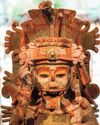
Evidence emerges of the day in 1562 when an infamous Spanish cleric tried to destroy Maya religion
12 mins
November/December 2025
Archaeology
OASIS MAKERS OF ARABIA
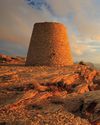
Researchers are just beginning to understand how people thrived in the desert of Oman some 5,000 years ago
8 mins
November/December 2025
Archaeology
FOSSIL FORCE
One of the planet's most successful arthropods, trilobites, abounded in the oceans from about 520 million to 250 million years ago.
1 min
November/December 2025
Archaeology
BIGHORN MEDICINE WHEEL, WYOMING
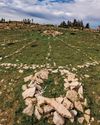
Perched almost 9,700 feet above sea level on Medicine Mountain in Wyoming's Bighorn Range, the Medicine Wheel is an 80-foot-diameter circular structure made from limestone boulders.
2 mins
November/December 2025
Archaeology
ANCIENT LOOK BOOK
A young woman buried in China's Tarim Basin some 2,000 years ago went to the afterlife accompanied by the height of fashion.
1 mins
November/December 2025
Archaeology
A FAMILIAR FACE
In the early eleventh century, a landslide on the island of Ostrów Lednicki in western Poland caused a hillfort to collapse and slip to the bottom of Lake Lednica.
1 min
November/December 2025
Archaeology
Temples to Tradition
A looted cache of bronzes compels archaeologists to explore Celtic sanctuaries across Burgundy
13 mins
November/December 2025
Translate
Change font size