Poging GOUD - Vrij
The Myth of the Designer Baby
Scientific American
|December 2025
Parents beware of any genomics firm saying it can help them with “genetic optimization” of their embryos
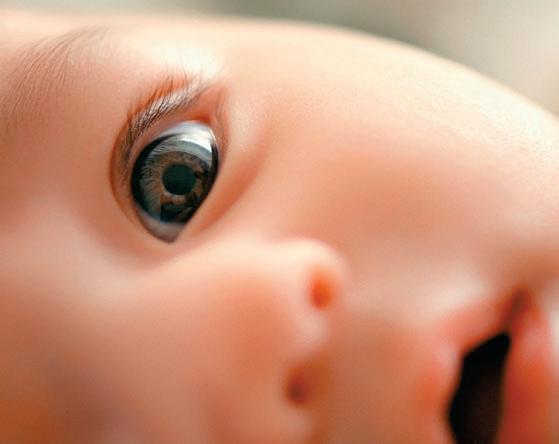
AN UNDERSTANDABLE ethics outcry greeted the June 2025 announcement of a software platform offering aspiring parents “genetic optimization” of their embryos. Touted by Kian Sadeghi, CEO of software maker Nucleus Genomics, the Nucleus Embryo service, costing thousands of dollars, promised optimization of traits such as inherited risk of heart disease and cancer, as well as intelligence, longevity and hair color. The company offered an analysis for left-handedness, lumping it in with aspects of “body and physical health” such as chronic pain. It also promised to weed out things that predispose someone to becoming an alcoholic.
That left one commentator, a venture capitalist, feeling “nauseous.” Critics worried that such a process “treats children as marketable goods.” More than one reference to “designer babies” and “eugenics” naturally followed. “The Gattaca Future Is Here,” read one headline, referencing the 1997 science-fiction film Gattaca, which imagines a dystopian future where genetically engineered “Valids” reign supreme over the “In-Valids” who were conceived the old-fashioned way.
As professional bioethicists, we would have those same concerns—if Nucleus Embryo actually did what it claims. But it doesn’t. The cinematic analogy to Nucleus Embryo isn’t Gattaca. It’s The Dropout—the 2022 miniseries about the rise and fall of Elizabeth Holmes and her blood-testing company, Theranos.
To be clear, there’s no sign that Nucleus Genomics has engaged in the kind of intentional deception that marked Theranos, but there are striking parallels. Like Holmes, Sadeghi dropped out of a prestigious university to start his own biotech company, wooing enough Silicon Valley investors to launch his start-up.

Dit verhaal komt uit de December 2025-editie van Scientific American.
Abonneer u op Magzter GOLD voor toegang tot duizenden zorgvuldig samengestelde premiumverhalen en meer dan 9000 tijdschriften en kranten.
Bent u al abonnee? Aanmelden
MEER VERHALEN VAN Scientific American
Scientific American
Probiotic Hope and Hype
Despite their popularity, supplements with billions of \"good\" microbes help only a few illnesses, research shows

3 mins
January 2026
Scientific American
Mondays Really Are More Stressful
The start of the workweek can be a biologically measurable stressor, with consequences for long-term health that can stretch into retirement
4 mins
January 2026
Scientific American
Tiny Display
An e-paper breakthrough brings extremely high-resolution color
2 mins
January 2026
Scientific American
Fine-Feathered Snack
A bat's tracker documents a dramatic midair hunt
2 mins
January 2026
Scientific American
OUR ROBOTIC PICTURE
Will mechanical helpers ever be commonplace at home, at work and beyond?
11 mins
January 2026

Scientific American
"Use Your Words" Can Be Good for Kids' Health
Writing or expressing feelings can help adults mentally and physically. Kids are no different
5 mins
January 2026

Scientific American
Distant Diplomacy
Unrelated species “talk” and understand one another to avoid threats
2 mins
January 2026
Scientific American
Behind the Nobel
A 2025 winner reflects on the mysterious T cells that won him the prize
5 mins
January 2026

Scientific American
A Suite of Killers
Heart ailments, kidney diseases and type 2 diabetes actually may be part of just one condition. It's called CKM syndrome
10 mins
January 2026
Scientific American
Static Launch
Tiny worms leap toward their fruit fly hosts with an electric “tractor beam”
3 mins
January 2026
Listen
Translate
Change font size