
Ga onbeperkt met Magzter GOLD
Krijg onbeperkte toegang tot meer dan 9000 tijdschriften, kranten en Premium-verhalen voor slechts
The Benefits of Raising Conscientious Kids
Scientific American
|November 2025
Being conscientious will serve kids in the long run. Here are some tips for helping them learn that trait
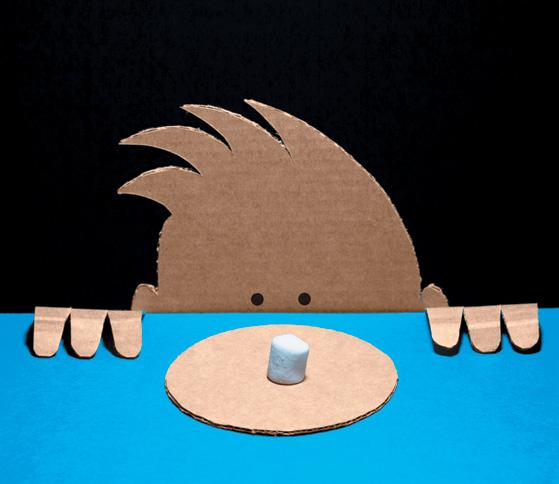
MY PRESCHOOLER IS OBSESSED with rules— and, more important, exploring their loopholes. When I tell him to stop throwing rocks, he will drop a rock dramatically with a loud thud, assuming plausible deniability. Pretending to be a Tyrannosaurus rex, he will chase his little sister around our kitchen island and push her. “Don’t push your sister,” I'll command, and he will reply, “I didn’t push her! The dinosaur did it.”
Self-control is one’s ability to navigate multiple competing desires—such as listening to your mother and shoving your sister. We tend to idolize people who show certain kinds of self-control (such as professional athletes) and demonize those who we think don’t show enough (for example, athletes who get caught in doping scandals).
When I think about self-control in children, I think about psychologist Walter Mischel’s marshmallow test, in which children could either eat a single marshmallow immediately or show self-control, refuse that first marshmallow and be rewarded with two marshmallows later. The original studies found that children who waited for the additional marshmallows had more academic success in adolescence compared with those who gave in to temptation.
But what if the marshmallow way of thinking about self-control is wrong? Maybe it’s about not just avoiding the tempting first marshmallow but the myriad other things that go along with that: planning for the future, following rules, working hard and trusting that you'll indeed get your eventual reward. In other words: being conscientious.
Teaching conscientiousness—a personality trait that’s about more than self-control—may actually be the path to helping our children be the best versions of themselves.

Dit verhaal komt uit de November 2025-editie van Scientific American.
Abonneer u op Magzter GOLD voor toegang tot duizenden zorgvuldig samengestelde premiumverhalen en meer dan 9000 tijdschriften en kranten.
Bent u al abonnee? Aanmelden
MEER VERHALEN VAN Scientific American

Scientific American
Probiotic Hope and Hype
Despite their popularity, supplements with billions of \"good\" microbes help only a few illnesses, research shows

3 mins
January 2026

Scientific American
Mondays Really Are More Stressful
The start of the workweek can be a biologically measurable stressor, with consequences for long-term health that can stretch into retirement
4 mins
January 2026
Scientific American
Tiny Display
An e-paper breakthrough brings extremely high-resolution color
2 mins
January 2026
Scientific American
Fine-Feathered Snack
A bat's tracker documents a dramatic midair hunt
2 mins
January 2026

Scientific American
OUR ROBOTIC PICTURE
Will mechanical helpers ever be commonplace at home, at work and beyond?
11 mins
January 2026

Scientific American
"Use Your Words" Can Be Good for Kids' Health
Writing or expressing feelings can help adults mentally and physically. Kids are no different
5 mins
January 2026
Scientific American
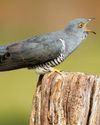
Distant Diplomacy
Unrelated species “talk” and understand one another to avoid threats
2 mins
January 2026
Scientific American
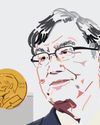
Behind the Nobel
A 2025 winner reflects on the mysterious T cells that won him the prize
5 mins
January 2026

Scientific American
A Suite of Killers
Heart ailments, kidney diseases and type 2 diabetes actually may be part of just one condition. It's called CKM syndrome
10 mins
January 2026
Scientific American
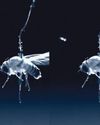
Static Launch
Tiny worms leap toward their fruit fly hosts with an electric “tractor beam”
3 mins
January 2026
Listen
Translate
Change font size