Versuchen GOLD - Frei
The Benefits of Raising Conscientious Kids
Scientific American
|November 2025
Being conscientious will serve kids in the long run. Here are some tips for helping them learn that trait
MY PRESCHOOLER IS OBSESSED with rules— and, more important, exploring their loopholes. When I tell him to stop throwing rocks, he will drop a rock dramatically with a loud thud, assuming plausible deniability. Pretending to be a Tyrannosaurus rex, he will chase his little sister around our kitchen island and push her. “Don’t push your sister,” I'll command, and he will reply, “I didn’t push her! The dinosaur did it.”
Self-control is one’s ability to navigate multiple competing desires—such as listening to your mother and shoving your sister. We tend to idolize people who show certain kinds of self-control (such as professional athletes) and demonize those who we think don’t show enough (for example, athletes who get caught in doping scandals).
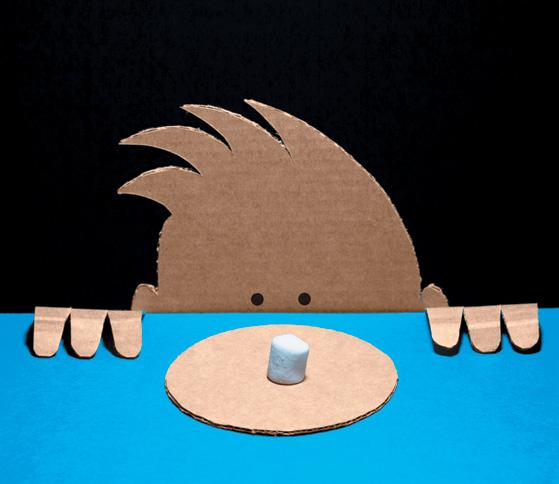
When I think about self-control in children, I think about psychologist Walter Mischel’s marshmallow test, in which children could either eat a single marshmallow immediately or show self-control, refuse that first marshmallow and be rewarded with two marshmallows later. The original studies found that children who waited for the additional marshmallows had more academic success in adolescence compared with those who gave in to temptation.
But what if the marshmallow way of thinking about self-control is wrong? Maybe it’s about not just avoiding the tempting first marshmallow but the myriad other things that go along with that: planning for the future, following rules, working hard and trusting that you'll indeed get your eventual reward. In other words: being conscientious.
Teaching conscientiousness—a personality trait that’s about more than self-control—may actually be the path to helping our children be the best versions of themselves.


Diese Geschichte stammt aus der November 2025-Ausgabe von Scientific American.
Abonnieren Sie Magzter GOLD, um auf Tausende kuratierter Premium-Geschichten und über 9.000 Zeitschriften und Zeitungen zuzugreifen.
Sie sind bereits Abonnent? Anmelden
WEITERE GESCHICHTEN VON Scientific American

Scientific American
The Business of Space Weather
A company aims to offer better forecasts based on a new solar model

7 mins
April 2026

Scientific American
Mindless Sleep
Even without brains, sea anemones and jellyfish can sleep like humans do
1 min
April 2026

Scientific American
THE KIDS ARE ALL RIGHT
Young people are doing better than you think
12 mins
April 2026

Scientific American
Something in THE WATER
Pristine alpine lakes are being choked by algal blooms. The culprit is in the air
9 mins
April 2026

Scientific American
A Dose of Prevention
New alert systems and biomarkers are spotting drug- induced kidney damage early, before irreversible harm
6 mins
April 2026

Scientific American
Life on the Edge
Kidney damage can progress for years without symptoms. The newly diagnosed cope with everything from restrictive diets to the emotional and logistical toll of dialysis
9 mins
April 2026

Scientific American
Stopping an Autoimmune Attack
IgA nephropathy, a frequent cause of kidney failure, is underdiagnosed. New treatments mean it's more important now to find those who will benefit
8 mins
April 2026

Scientific American
Mindless Sleep
Even without brains, sea anemones and jellyfish can sleep like humans do
4 mins
April 2026

Scientific American
Microbes Afloat
BACTERIA AND THE VIRUSES that infect them are perpetually at war. Their deadly clashes push both kinds of microbes to evolve new traits that meet the challenges of every environment they inhabit, from the human digestive tract to the seafloor’s hydrothermal vents— and even the harsh conditions of space.
2 mins
April 2026

Scientific American
The Strangest Bloom
Research reveals how the corpse flower came by its peculiar traits
9 mins
April 2026
Listen
Translate
Change font size