
Ga onbeperkt met Magzter GOLD
Krijg onbeperkte toegang tot meer dan 9000 tijdschriften, kranten en Premium-verhalen voor slechts
Fast Fashion Needs a Green Makeover
Scientific American
|October 2025
A more circular economy in textiles will look good on everyone
-
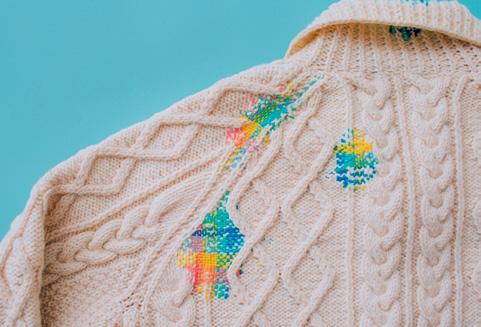
PEOPLE IN THE U.S. throw away at least 17 million tons of textiles every year—about 100 pounds of clothing per person. At the same time, unsold blouses, jackets, and other fashion-industry leftovers end up in dumps such as the one in Chile’s Atacama Desert, so vast as to be visible from space. Many of these items are fast fashion—made quickly, sold cheaply, and in style for too short a time because the industry relies on novelty to keep consumers buying.
Fashion poses more than an aesthetic problem, however. Every year the global garment industry emits up to 10 percent of the world’s greenhouse gas output and uses enough water to fill at least 37 million Olympic-size swimming pools, as an article in this magazine noted this past July. Cotton farming can involve massive quantities of pesticides, and yarn dyeing pollutes waterways with toxic chemicals. Synthetic polymers such as nylon are made with fossil fuels and shed microfibers with every wash.
It’s time to embrace a circular economy in fashion—one that reuses clothes, fabrics and yarn; recycles to the extent possible; and encourages producers and retailers to choose textiles and processes that minimize the input of raw resources such as cotton or synthetic polymers. Our choices as consumers matter as well. How we select fashion and follow trends is one accessible way we can make a dent in climate change.
Almost one third of the clothes produced every season are never sold and may go straight to landfills.

Dit verhaal komt uit de October 2025-editie van Scientific American.
Abonneer u op Magzter GOLD voor toegang tot duizenden zorgvuldig samengestelde premiumverhalen en meer dan 9000 tijdschriften en kranten.
Bent u al abonnee? Aanmelden
MEER VERHALEN VAN Scientific American

Scientific American
Probiotic Hope and Hype
Despite their popularity, supplements with billions of \"good\" microbes help only a few illnesses, research shows

3 mins
January 2026

Scientific American
Mondays Really Are More Stressful
The start of the workweek can be a biologically measurable stressor, with consequences for long-term health that can stretch into retirement
4 mins
January 2026

Scientific American
Tiny Display
An e-paper breakthrough brings extremely high-resolution color
2 mins
January 2026

Scientific American
Fine-Feathered Snack
A bat's tracker documents a dramatic midair hunt
2 mins
January 2026

Scientific American
OUR ROBOTIC PICTURE
Will mechanical helpers ever be commonplace at home, at work and beyond?
11 mins
January 2026

Scientific American
"Use Your Words" Can Be Good for Kids' Health
Writing or expressing feelings can help adults mentally and physically. Kids are no different
5 mins
January 2026

Scientific American
Distant Diplomacy
Unrelated species “talk” and understand one another to avoid threats
2 mins
January 2026

Scientific American
Behind the Nobel
A 2025 winner reflects on the mysterious T cells that won him the prize
5 mins
January 2026

Scientific American
A Suite of Killers
Heart ailments, kidney diseases and type 2 diabetes actually may be part of just one condition. It's called CKM syndrome
10 mins
January 2026

Scientific American
Static Launch
Tiny worms leap toward their fruit fly hosts with an electric “tractor beam”
3 mins
January 2026
Listen
Translate
Change font size