Poging GOUD - Vrij
GET THE BALANCE RIGHT
Down To Earth
|June 16, 2025
India currently relies on three major food crops—rice, maize and sugarcane—for ethanol production. Ethanol-blended petrol supports the country’s goals of carbon neutrality and energy sovereignty. But the transition to clean energy must not jeopardise food security.
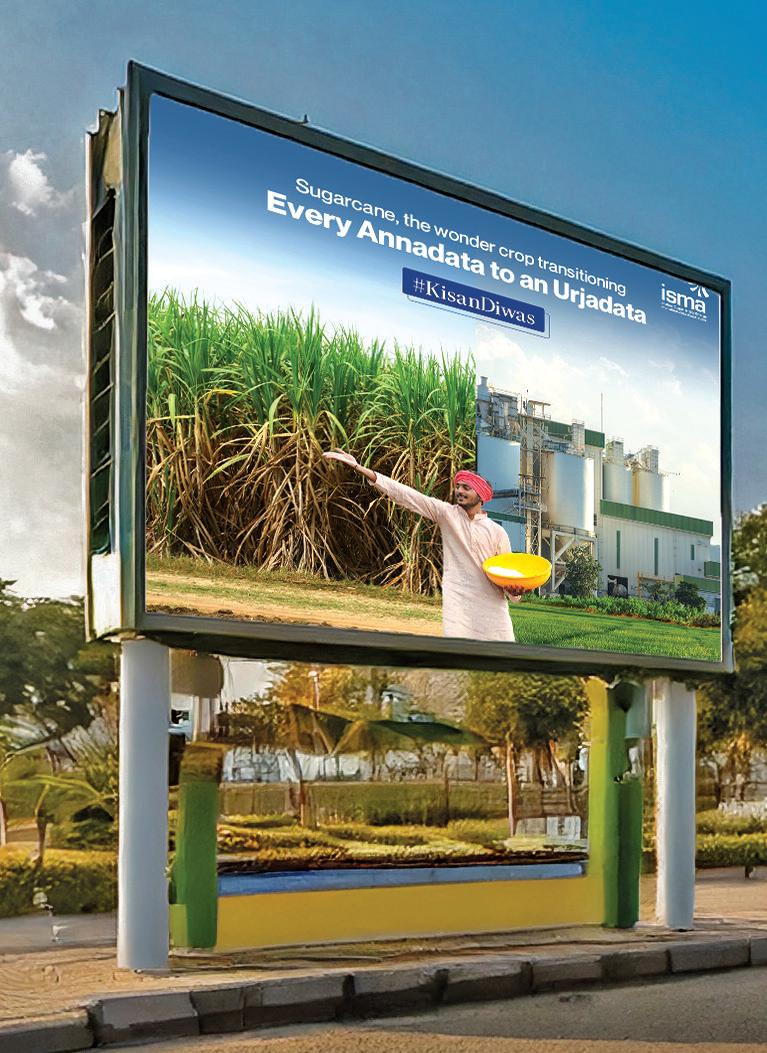
ANNADATA SE Urjadata; or from provider of food to provider of energy. This billboard announcement, that one can spot almost anywhere in the country, from petrol pumps to fair price shops to government buildings, declares a new identity for India's distressed farmers. As if to highlight this improved status of farmers and the country, Hardeep Singh Puri, Union Minister of Petroleum and Natural Gas, took to X (formerly Twitter) on April 1, and said, "India's farmers are now driving the nation's energy future." Next day, on the same platform, the Union Ministry of Petroleum and Natural Gas made a more specific pitch: "Ethanol isn't just fuel-it's a lifeline for farmers." Later that month, Nitin Gadkari, Union Minister for Road Transport and Highways, also emphasised at an event the pivotal roles of farmers in India's future energy ecosystem.
This vision is already taking root in Uttar Pradesh's Shravasti district. Budh Sagar Maurya from Mohanpur Bhartha village, who has primarily been a wheat and paddy grower all his life, has made a notable shift. This rabi season, he scaled back his wheat cultivation to make room for spring maize, sown around FebruaryMarch. The reason, Maurya tells Down To Earth (DTE), is better prices for maize, which is now in demand for producing a liquid fuel, ethanol. "Since wheat can be harvested around April, I kept 0.4 hectare (ha) of my 1 ha land fallow for three months to be able to sow maize on time," Maurya says.
Last year he cultivated maize on 0.2 ha and sold it for 2,250 per quintal (100 kg), above the minimum support price (MSP) of *2,090 per quintal and much above average production cost of ₹1,447 per quintal. "Government officials tell me this year the prices will increase further," Maurya tells DTE.
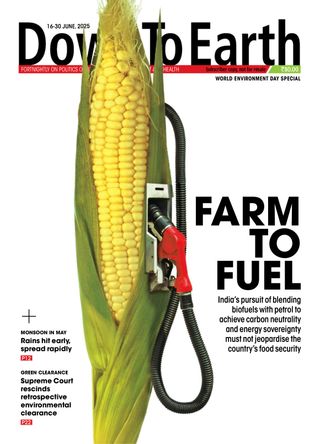

Dit verhaal komt uit de June 16, 2025-editie van Down To Earth.
Abonneer u op Magzter GOLD voor toegang tot duizenden zorgvuldig samengestelde premiumverhalen en meer dan 9000 tijdschriften en kranten.
Bent u al abonnee? Aanmelden
MEER VERHALEN VAN Down To Earth
Down To Earth
Popular distrust
THE WORLD seems to be going through a period of stasis despite facing an unfathomable polycrisis.

2 mins
February 01, 2026

Down To Earth
CONSERVE OR PERISH
Periyar Tiger Reserve has rewritten Indian conservation by turning poachers into protectors and conflict into coexistence
5 mins
February 01, 2026

Down To Earth
'Rivers need to run free'
From Tibet to West Bengal, the Brahmaputra is the pulse of communities and ecosystems along its course. But what are the risks the river faces through human interventions, particularly dams, discusses journalist, author and filmmaker SANJOY HAZARIKA in his new book, River Traveller.
4 mins
February 01, 2026

Down To Earth
India is facing up to its innovation lag
There are signs now that India is acknowledging the superior strides made by China in a frontier technology like Al
4 mins
February 01, 2026

Down To Earth
Competing concerns
What are the repercussions of the EU-Mercosur pact that have made European farmers protest against the free trade agreement?
4 mins
February 01, 2026

Down To Earth
From fryer to flight
Sustainable fuel made from used cooking oil can play a pivotal role in helping India achieve its aviation emission reduction goals. Measures to collect this oil must be revamped
4 mins
February 01, 2026

Down To Earth
ACCESS OPEN
An amendment to India's nodal forest conservation law opens up forests across India to commercial exploitation by the paper industry
6 mins
February 01, 2026
Down To Earth
DRINK FROM TAP CAN BE A REALITY
As cities across India struggle to supply safe piped water, Odisha offers a success story
2 mins
February 01, 2026

Down To Earth
GREAT DRYING
The Earth is hotter than at any point in the past 100,000 years, with 2023-25 becoming the warmest three-year period on record and also breaching the 1.5°C threshold for the first time. One fallout is dwindling freshwater.
22 mins
February 01, 2026

Down To Earth
Green redemption
Restoration of grasslands of Kerala's Pampadum Shola National Park, once dominated by invasive Australian wattles, see a return of streams and native species
1 mins
February 01, 2026
Listen
Translate
Change font size