Essayer OR - Gratuit
GET THE BALANCE RIGHT
Down To Earth
|June 16, 2025
India currently relies on three major food crops—rice, maize and sugarcane—for ethanol production. Ethanol-blended petrol supports the country’s goals of carbon neutrality and energy sovereignty. But the transition to clean energy must not jeopardise food security.
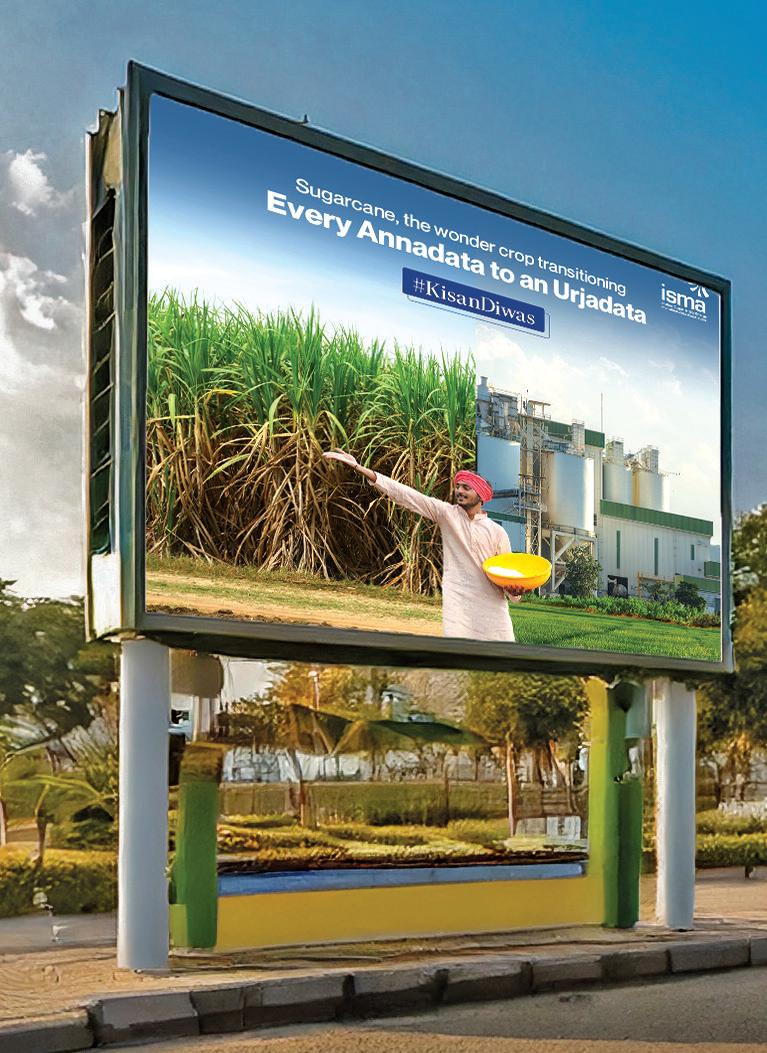
ANNADATA SE Urjadata; or from provider of food to provider of energy. This billboard announcement, that one can spot almost anywhere in the country, from petrol pumps to fair price shops to government buildings, declares a new identity for India's distressed farmers. As if to highlight this improved status of farmers and the country, Hardeep Singh Puri, Union Minister of Petroleum and Natural Gas, took to X (formerly Twitter) on April 1, and said, "India's farmers are now driving the nation's energy future." Next day, on the same platform, the Union Ministry of Petroleum and Natural Gas made a more specific pitch: "Ethanol isn't just fuel-it's a lifeline for farmers." Later that month, Nitin Gadkari, Union Minister for Road Transport and Highways, also emphasised at an event the pivotal roles of farmers in India's future energy ecosystem.
This vision is already taking root in Uttar Pradesh's Shravasti district. Budh Sagar Maurya from Mohanpur Bhartha village, who has primarily been a wheat and paddy grower all his life, has made a notable shift. This rabi season, he scaled back his wheat cultivation to make room for spring maize, sown around FebruaryMarch. The reason, Maurya tells Down To Earth (DTE), is better prices for maize, which is now in demand for producing a liquid fuel, ethanol. "Since wheat can be harvested around April, I kept 0.4 hectare (ha) of my 1 ha land fallow for three months to be able to sow maize on time," Maurya says.
Last year he cultivated maize on 0.2 ha and sold it for 2,250 per quintal (100 kg), above the minimum support price (MSP) of *2,090 per quintal and much above average production cost of ₹1,447 per quintal. "Government officials tell me this year the prices will increase further," Maurya tells DTE.
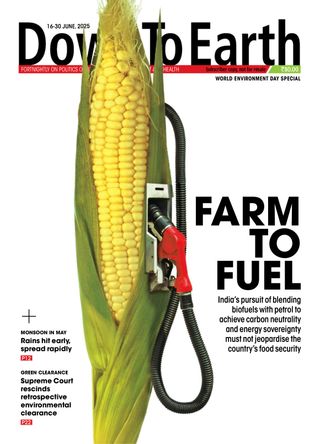

Cette histoire est tirée de l'édition June 16, 2025 de Down To Earth.
Abonnez-vous à Magzter GOLD pour accéder à des milliers d'histoires premium sélectionnées et à plus de 9 000 magazines et journaux.
Déjà abonné ? Se connecter
PLUS D'HISTOIRES DE Down To Earth

Down To Earth
MAJESTIC SARUS STAGES COMEBACK
Involvement of farmers in conservation helps the sarus crane population soar in eastern Uttar Pradesh over the past decade

5 mins
June 16, 2026

Down To Earth
Global resistance to AI data centres hardens
India must learn how to regulate environmentally disastrous data centres that guzzle more water and power than entire nations
4 mins
June 16, 2026

Down To Earth
SUMMER SMOG
Ground-level ozone is one of the national capital's least appreciated public health threat
1 mins
June 16, 2026

Down To Earth
A FOREST IN WAIT
For five decades, Abujhmad in Chhattisgarh was closed to the country. Now, as the region opens up, ANIL ASHWANI SHARMA travels to villages in its dense forests to see how isolation has impacted the people and development
6 mins
June 16, 2026

Down To Earth
DON'T WASTE THE FUTURE
Policymakers may need to focus less on expanding programmes and more on improving their effectiveness and reach, suggests the latest NFHS-6 data
3 mins
June 16, 2026
Down To Earth
NEED A FOREST TRIBUNAL
A tribunal will provide people a dedicated independent forum where they will have a statutory right to approach
2 mins
June 16, 2026
Down To Earth
Moment or movement
ONE DEFINITION of the word metamorphosis in the dictionary is “a striking alteration in appearance, character, or circumstances”.
2 mins
June 16, 2026

Down To Earth
El Niño, amplified
As a possible super El Niño looms in 2026, scientists warn of devastations that may extend into 2027
6 mins
June 16, 2026

Down To Earth
A mindless denial
District level bodies are increasingly refusing tribal population's rights over resources guaranteed by the forest rights Act
5 mins
June 16, 2026

Down To Earth
TOOR TOUR
What makes pigeon pea so ubiquitous across cuisines in India
4 mins
June 16, 2026
Listen
Translate
Change font size